Notes on Violence

Justin E. H. Smith in his Substack Newsletter:
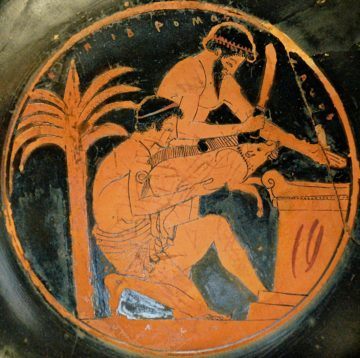
In her influential 1971 article, “A Defense of Abortion”,[1] the philosopher Judith Jarvis Thomson deploys a number of outlandish thought experiments. Among them is the story of a woman much like herself who gets kidnapped and, on awakening, finds she is attached by complicated life-support apparatuses to a great violinist. Her kidnappers explain when she awakens that she happens to be just so physiologically constituted as to be necessary for the violinist’s survival, and surely she agrees it is important to keep this rare musician alive, does she not? If she gets up and walks away, he will die; if she stays attached to him for nine months, they will both live. But, they acknowledge, she is of course free to go.

This particular scenario is one that Thomson only invokes in the course of making another point about another category of human beings than frail adult violinists, and yet it is a passing remark about his dependency on her that has preoccupied me the longest and most profoundly: we all agree, she reasons, that the person attached to the violinist is free to get up and leave, but she is not free to slit the violinist’s throat before going. Why not? The effect is the same in both cases —the violinist dies—  and indeed a case could be made that killing him swiftly is more merciful than letting him die slowly.

More here.

What Makes Quantum Computing So Hard to Explain?

Scott Aaronson in Quanta:

Quantum computers, you might have heard, are magical uber-machines that will soon cure cancer and global warming by trying all possible answers in different parallel universes. For 15 years, on my blog and elsewhere, I’ve railed against this cartoonish vision, trying to explain what I see as the subtler but ironically even more fascinating truth. I approach this as a public service and almost my moral duty as a quantum computing researcher. Alas, the work feels Sisyphean: The cringeworthy hype about quantum computers has only increased over the years, as corporations and governments have invested billions, and as the technology has progressed to programmable 50-qubit devices that (on certain contrived benchmarks) really can give the world’s biggest supercomputers a run for their money. And just as in cryptocurrency, machine learning and other trendy fields, with money have come hucksters.

In reflective moments, though, I get it. The reality is that even if you removed all the bad incentives and the greed, quantum computing would still be hard to explain briefly and honestly without math. As the quantum computing pioneer Richard Feynman once said about the quantum electrodynamics work that won him the Nobel Prize, if it were possible to describe it in a few sentences, it wouldn’t have been worth a Nobel Prize.

More here.

Talk of toxic masculinity puts the blame in all the wrong places

Heidi Matthews in Psyche:

As a new parent of boy/girl twins (at least as they were assigned at birth), I puzzle about the cultural pressure to scrutinise my infant son’s burgeoning masculinity lest it emerge as ‘toxic’. I catch myself watching and wondering, resisting the urge to police his interactions with his sister: He took the toy she was playing with, is this aggression that will stifle her confidence? She seems unbothered and has quickly snatched it back – phew! Is it bullying or an early form of manspreading when, both of them vying for the same object, he moves into her space and pushes her aside?
Today, popular parenting messaging, from Instagram to The New York Times, is suspicious of and concerned about boys. ‘Boys are broken,’ we are told. Boys underperform girls in school and college, and are more likely to engage in behaviour that is harmful to both themselves and others. Boys fight, bully, take dangerous risks, and sexually harass. From school shootings to incel-inspired terrorism, white boys in particular perpetrate mass acts of violence.

More here.

Sunday Poem

In a Station

Once I walked through the halls of a station
Someone called your name
In the streets I heard children laughing
They all sound the same

Wonder could you ever know me
Know the reason why I live?
Is there nothing you can show me?
Life seems so little to give

Once I climbed up the face of a mountain
And ate the wild fruit there
Fell asleep until the moonlight woke me
And I could taste your hair

Isn’t everybody dreaming?
Then the voice I hear is real
Out of all the idle scheming
Can’t we have something to feel?

Once upon a time leaves me empty
Tomorrow never came
I could sing the sound of your laughter
Still I don’t know your name

Must be some way to repay you
Out of all the good you gave
If a rumor should delay you
Love seems so little to say

by Richard Manuel
from
Music From Big Pink
The Band, 1968

The Band, “In a Station” – YouTube

Cavity: A tooth can die quickly, in days, or slowly, over weeks or months or years

Danielle Geller in Guernica:

The saltwater aquarium in my new dentist’s office is its best feature. My favorite fish is a red fish with big eyes and a black stripe along its back. He has a generally grumpy demeanor, and I cannot help but feel a friendship form between us. I take photos of him and sometimes post them to Instagram. (“This red fish is my favorite fish, he is a total weirdo.”) He is popular among my friends.
I am aware, though it has not been my experience, that aquariums are common features in dentist offices. (One of my childhood dentists had an arcade machine. My sister and I would race monster trucks before our appointments.) I imagine this is due to the anxiety many people feel about dental procedures. (I once had a full-blown panic attack before my wisdom tooth extraction, even though I had been given Valium to take beforehand. “I can’t do anything if you don’t stop crying,” my dentist snapped.) Aquariums aren’t cheap to maintain, but dentists or their office administrators must feel they have some beneficial or tangible impact. (In the Google reviews for my new dentist office, I find one from four years ago that reads: “Excellent service. But I went because of Dr. K—’s military service and understanding of PTSD.”) Watching fish swim lazily through a fifty-gallon tank surely has some small but significant calming effect.

The red fish doesn’t really swim. He darts from hiding place to hiding place to resting bowl, and then he crawls along with grasping, tensile fins.

…This essay is a glass aquarium. The fish, a smooth-eyed distraction.

My father is dying. Liver cancer, stage 4.

“Tell your sister not to get too excited,” he tells me in a short phone call. By excited, he does not mean thrilled. He means worked up, distraught. We are not supposed to cry about his death.

More here.

Isaac Newton’s forgotten years as a cosmopolitan Londoner

Steve Donoghue in The Christian Science Monitor:

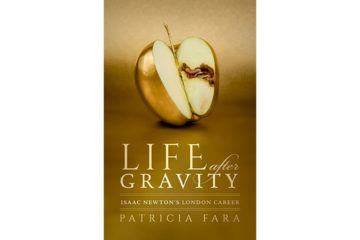
Many of us tend to like our geniuses as neatly lovable caricatures. And when it comes to Isaac Newton, we tend to envision a virtually disembodied intellect who was inspired by a falling apple to revolutionize physics from the quiet of his study at Trinity College. But even when Newton was performing his intellectual feats at Cambridge in the 1680s, he was eager to move on to a new life. Patricia Fara, historian of science at Cambridge University, seeks to chronicle that period in “Life after Gravity: Isaac Newton’s London Career.” In this book she presents Newton as “a metropolitan performer, a global actor who played various parts.”

Here we have not the familiar – and almost inhuman – Newton who produced his great “Principia Mathematica” in 1687, but rather a worldly, cosmopolitan Newton: master of the Royal Mint, president of the Royal Society, member of parliament, speculator on the market, prominent man-about-town.

In many ways it’s a startling portrait, and it’s clearly intended to be. Fara is a pleasingly lively historical guide – not just to Newton’s London life, but also to the London of those decades. It’s the London of Queen Anne and William Hogarth and most of all John Dryden, and their presence wonderfully hovers over everything here. We see Newton become preoccupied with straightening out the complicated mess he’d inherited at the Royal Mint. We see him working the stock market – not always successfully, which seems at first odd about somebody who invented whole new kinds of calculus at will. And Fara’s lengthy digressions are as fascinating as her main subject – particularly the mini-biography she provides of Newton’s relative and fellow thorough-going London creature John Conduitt.

Saturday, July 10, 2021

Distributional Effects of Monetary Policy

Elham Saeidinezhad over at his website:

Who has access to cheap credit? And who does not? Compared to small businesses and households, global banks disproportionately benefited from the Fed’s liquidity provision measures. Yet, this distributional issue at the heart of the liquidity provision programs is excluded from analyzing the recession-fighting measures’ distributional footprints. After the great financial crisis (GFC) and the Covid-19 pandemic, the Fed’s focus has been on the asset purchasing programs and their impacts on the “real variables” such as wealth. The concern has been whether the asset-purchasing measures have benefited the wealthy disproportionately by boosting asset prices. Yet, the Fed seems unconcerned about the unequal distribution of cheap credits and the impacts of its “liquidity facilities.” Such oversight is paradoxical. On the one hand, the Fed is increasing its effort to tackle the rising inequality resulting from its unconventional schemes. On the other hand, its liquidity facilities are being directed towards shadow banking rather than short-term consumers loans. A concerned Fed about inequality should monitor the distributional footprints of their policies on access to cheap debt rather than wealth accumulation.

Dismissing the effects of unequal access to cheap credit on inequality is not an intellectual mishap. Instead, it has its root in an old idea in monetary economics- the quantity theory of money– that asserts money is neutral. According to monetary neutrality, money, and credit, that cover the daily cash-flow commitments are veils. In search of the “veil of money,” the quantity theory takes two necessary steps: first, it disregards the payment systems as mere plumbing behind the transactions in the real economy.

More here.

A Friend to the Dissidents

Matt Weir in Dissent:

On the night of August 20, 1968, neighbors woke the Czech writer Bohumil Hrabal and his wife, Eliška Plevová, to tell them that the Soviet Union was invading. Already their occupiers, the Soviets were now coming to put an end to the reforms of the Prague Spring. By morning, planes were flying low overhead, and soldiers and tanks filled the streets. One tank pointed its cannon directly at the offices of the Union of Czechoslovak Writers in Wenceslas Square. Hrabal, however, was eager to fulfill his duties as the best man at the wedding of his friend, the graphic artist Vladimír Boudník, in nearby Český Krumlov. “I set out in my car,” Hrabal writes in The Gentle Barbarian, “but I couldn’t get out of Prague, either through the city centre, or by using back routes, because the fraternal armies had arrived to liquidate something that was not there.” So he returned home, tried to attend a gallery show on modern American art (sorry, closed), and later relayed his troubles to his and Boudník’s mutual friend, the writer and philosopher Egon Bondy. Bondy, who called Hrabal by his nickname, Doctor, explodes in a frenzy of jealousy and admiration for Boudník:
Goddamn it! That Vladimír! Will I ever have the good fortune to have so many armies set in motion because I’m getting married? The only thing that beautiful, Doctor, was when you took my greetings to Rudi Dutschke, and you went into his apartment building just as they were carrying him out after he was shot in the head. But mobilizing five armies just to stop a wedding, that’s something I’ll never fathom. Why? Because Vladimír has always attracted great events and great misfortune. That’s just how it is. Goddamn it! What amazing luck the man has!

This foolish exuberance for life and its endless variety, modern American art and lurid despotic violence alike, is characteristic of the Hrabalian universe, as is the offhand, jarring mention of the attempted assassination of Dutschke, a leftist student leader in Germany. In Hrabal’s writings, history is a portentous, dynamic background, the slaughter bench on which rests the well-told tale.

More here.

The Screaming Twenties: How Elite Overproduction May Lead to a Decade of Discord in the United States

Gideon Jones in Strife:

One of the great stories about the United States in recent years has been the rise of political polarisation and instability. Though the growing strife at the heart of the nation has been in the making for decades, the last year alone has seen the Covid Crisis, the death of George Floyd and the subsequent Black Lives Matter movement, as well as an election process that climaxed with the storming of the U.S Capitol Building. To any observer, it is apparent that these events have continued to exacerbate cleavages in American political life, and it seems that such divides will not be bridged anytime soon. The great fear is that US in the 21st Century may be facing a period of political instability, competing radical ideologies and ever-widening inequality. The last century in the US saw a post-World War One resurgence in the Roaring of the 1920s- will the 2020s in contrast see us dragged Screaming through the decade?

The United States is not alone in facing this problem. France has faced nationwide protests since 2018 with the gilets jaune movement, whilst the United Kingdom faced political paralysis and partisan infighting with the Brexit referendum (while Northern Ireland faced some of the worst riots its seen in years  in part due to the Irish Sea Border).  Many hypotheses have been put forward about the source of the discontent that has been rising in the United States and the rest of the Western world.  Yet no theorisation, I believe, can claim to be as unique or intriguing as that of elite overproduction, and there is reason to believe that the 2020s will continue to see increasing political instability because of it.

Peter Turchin, whose work has been gaining increased recognition as of late, uses Structural Demographic Theory alongside a way of studying the long-term dynamics that create conditions for political stability, and in turn, political disintegration, and uses this to analyse history. Turchin proposes that all structural-demographic variables that influence the (in)stability of a given society are encompassed within three forces: the population, the state, and the elites (with each of these categories subject to change in response to structural shifts).

More here.

All Money Is ‘Fiat Money,’ Most Money Is ‘Credit Money’

Robert Hockett in Forbes:

There seems to be some confusion afoot about what ‘fiat currencies’ are, whether the dollar is one of them, and whether it ought or ought not to be. Much of this stems from latterday gold enthusiasts like Peter Schiff and, ironically, what I call his Cryptopian antagonists.

Goldbugs use ‘fiat’ as a term of opprobrium, suggesting that money by decree is a threat to liberty and currency value alike thanks to the power conferred on the state or its agent – the central banker. Cryptopians talk the same talk, thereby infuriating the likes of Schiff.

Schiff’s beef with the Cryptopians is that they replace what he views as one valueless instrument – the fiat dollar – with another, the so-called crypto asset – neither of which bears any ‘intrinsic’ value. Only substances like gold, Schiff maintains in his guise as a latterday exponent of ‘commodity money,’ retains that.

In this dispute we should count Schiff the dubious ‘winner,’ for at least he is backhandedly recognizing, unlike the Cryptopians, that scarcity alone, while necessary to what the political economists dubbed exchange value, is not sufficient. Some additional form of value is likewise requisite.
More here.

Meet the Georgians

Kathryn Hughes at The Guardian:

The way Robert Peal describes Georgian England, you’d be mad not to want to live there yourself. In “Merrie Englande” – he uses the term without irony and a fair shot of wistfulness – everyone is high on a trifecta of chocolate, sugar and gin. No one seems cross, although there must have been some almighty hangovers, and sex sounds polymorphous and unproblematic. In the period known as the long 18th century, suggests Peal in his euphoric introduction, you could love any way you chose, get giddy on spirits and dress in a positive rainbow of new colours imported from Britain’s nascent empire. Religion, moreover, was reasonable and unflustered by sin.

Peal knows it’s not really like this of course – in the 18th century most people couldn’t afford sugar, homosexuals were hanged and John Wesley founded Methodism in order to make people feel guilty about absolutely everything. Still, Peal’s aim in this avowedly populist book is to rescue the Georgians from collective cultural amnesia.

more here.

Julius Eastman’s Florid Minimalism

Alex Ross at The New Yorker:

Eastman died in 1990, at the age of forty-nine. Ebullient and confrontational in equal measure, he attended the Curtis Institute of Music, joined the Creative Associates program at the University of Buffalo, and found a degree of renown in avant-garde circles. In his final years, struggling with addiction, he faded from view. As a Black gay man, he encountered resistance and incomprehension during his lifetime. He is now experiencing a dizzying posthumous renaissance, to the point where his Symphony No. II is scheduled for the New York Philharmonic’s 2021-22 season.

“Femenine,” the companion to a now lost piece titled “Masculine,” can be roughly described as a minimalist score. Like Terry Riley’s 1964 classic, “In C,” “Femenine” is bound together by an unrelenting ostinato.

more here.

There Is No Debate Over Critical Race Theory

Ibram X. Kendi in The Atlantic:

The United States is not in the midst of a “culture war” over race and racism. The animating force of our current conflict is not our differing values, beliefs, moral codes, or practices. The American people aren’t divided. The American people are being divided. Republican operatives have buried the actual definition of critical race theory: “a way of looking at law’s role platforming, facilitating, producing, and even insulating racial inequality in our country,” as the law professor Kimberlé Crenshaw, who helped coin the term, recently defined it. Instead, the attacks on critical race theory are based on made-up definitions and descriptors. “Critical race theory says every white person is a racist,” Senator Ted Cruz has said. “It basically teaches that certain children are inherently bad people because of the color of their skin,” said the Alabama state legislator Chris Pringle.
There are differing points of view about race and racism. But what we are seeing and hearing on news shows, in school-district meetings, in op-ed pages, in legislative halls, and in social-media feeds aren’t multiple sides with differing points of view. There’s only one side in our so-called culture war right now. The Republican operatives, who dismiss the expositions of critical race theorists and anti-racists in order to define critical race theory and anti-racism, and then attack those definitions, are effectively debating themselves. They have conjured an imagined monster to scare the American people and project themselves as the nation’s defenders from that fictional monster.

The evangelist Pat Robertson recently called critical race theory “a monstrous evil.” And over the past year, that “monstrous evil” has supposedly been growing many legs. First, Republicans pointed to Black Lives Matter demonstrators. Three days after George Floyd’s murder last year, President Donald Trump recast the largely peaceful demonstrators as violent and dishonorable “THUGS.” By the end of July, Trump had framed them as “anarchists who hate our country.” Then “cancel culture” was targeted. At the Republican National Convention in August, Trump blasted “cancel culture” as seeking to coerce Americans “into saying what you know to be false and scare you out of saying what you know to be true.”

More here.

How Did a Gay Scientist of Jewish Descent Thrive Under the Nazis?

Seth Mnookin in The New York Times:

When the Nazis seized power in March 1933, it was not unusual for major scientific institutes to be led by Nobel laureates with Jewish roots: Albert Einstein and Otto Meyerhof, both Jewish, ran prestigious centers of physics and medical research; Fritz Haber, who’d converted from Judaism in the late 19th century, ran a chemistry institute; and Otto Warburg, who was raised as a Protestant but had two Jewish grandparents, was the director of a recently opened center for cell physiology.

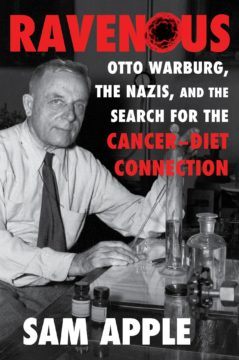
…Warburg’s research in the 1920s and 1930s into how living organisms transform fuel, in the form of oxygen and glucose, into energy made him one of the giants of biochemistry. When he won the Nobel Prize in Physiology or Medicine in 1931 for his discovery of the enzyme that triggers our cells to break down glucose molecules with oxygen, it capped a remarkable nine-year period in which he was nominated a total of 49 times. (That could explain his reaction on learning that he had won: “It’s about time.”). The research that Warburg is best known for today, and the work that forms the backbone of “Ravenous,” is his discovery that cancer cells behave differently from healthy cells in two very specific ways: They consume massive amounts of glucose — Apple compares them to ravenous shipwrecked sailors — and they eschew aerobic respiration in favor of fermentation.

…In the end, Warburg’s biggest sin seems to have been that he not only remained in Germany but survived. Apple ends the first chapter detailing Warburg’s life after the war with an anecdote about a dinner party in America during a 1949 trip that he hoped would result in employment. The greatest obstacle to achieving this goal, Apple writes, “might have finally dawned on Warburg” when the wife of a Caltech professor asked him why he’d remained in Germany “when the Nazis were doing such bad things.” The scene then played out: “‘I wanted to protect my co-workers,’ Warburg lied. ‘What could I have done?’ The woman had an idea: ‘You could have committed suicide!’ Warburg and the other dinner guests sat stunned. Someone had finally informed the Emperor of Dahlem of his missing clothes.”

More here.

Saturday Poem

Stone

De piedra, sangre

I make my own heaven. I drag it out of the streets, and inhospitable terrains.
I mixed “tabique”, brick, mortar with my hands, kneading,

I need, to make my own heaven.
It is clandestine, in broad daylight.

It’s microwave popcorn, from Costco, because Costco can cross the border
as many times as it wants and it has never been asked to go back to where it came from.

Not in this kitchen, scrubbed so clean, with bleach, that the roaches have to ask permission to scatter out onto the floor.

Sulema and I, don’t flinch. She has figured me out. We know we have lived some shit and now, it takes more than a cockroach to keep us from moving, forward.

Fuck the roaches, the military, the long nights and even longer days. There is popcorn to be made, a courtyard of children waiting for it.

Baby girl walks in to check on our progress. She is waiting impatiently for popcorn, the smell of butter making its way around the shelter, La Casa.
The house is built on a solid foundation of Goodyear tires, and unpacked, repacked, suitcases, unpacked, repacked plans.

Today, there is popcorn.
All that matters is today.
For my sake, not Sulema’s

The flowerbeds, and the upside-down Christmas trees, drying out in the sun are beautiful.

I will remember them, when I am warm by a campfire, watching my children for signs of a chill.
I will remember them, determined, uneven steps, protruding out of a hillside, going wherever they need to go.

Wherever they need to go.
There is no going back.
Sulema and I both know this, standing in the hot kitchen of the TJ shelter, it is obvious.
It is a beautiful truth, it takes hesitation and beats it down, into the floor.

We danced on it.

by Aideed Medina
from
Split This Rock