
Joe Klein in The New York Times:
 Through the spring and summer, I’ve been watching the daily maps of Covid-19 cases and vaccinations — the diagonal slash through Appalachia and the South to the Ozarks and Texas, where cases soared; the high vaccination rates in New England — and I’ve thought back to “ALBION’S SEED: FOUR BRITISH FOLKWAYS IN AMERICA,”” David Hackett Fischer’s classic history of British migration to colonial America, which was published in 1989 and explained these phenomena with a clarity that seems even more stunning today. The divide between maskers and anti-maskers, vaxxers and anti-vaxxers is as old as Plymouth Rock. It is deeper than politics; it is cultural.
The Appalachian hill country and much of the Deep South were settled by a wild caste of emigrants from the borderlands of Scotland and England. They brought their clannish, violent, independent culture, which had evolved over seven centuries of border warfare. They were, Fischer wrote, “a society of autonomous individuals who were unable to endure external control and incapable of restraining their rage against anyone who stood in the way.” The spirit of the Scots-Irish borderlanders could also be seen in the Jan. 6 insurrection at the Capitol; their ancestors staged the Whiskey Rebellion against the U.S. Constitution.
In New England, it was quite the opposite. “Order was an obsession” for the Puritan founders. Everything was regulated. Local selectmen had to report — that is, to spy — on the domestic tranquillity of every family in their jurisdiction. Cotton Mather defined an “honorable” person as one who was “studious, humble, patient, reserved and mortified.” These habits have lingered, too.
“Albion’s Seed” makes the brazen case that the tangled roots of America’s restless and contentious spirit can be found in the interplay of the distinctive societies and value systems brought by the British emigrations — the Puritans from East Anglia to New England; the Cavaliers (and their indentured servants) from Sussex and Wessex to Virginia; the Quakers from north-central England to the Delaware River valley; and the Scots-Irish from the borderlands to the Southern hill country.
More here.
 I arranged to meet Joan Didion in 1971 after reading
  The execution of any musical symphony is a difficult task, demanding significant skills from each musician. Perhaps the hardest task lies with the conductor who must orchestrate the musicians so the music comes alive cohesively and speaks to our deepest emotions. The human brain is like an orchestra: different regions perform different types of processing, much like the individual musicians who must read the music, play their instruments, and also listen and adapt to the sounds others make. Yet the conductor’s role is different from anything that occurs in the brain. Without a conductor, the music almost always fails – as the filmmaker Federico Fellini showed in Prova d’orchestra (1978), or Orchestra Rehearsal.
 A year ago, we sat down to write an unusual Goalkeepers Report. After years of steady progress on the United Nations’ Sustainable Development Goals (SDGs), the first wave of the COVID-19 pandemic was devastating families, health systems, and economies. We feared it was triggering an unprecedented reversal of progress across nearly every measure of health and prosperity that we track each year in this report.
 Several months after Charlottesville, as part of an exhibition at the New Museum, Bordowitz debuted Some Styles of Masculinity, a trio of improvised monologues on these figures and how they’d shaped him, how they’d enabled him to go off script and to cultivate a performance of gender that accounted for his particular understanding of race, ethnicity, and nationality. The monologues are sincere and hopeful, weird and campy. Bordowitz, who was born in 1964, returns to his roots: He performs under his Hebrew name, Benyamin Zev, fulfilling his longtime fantasy of hosting a variety show. He regards his own body—the way he speaks, stands, listens—as he describes how he became who he is: through worshiping Lou Reed, studying Lenny Bruce routines, absorbing Jewish liberation theology, and engaging in the confrontational, in-the-streets action of late-’80s AIDS activism. But he acts less like a pedagogue or narrator than the host of an off-kilter, otherworldly take on The Carol Burnett Show or The Dick Van Dyke Show. He addresses the audience, casting about for reactions, but he also looks past the crowd—and past the reader—for an audience that has yet to assemble.
 Six years in the making, “Surrealism Beyond Borders” has been organized by Stephanie D’Alessandro at the Met and Matthew Gale at Tate Modern in London, to which the show will travel next year. As in recent shows like
  In a new USC study on the health effects of a low-calorie diet that mimics fasting in the body, researchers found regular five-day cycles of the diet in mice seemed to counteract the detrimental effects of their usual high-fat, high-calorie diet. The study, published today in Nature Metabolism, analyzed the diet, health and lifespan of three different groups of mice over two years. The findings point to the potential of using a fasting-mimicking diet as “medicine,” according to the researchers. A fasting-mimicking diet, or FMD, is a low-calorie diet that “tricks” the body into a fasting state.
 After her first novel, The God of Small Things (1997), Arundhati Roy did not publish another for twenty years, when The Ministry of Utmost Happiness was released in 2017. The intervening decades were nonetheless filled with writing: essays on dams, displacement, and democracy, which appeared in newspapers and magazines such as Outlook, Frontline, and the Guardian, and were collected in volumes that quickly came to outnumber the novels. Most of these essays were compiled in 2019 in My Seditious Heart, which, with footnotes, comes to nearly a thousand pages; less than a year later she published nine new essays in Azadi.
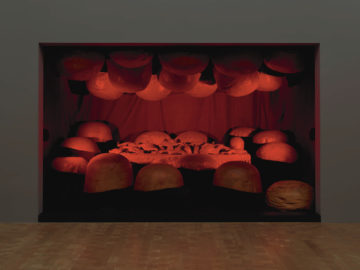 Kusama’s Narcissus Garden and Bourgeois’s Ventouse both feature gleaming globes on flat surfaces. And both, I believe, come from a similar place—the land of daddy complexes and phallic fetishes. (I’m not the first to notice some parallels between Kusama and Bourgeois; in 2017 Sotheby’s S|2 gallery in London presented a joint show, as did Peter Blum Gallery in 2001.)
 “I loved it when my tits or my cock or my asshole would destroy my own ego with their needs,” writes Dodie Bellamy in The Letters of Mina Harker. It’s true that these body parts and many others assert themselves vehemently throughout the text, which is already a riot of warring impulses and contradictory or just chorusing voices. Most writing strives to unify impulses, to find harmony between the heart (or whatever) and the mind, the corporeal and the spiritual, the story and its narrator. Dodie begins this book by disassembling that expectation, mocking it as she discards it, bringing it up again and again only to find it eternally lacking. Formal contrivance can never compete for long with what’s real and right in front of us. This book interrupts itself often to critique itself, or tell the story of its own creation, or take a break from itself to eat a snack, jerk off, begin again.
 With the price of Bitcoin reaching new highs, and El Salvador and Cuba deciding to accept it as legal tender, cryptocurrencies are here to stay. What implications will this have for money and politics?
 My inspiration for this essay comes from reading a paper entitled ‘
 For half a century the debate around nuclear energy has produced more heat than light, inspiring impassioned discourse on all sides. But given the many urgent imperatives for rapidly transitioning our energy systems from high- to low-carbon—and from centralized and vulnerable to decentralized and resilient—in the very near future, an even-handed, impartial reckoning with nuclear power is perhaps more important than ever.
 Nearly three years ago,