
Over at Behind the News, Doug Henwood moderates a debate between Peter Victor and Robert Pollin 0n whether economic growth is compatible with solving the climate crisis, starting at 24:00. (Also in the podcast, Sheryll Cashin, author of White Space, Black Hood, on the origins, mechanisms, and effects of residential segregation, mostly by race but also by class.)
Category: Archives
The Extractive Circuit
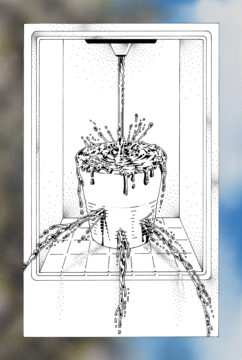 Ajay Singh Chaudhary in The Baffler (image © Jul Quanouai):
THE MACHINERY—THE ACTUAL FORM AND FUNCTION—of twenty-first-century capitalism is an extractive circuit which quite literally crisscrosses the world. Its global value chains stretch through physical infrastructure and “frictionless” financial flows at the speed allowed by fossil fuels; telecommunications; and geophysical, technological, psychosocial, and bodily limits and “optimizations.” It connects economically and ecologically dispossessed agricultural communities in the Global South with regimes of hyperwork in the Global North; rare earth “sacrifice zones” with refugees; migrant labor with social reproduction; ocean acidification and atmospheric carbon with profitable opportunity. It has required the transformation of states; it has ripped through biomes and through flesh. Capital often appears and is treated as a historical abstraction; this is doubly true of globalized, financialized capital. The extractive circuit is the leaden reality of a global human ecological niche organized for maximal profitability—no matter how difficult or costly to maintain. Its realities underscore the generalization of a colonial social relation in socioecological terms, even as older modes of imperialism and neocolonialism are hardly swept aside. Its speed, frenzy, coercion, and brutality reach into the very heart of the imperial metropole, far beyond where such relations were already present. Feelings of exhaustion—depression, desperation, fatigue, exasperation—course through its wirings, neurons, biochemicals, and sinews.
At every “node” along such a circuit, “inputs”—ecological, political, social, individual—are extracted and “exhausted.”
More here.
Manufacturing Stagnation
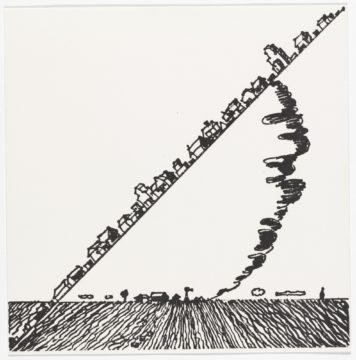 Herman Mark Schwartz in Phenomenal World:
$5.3 trillion of US federal government stimulus and relief spending have returned the economy to its pre-Covid growth trajectory. But that growth trajectory was hardly robust—either before or after the 2008 financial crisis. Nor was the slow decay of GDP growth rates unique to America. In the aggregate, the seven largest rich economies—the G7, composed of the US, Japan, Germany, France, Britain, Italy and Canada—saw growth in real per capita gross domestic product (GDP) slip by more than half from the 1980s to the 2010s.
Economists have called this slowdown “secular stagnation.” Secular stagnation is a seemingly permanent era of slower growth in productivity, investment, and output, and therefore also in per capita income. The Great Depression of the 1930s provoked the first debate about secular stagnation, which pitted John Maynard Keynes and Michał Kalecki against Joseph Schumpeter. The former saw idle workers and idle industrial capacity and called for aggressive fiscal policy and state-directed investment to restore growth. The latter saw idle capacity as evidence of over-investment and too high wages and called for liquidation of struggling firms and cuts in nominal wages.
More here.
Saturday Poem
A New Bapu
Would take to Twitter like fish to water
But grow out of it
And use it as a protest tool.
Once in a while, he would take breaks with vows of silence.
He would use the extra time
To sort out, ends and means
The broken strings.
He would be wise to know
Greed remains greed and power is now
Like electricity, everywhere,
From the clerk to the high heavens.
He would look for a place to start—
And it would be with himself.
Cleaning the toilet on a weekday,
Making plants grow with bare hands.
Not using a sensor to figure it out.
He would be wary of AI, robots, anything that takes the mind away.
They take the soul out, he would say.
But he would take to planes more easily, for the utility.
He would still write letters, with a fountain pen
And send postcards, to children.
He would recycle paper and look inside, for answers.
He would be worried about
Climate change.
He would pass the street and you wouldn’t even know.
He would travel incognito.
by Amlanjvoti Goswami
from Rattle Magazine, #73, Fall 2021
Ed. Note- Bapu: Spiritual father
The Singularity Is Here
Ayad Akhtar in The Atlantic:
 Something unnatural is afoot. Our affinities are increasingly no longer our own, but rather are selected for us for the purpose of automated economic gain. The automation of our cognition and the predictive power of technology to monetize our behavior, indeed our very thinking, is transforming not only our societies and discourse with one another, but also our very neurochemistry. It is a late chapter of a larger story, about the deepening incursion of mercantile thinking into the groundwater of our philosophical ideals. This technology is no longer just shaping the world around us, but actively remaking us from within.
That we are subject to the dominion of endless digital surveillance is not news. And yet, the sheer scale of the domination continues to defy our imaginative embrace. Virtually everything we do, everything we are, is transmuted now into digital information. Our movements in space, our breathing at night, our expenditures and viewing habits, our internet searches, our conversations in the kitchen and in the bedroom—all of it observed by no one in particular, all of it reduced to data parsed for the patterns that will predict our purchases.
But the model isn’t simply predictive. It influences us. Daniel Kahneman’s seminal work in behavioral psychology has demonstrated the effectiveness of unconscious priming. Whether or not you are aware that you’ve seen a word, that word affects your decision making. This is the reason the technology works so well. The regime of screens that now comprises much of the surface area of our daily cognition operates as a delivery system for unconscious priming. Otherwise known as advertising technology, this is the system behind the website banners, the promotions tab in your Gmail, the Instagram Story you swipe through, the brand names glanced at in email headings, the words and images insinuated between posts in feeds of various sorts. The ads we don’t particularly pay attention to shape us more than we know, part of the array of the platforms’ sensory stimuli, all working in concert to adhere us more completely.
More here.
The Critic Elizabeth Hardwick Was Very Tough on Biographies. Now Here’s One of Her.
Jennifer Szalai in The New York Times:
 To be a literary biographer is to court the extravagant ridicule of the very people you write about. For all of the salutary services a writer’s biography can offer — the tracing of the life, the contextualizing of the work, the resuscitation of a reputation and the deliverance from neglect — the biographer has been derided as a “post-mortem exploiter” (Henry James) and a “professional burglar” (Janet Malcolm).
The critic Elizabeth Hardwick called biography “a scrofulous cottage industry,” adding that it was rarely redeemed by “some equity between the subject and the author.” One biographer of Ernest Hemingway, Hardwick wrote, seemed so enamored of “his access to the raw materials” that he produced “only an accumulation, a heap.” Similarly, a book about Katherine Anne Porter was larded with “an accumulation of the facts,” which had “the effect of a crushing army.”
A warning, then, was probably in order for Cathy Curtis, the author of “A Splendid Intelligence: The Life of Elizabeth Hardwick.”
…The ’70s turned out to be an extraordinarily productive time for Hardwick — a decade when she wrote the essays on women and literature that were collected in “Seduction and Betrayal,” and when she polished the scenes that she collaged into “Sleepless Nights.” Curtis assiduously chronicles the literary panels, the gossip and the ailments of Hardwick’s later years, before she died in 2007, observing the rhythms of Hardwick’s work while never quite falling into sync with them. But then a march is different from a dance, even if each has its own choreography. When Hardwick was in her late 80s and still writing, she was asked why writers stop. “Writing is so hard,” she said. “It’s the only time in your life when you have to think.”
More here.
Friday, November 5, 2021
A sweeping new history of humanity upends the story of civilization
Emily M. Kern in the Boston Review:
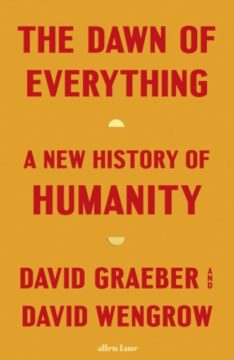 The standard history of humanity goes something like this. Roughly 300,000 to 200,000 years ago, Homo sapiens first evolved somewhere on the African continent. Over the next 100,000 to 150,000 years, this sturdy, adaptable species moved into new regions, first on its home continent and then into other parts of the globe. These early humans shaped flint and other stones into cutting blades of increasing complexity and used their tools to hunt the mega-fauna of the Pleistocene era. Sometimes, they immortalized these hunts—carved on rock faces or painted in glorious murals across the walls and ceilings of caves in places like Sulawesi, Chauvet, and Lascaux.
Then, some 10,000 years ago, humans began to farm, exchanging their gathering and hunting for domestication and permanent settlement. Communities grew denser and more complex, requiring strong leadership to manage resources effectively, and systems of writing to keep track of who produced what. This was a bad deal for farmers, who now had to work much longer hours in the fields than they had as hunters and foragers, but also produced a surplus of food that allowed other members of the community to specialize in new work, as craftspeople, priests, scribes, and accountants. Eventually, the first states emerged to coordinate the complex social arrangements that ensued and to defend their populations against other competitors. Ultimately those states became incorporated into the early empires of the ancient world, establishing humankind on the path towards the present day. From humanization, we get agriculture; from agriculture, we get science; through science, we get the modern world.
More here.
How to Fight Ocean Plastic
Tomas Pueyo in Uncharted Territories:
Plastic is everywhere.
It’s in the food you eat.
It’s in the water you drink.
It’s in the air you breathe.
And not just a bit.
You eat a credit card’s worth of plastic a week.
Your body is replete with it.
How does it affect you? We know nothing.
It might make you sterile or accelerate puberty.
It might give you cancer or make you obese.
And a lot of it comes from plastic at sea.
Millions of tons of it, killing millions of birds and fish.
Here’s a rundown of where it comes from and where it goes, how it kills animals, how it ends up in your gut, and what you can do about it.
More here.
Ben Shapiro and Ana Kasparian debate critical race theory, socialism vs. capitalism, bias in news media, and more
The politics of rebranding
Kenan Malik in Pandaemonium:
 It’s easy to mock the Corporation Formerly Known As Facebook. Mark Zuckerberg’s announcement that Facebook would henceforth be Meta, and his attempt to swerve the intensifying assault on his company’s sordid activities with a nifty bit of rebranding, is worthy of all the ridicule that’s been heaped on it.
And yet, when the laughter has faded, we might also reflect on the fact that the Zuckerberg manoeuvre is a feature not of a particular company but of our age. Rebranding has become the norm, not just in business but in politics and social activism too. And, as with Facebook (or Meta), we live in a world in which form is often seen as more important than content and the symbolic is elevated over the material.
In 1995, the political philosopher Nancy Fraser warned that too often “cultural recognition displaces socio-economic redistribution as the remedy for injustice and the goal of political struggle”. Quarter of a century on and struggles for equality and social justice have become even more centred around the cultural and the symbolic, whether tussles over identities or controversies over statues, rather than on wages, housing or material deprivation.
More here.
In Our Time: The Song of Roland
https://www.youtube.com/watch?v=B6VIcUEn9CM
José Revueltas: The Excommunicated Communist
Mathew Glesson at the LARB:
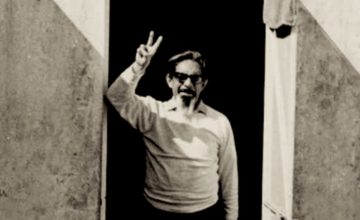 A LITTLE OVER halfway through his 1943 novel El luto humano (Human Mourning), the Mexican writer José Revueltas inserts himself as a character so unobtrusively that it’s easy to miss. A government go-between, when hiring an assassin to kill the leader of an agricultural strike, complains, “First there was the agitation sown by José de Arcos, Revueltas, Salazar, García, and the other Communists. […] And now all over again…” It’s a sly wink at the fact that the novel’s scenario overlaps with the author’s life; it also foreshadows the way that Revueltas’s place in Mexican letters today is inextricably entwined with his dramatic biography.
Revueltas is a contradictory figure: titanic, maybe even canonical, yet at the same time obscure, underground, and seemingly impossible for literary society to fully assimilate without indigestion.
more here.
Magritte: A Life
Charles Darwent at Literary Review:
 The instant recognisability of Magritte’s work has its roots not in his training at the Académie Royale des Beaux-Arts in Brussels from 1916 to 1918 but in his postwar work as a draughtsman in the city from 1922 to 1926. During this time he made artworks for advertising companies and designed wallpaper and posters. The skills garnered from the first two of these are immediately evident in Golconda, now in the Menil Collection in Houston, Texas. The bowler-hatted men, part Thomson and Thompson, part Gilbert and George, are as obviously Magritte’s logo as the part-eaten apple is that of a certain American computer giant. His eye for pattern was also acute. Golconda would make lovely wallpaper, and no doubt has.
The Menil’s Golconda is an anomaly in being unique, hand-made and identifiable – an autograph work. It is the millions of mass-printed posters of the picture that are arguably the real Golconda, banal and yet everywhere, like the little grey men they depict.
more here.
Friday Poem
Sin in my Seventh Year
I own,
in varying degrees,
to the seven deadly sins
– and countless others, more trivial,
but now,
in my three score and tenth year,
I confess, above all, to pride.
I am not too proud
for hand-me-downs and handouts
and even, on occasion, helpful advice.
I am not proud of my looks,
– that was long ago,
nor of my accomplishments,
save that I have survived.
I have no pride of possessions,
all are impermanent and mutable,
nor of my intellect which, like my body,
is swiftly succumbing to the indignities of age.
I might take pride in the kind hearts of my children but,
fearing the jealousy of the gods,
I shall keep silent,
But I am proud,
fiercely and joyously proud,
simply of being here,
of existing at this time and place
in the continuum of consciousness,
as witness and participant.
I am proud that I have been summoned by the universe,
to learn its workings,
to serve the great work as lover and beloved.
I am so proud to be a drop in the bucket of totality,
a spark in the blazing glory of creation.
I am proud, beyond measure,
like a freshman at the senior prom,
of having been invited to the dance.
by Linda M. Stitt
from: Passionate Intensity
Single molecule controls unusual ants’ switch from worker to queen-like status
From Phys.Org:
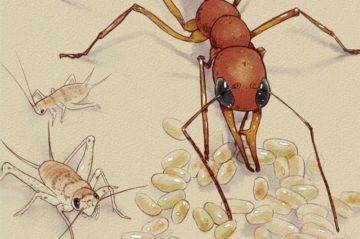 Depending on the outcome of social conflicts, ants of the species Harpegnathos saltator do something unusual: they can switch from a worker to a queen-like status known as gamergate. Now, researchers reporting in the journal Cell on November 4th have made the surprising discovery that a single protein, called Kr-h1 (Krüppel homolog 1), responds to socially regulated hormones to orchestrate this complex social transition.
“Animal brains are plastic; that is, they can change their structure and function in response to the environment,” says Roberto Bonasio of the University of Pennsylvania Perelman School of Medicine. “This process, which also takes place in human brains—think about the changes in behavior during adolescence—is crucial to survival, but the molecular mechanisms that control it are not fully understood. We determined that, in ants, Kr-h1 curbs brains’ plasticity by preventing inappropriate gene activation.”
In an ant colony, workers maintain the colony by finding food and fighting invaders, whereas the queen’s main task is to lay eggs. And, yet, it is the same genetic instructions that give rise to these very different social roles and behaviors. By studying ants, Bonasio and colleagues, including Shelley Berger, also at the University of Pennsylvania, wanted to understand how turning certain genes “on” or “off” affects brain function and behavior. Because Harpegnathos adults can switch from a worker to a gamergate, they were perfect for such studies.
More here.
Friends in High Places
Madame De La Fayette in 1558 from Lapham’s Quarterly:
 “Ever since I have been at court,” exclaimed the vidame, “the queen has always treated me with much distinction and amiability, and I have reason to believe she has had a kindly feeling for me. Yet there was nothing marked about it, and I had never dreamed of other feelings toward me than those of respect. I was even much in love with Madame de Themines. The sight of her is enough to prove that a man can have a great deal of love for her when she loves him—and she loved me.
“Nearly two years ago, when the court was at Fontainebleau, I happened to talk with the queen two or three times when very few people were there. It seemed to me that I pleased her and that she was interested in all I said. One day especially we were talking about confidence. I said I did not confide wholly in anyone; that one always repented absolute unreserve sooner or later; and that I knew a number of things of which I had never spoken to anyone. The queen said she thought better of me for that; that she had not found anyone in France who had any reserve; and that this had troubled her greatly, because it had prevented her confiding in anyone; that one must have somebody to talk to, especially persons of her rank. The following days she several times resumed the same conversation and told me many tolerably secret things that were happening. At last it seemed to me that she wanted to test my reserve and wished to entrust me with some of her own secrets. This thought attached me to her. I was flattered by the distinction, and I paid her my court with more assiduity than usual. One evening, when the king and all the ladies had gone out to ride in the forest, she remained at home, because she did not feel well, and I stayed with her. She went down to the edge of the pond and let go of the equerry’s hand, to walk more freely. After she had made a few turns, she came near me and bade me follow her. ‘I want to speak to you,’ she said, ‘and you will see from what I wish to say that I am a friend of yours.’ Then she stopped and gazed at me intently. ‘You are in love,’ she went on, ‘and because you do not confide in anyone, you think your love is not known. But it is known even to the persons interested. You are watched. It is known where you see your mistress; a plan has been made to surprise you. I do not know who she is, I do not ask you. I only wish to save you from the misfortunes into which you may fall.’ Observe, please, the snare the queen set for me, and how difficult it was to escape it. She wanted to find out whether I was in love, and by not asking with whom, and by showing that her sole intention was to aid me, she prevented my thinking that she was speaking to me from curiosity or with premeditation.
More here.
Thursday, November 4, 2021
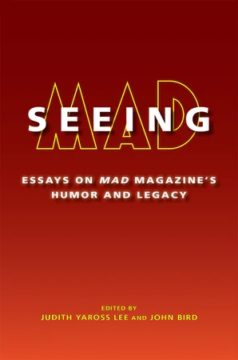
Essays on Mad Magazine’s Humor and Legacy
Thomas Larson in Another Chicago Magazine:
 In 1966, I was a junior at St. Louis’s Kirkwood High. After the teachers let us monkeys out at 2:50, I lazed about, often trekking to a friend’s home to talk antiwar politics or Salinger stories. I was a serious kid, some days lying on one of the twin beds in Ken Klotz’s room (his unlucky brother off in Vietnam) where we were hypnotized by Bob Dylan’s Blonde on Blonde and the literary dazzle of “Visions of Johanna”: “The ghost of electricity howls from the bones of her face.” But then some days I needed a break.
I got one hanging out with Clay Benton. Clay, a wunderkind with a reel-to-reel tape machine, recorded parodies of Superman—the Caped Crusader of comic book, radio drama, TV show. His sendup was Space-O-Ace Man, a half-doofus, half-hippie hero who also flew in to fight crime but whose dorky moves ruined everything. After he and I roughed up a script, we’d record a show with daffy voices and sound effects. We mimicked a big-bosomed girl Clay and I salivated over in class, who needed rescuing. We shielded her from Ming the Merciless with our own bodies in response to her cries of Help!
More here.
Exploding batteries are a killer problem for everyone
Thursday Poem
Where Do You Search For Me, Man
Where do you search for me, Man, I am here next to you.
Not in pilgrimage, nor in idols, no, nor in your solitude either
I am not in your temple, not in a mosque, nor in the Kaaba, no, not in Benaras
I am here next to you, Man, I am here next to you.
I am not in meditation, not in austerity, not in asceticism, not in trances
I do not reside in actions nor in inaction, no, not in renunciation
I am here next to you, Man, I am here next to you.
I am not in the nether regions, nor in the celestial skies above
I am not manifest nor hidden, I am not in the breath of all breaths
I am here next to you, Man, I am here next to you.
Search for me and I am yours to find, now, in one instant of search
Says Kabir listen O wise Man: I am present, always, in your faith.
I am here next to you, Man, I am here next to you.
by Kabir
translation by: Ajit Dutta
***
Moko Kahan Dhundhe re Bande
Moko Kahan Dhundhe re Bande, Main To Tere Paas Mein
Na Teerath Mein, Na Moorat Mein Na Ekant Niwas Mein
Na Mandir Mein, Na Masjid Mein Na Kabe Kailas Mein
Mein To Tere Paas Mein Bande Mein To Tere Paas Mein
Na Mein Jap Mein, Na Mein Tap Mein Na Mein Bhrat Upvaas Mein
Na Mein Kiriya Karm Mein Rehta Nahin Jog Sanyas Mein
Mein To Tere Paas Mein Bande Mein To Tere Paas Mein
Nahin Pran Mein Nahin Pind Mein Na Brahmand Akas Mein
Na Mein Prakuti Prawar Gufa Mein Nahin Swasan Ki Swans Mein
Mein To Tere Paas Mein Bande Mein To Tere Paas Mein
Khoji Hoye Turat Mil Jaoon Ik Pal Ki Talas Mein
Kahet Kabir Suno Bhai Sadho Mein To Hun Viswas Mein
Mein To Tere Paas Mein Bande Mein To Tere Paas Mein
Kabir
Czeslaw Milosz: The Sweep of Time