On Judy Chicago’s ‘Forever de Young’

Dodie Bellamy at Artforum:
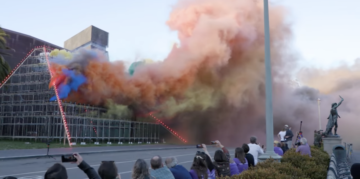
GIDDY FROM SIPPING FLUTES of the de Young Museum’s prosecco, my friend Karen and I quickly realized that from the VIP section, the view of Judy Chicago’s smoke sculpture, Forever de Young, was going to suck. Since we were standing to the side of the huge pyramid-shaped scaffolding that was holding the canisters of colored pigments that would be “released” into the air, we knew we would not be able to see the whole picture. We scanned for a better vantage point but were cordoned off, and the rest of the crowd formed a dense mass that looked impossible to insert ourselves into. So we hunkered down with museum patrons and low-level journalists, and waited, as the de Young instructed us, for Chicago to “pull the trigger at just the right moment” and set the extravaganza in motion.

Until I got here, I wasn’t sure the event was going to happen. Last March, Chicago’s Living Smoke performance in Palm Desert was cancelled because of environmental concerns.

more here.
Kwame Anthony Appiah, The Art of Nonfiction No. 10

Interview with David Remnick in The Paris Review:

Fifty years ago, at a harp recital in Gloucester­shire, a retired British military officer with a clipped aristo accent came across a brown-skinned teenager. “I say, old chap, do you speak English?” the officer said. As a story in Yale’s New Journal recounted, the young man—Kwame Anthony Akroma-Ampim Kusi Appiah—replied, “Why don’t you ask my grandmother?”
“Who, may I ask, is your grandmother?” the retired officer said.

“Lady Cripps.”

Lady Cripps was Isobel Cripps, the widow of Sir Stafford Cripps, a Christian socialist and Labour politician who had been chancellor of the exchequer and the Crown’s ambassador to the Soviet Union; he was known for his stalwart desire to relinquish Britain’s imperial possessions, from Calcutta to Accra. In 1953, the year of Queen Elizabeth II’s coronation, Stafford and Isobel’s daughter Peggy married Joe Appiah, kinsman of Ashanti kings and a leader of the Ghanaian independence movement. (The marriage would help inspire the film Guess Who’s Coming to Dinner.) A year later, the Appiahs’ first child and only son was born.

When Anthony was growing up in Kumasi, the capital of the Ashanti region of Ghana, the Appiah household was a locus of political and literary conversation. Among the visitors were the historian and activist C. L. R. James, the Pan-Africanist George Padmore, and the novelist Richard Wright. Joe Appiah instilled in his son a sense of global citizenship and family honor. As Anthony once wrote, “I found myself remembering my father’s parting words, years ago, when I was a student leaving home for Cambridge—I would not see him again for six months or more. I kissed him in farewell, and, as I stood waiting by the bed for his final benediction, he peered at me over his newspaper, his glasses balanced on the tip of his nose, and pronounced: ‘Do not disgrace the family name.’ Then he returned to his reading.”

More here.

Should Booster Shots Be Required? This Covid question played out long ago, in the fight against smallpox in 1872

Mark Fischetti in Scientific American:

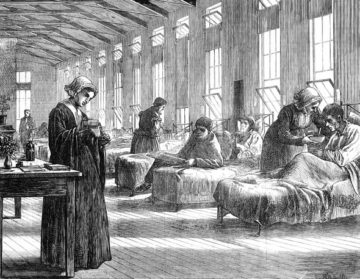
Vaccine booster shots for COVID have recently been approved and are being rolled out widely. Wariness about boosters is still evident, however, along with debate over whether vaccinations should be required. All this seems new to us in 2021, but a similar situation played out in the U.S. and globally way back in 1872, when smallpox was raging. Scientific American published an article about the science, fears and debate over “revaccination”—boosters—and the discussion then is eerily parallel to the COVID discourse right now.

The article is reprinted below; it is a fascinating and pretty quick read. The alarming disease was spreading, people were afraid of contagion, the sick were being quarantined, and notably, there was great worry about a variant that could make smallpox much more deadly. Data from Prussia, where law required revaccination every seven years, showed that death by smallpox was rare, compared with higher rates in other parts of the world, so the editors expressed support for revaccination. Scientists were trying to determine how long to wait after initial inoculation before boosters were given. The editors also said that if there were a law requiring vaccination and revaccination, that action could end the scourge, yet they wondered whether such a law could be enforced.

More here.

Tuesday Poem

Different Names for Lamotrigine

—after Sam Sax

Bitter thing—swallowed
…….. with bread, cake,
a curtain of water closing my throat,
……..anything to keep from tasting
the slight in my magician’s hand.
……..Magic is any science
you do not understand. So, too,
……..is God. Faith is
the way I trust the bitter taste will
……..turn me sweet; prayer
is how I start every day with it
……..on my tongue
before any lover, before opening
……..the window to let
the morning sun make shadows
……..where there were none
before. My body is a haunted house
……..cracking under
its own weight. Love is anything that
……..banishes the ghosts.

by Jaz Sufi
from
Pank Magazine, poetry 13.1, 2018

Sunday, October 31, 2021

Trick and Treat: The hope, dread, and farce of communicating with the dead

Gerald Early in The Common Reader:

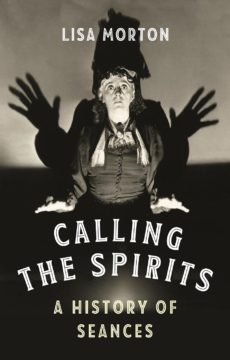
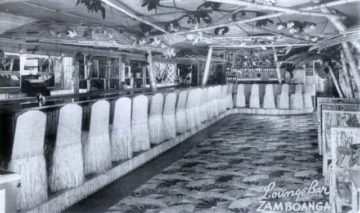
As Lisa Morton notes in Calling the Spirits: A History of Seances, there is not a shred of scientific evidence that proves the existence of spirits or any ability on our part or theirs, if they did exist, that we can communicate with them. (298) Despite this, there is hardly a culture or people on earth that has not or does not believe in a spiritual life of some sort after death and that does not have some sort of ritual conducted by a “specialist” to communicate with the dead. Human beings are convinced, and have been throughout history, that there is an afterlife, that death is not the end but simply a gateway to more life, and that this afterlife has some profound effect upon those still living this life. What this pervasive belief shows is:
• First, that we cannot imagine non-existence or fervently do not want to; for us, life only begets more life, good or gruesome, material or trans-material.

• Second, that there is an essential loneliness about human existence that makes us want to be surrounded by ghosts, spirits, gods, and the like who mean us either good or harm; to be alone frightens us more than evil spirits do.

• Third, that science has far less influence on our thinking than we might claim, that science has its limits in our understanding and shaping of the real and the unreal, that we believe we live in a world that requires propitiation as much as it does governance and stewardship, a world that remains as much supernatural as it is natural.

More here.

Notes on Class, Anxiety, and Class Anxiety

Justin E. H. Smith in his Substack newsletter, Hinternet:

If my father occasionally enjoyed falsifying his ancestry for a bit of role-playing fun on the French Riviera (I don’t believe it ever went very far, though he may once have gained admission with this ruse to a party at the vacation home of Sally Jessy Raphael), I have tended to adopt the opposite evolutionary strategy as I move through rather different social circles than those I may once have been expected to end up in. When an animal is threatened, it can puff itself up to appear even more threatening than its adversary, as a cat does; or it can lie prostrate like an opossum, even generating from within its living body the stench of death itself. While I have never been so desperate as to slip into thanatosis, I have often gone out of my way to imply, in rarefied social settings, that my own origins “stink”, that I come from the pure stock of Dustbowl migrants, from a sort of topsy-turvy farce of aristocracy in which you convince others that you are somebody precisely by establishing that you are descended from absolutely nobody.

This is both a useful strategy for social advancement —“What a wonder”, you can easily get people to think, as they might when confronted by a talking dog (like the one G. W. Leibniz went to investigate in a German peasant village that could say thécafé, and chocolat, thus not only being gifted with human speech, but somehow turning out Francophone), when you have established that you are an American who speaks French without ever having gone to boarding school in Switzerland or otherwise been thrust into a privileged bicultural setting in early childhood—; and, as Seneca reminds us, coming from nowhere —nowhere but the gods— is also the only genealogy worthy of a philosopher.

More here.

Why I Still Believe Covid-19 Could Not Have Originated in a Lab

Wendy Orent in Undark:

Many writers and researchers suggested that the presence of a high-containment laboratory in Wuhan, the Wuhan Institute of Virology, could point to a laboratory origin for the pandemic: a bioweapons experiment; or gain-of-function research, in which genetic manipulation adds some new feature to an existing germ; or simply the laboratory escape of a lethal bat virus. Since many lab escapes have happened in the past, some argue, a lab leak is a plausible explanation for this devastating explosion of disease. While a team convened by the World Health Organization declared in March that a lab leak was “extremely unlikely” and suggested wildlife farms that supplied the market could be the culprit, a new group of scientists is now set to revisit the issue.
Still, there remains, as of this writing, no physical evidence linking the pandemic’s origins with a laboratory escape. And furthermore, from a logical and evolutionary viewpoint, there is something fundamentally wrong with all lab-leak arguments.

More here.

The journalist who foretold the opioid epidemic sounds the alarm on the next wave

Harriet Ryan in the Los Angeles Times:

When journalist Sam Quinones went looking for a buyer for the book that became “Dreamland” a decade ago, there was little interest. Only one publisher was interested in the story of an Ohio everytown savaged first by painkiller-pushing Purdue Pharma and then by Mexican black-tar heroin cartels.

“Nobody really knew what an opioid was,” recalled Quinones, who at the time was a Los Angeles Times staff writer.

The 2015 book became a commercial and critical hit, winning a National Book Critics Circle award. Others followed with works about the opioid epidemic, including Beth Macy’s “Dopesick,” now a Hulu series, and Patrick Radden Keefe’s “Empire of Pain,” about Purdue’s owners, the Sackler family. The company eventually crumbled into bankruptcy under the weight of thousands of lawsuits.

More here.

It’s terrible the things I have to do to be me

Philippa Snow in The White Review:

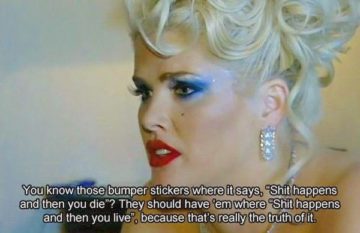
Here was a woman who had modelled her life so closely on Marilyn Monroe’s that doing so eventually helped drive her to her death – the blonde waves and the fake breasts; the pill addictions and the airheaded pronouncements about men and sex and diamonds; the years spent tumbling down the rabbit-hole in search of somebody with cash willing to play at being Daddy; the PLAYBOY cover and centrefold, and the unwise sexual exhibitionism, and the occasional moments of bleak honesty that nodded at some formative abuse – and yet still she achieved twice the thing that Monroe never did: for four days, from 7 September 2006 to 10 September 2006, Anna Nicole Smith was a mother to two children. As it had for Monroe, who confessed in her last year that she had wanted children ‘more than anything’, motherhood held as much significance for Smith as big-time fame did, her desire to be the world’s hottest chick only commensurate with her certainty that she should procreate. ‘I’m either going to be a very good, very famous movie star and model,’ Smith told ENTERTAINMENT WEEKLY at the height of her success, in 1994, ‘or I’m going to have a bunch of kids. I would miss having a career, but I’ve done my acting, and I’ve done my modelling. I’ve done everything I wanted to do.’ She did not become a great actor, even if for a short time she was one of the biggest models on earth. She did not make it to 40, even though she outlived Monroe by 3 sad, medicated years, dying at the Hard Rock Hotel in Florida at just 39 years old, in 2007.
One thing she did make was herself. Vickie Lynn Hogan, born 28 November 1967, was a flat-chested brunette. At five, she announced her intention to become a supermodel; shortly after, she revised her statement and suggested that, in fact, the thing she really wanted to be was the reincarnation of Marilyn Monroe. (Not an impersonator, note, or an entirely different starlet who took Monroe as her inspiration: the same woman, occupying the same body, not to mention the same obviously troubled mental space.)

More here.

For Harry Houdini, Séances and Spiritualism Were Just an Illusion

Bryan Greene in Smithsonian:

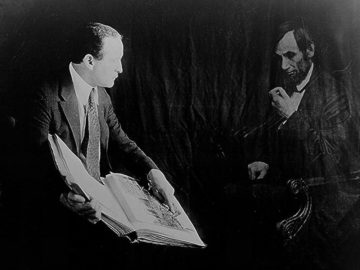
Harry Houdini was just 52 when he died on Halloween in 1926, succumbing to peritonitis caused by a ruptured appendix. Famous in life for his improbable escapes from physical constraints, the illusionist promised his wife, Bess, that—if at all possible—he would also slip the shackles of death to send her a coded message from the beyond. Over the next ten years, Bess hosted annual séances to see if the so-called Handcuff King would come through with an encore performance from the spirit world. But on Halloween 1936, she finally gave up, declaring to the world, “Houdini did not come through. … I do not believe that Houdini can come back to me, or to anyone.”

Despite Bess’ lack of success, the Houdini séance ritual persists to this day. Though visitors are banned from visiting the magician’s grave on Halloween, devotees continue to gather for the tradition elsewhere. Ever the attention-seeker in life, Houdini would be honored that admirers are still marking the anniversary of his death after 95 years. He’d likely be mortified, however, to learn that these remembrances take the form of a séance.

More here.

Sunday Poem

Time – “twixt sleep and wake”

Body comfortable in a cocoon of quilt.
Spirit, free to travel, lands on a clearing
between wood’s-edge and woodpile.
Early morning. Snow, blue with night,
red-orange touch of morning.

A fox on his way home trots by leaving
a trail of footsteps one could follow
if one were interested in history. I leave
no footsteps, but fox looks my way, nods,
and sets off about his business. Why
am I here? I wonder, then see in a cairn
a Buddha, serene as surrounding stone,
present to snow, woods, fox, – me.

by Nils Peterson

Saturday, October 30, 2021

Teju Cole’s Tour of the Shadows

Cora Currier in The New Republic:

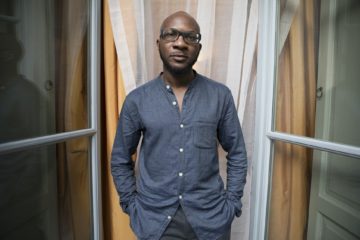
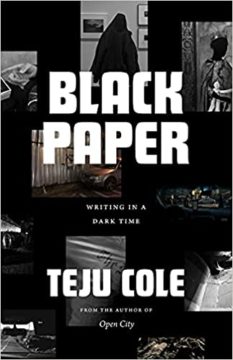
Each thing has its shadow: the name of the baroque painter Caravaggio, which reads “like two words conjoined”—the painterly technique of chiaroscuro and braggadocio, or boastfulness; the Danish philosopher Ludvig Holberg and the slave ships he invested in; Rilke’s famous poem about a caged panther and his less-known, startlingly racist verses about caged Ashanti people. In his new essay collection Black Paper: Writing in a Dark Time, the Nigerian American novelist and critic Teju Cole explores the flickering of light and shadow in photography, classical music, painting, and literature, and applies the same theme to elegies for departed friends, artists, and intellectuals, and the kind of rambling but penetrating meditations on cities that have characterized his novels.

Largely focused on photography (Cole is a photographer himself and frequent photography critic), these essays also encompass migration, the history of slavery, Trump’s presidency, “African” as an identity, and the movie Black Panther. Cole often goes to places where the conventional connotations of light and dark reverse: the harsh, cheapening, glare of photography, for instance, in moments when the camera is unwelcome or the instant he discovers the Sesotho word serithi, which can mean “shadow” but also “aura,” “dignity,” “presence,” or “confidence.” The word black, with all its shades and connotations, provides a through line in what might otherwise be an impossibly abstract conceit for a book. The title refers to the making of carbon copies, where “black transported the meaning” from page to page; Cole is intent on finding meaning in the dark. These things shadow Cole’s work: the exclusion of people from nations and from personhood and the sense that art cannot possibly do enough. What lights his way is his certainty that, on occasion, it can.

More here.

Who Owns Our Data?

Aziz Z. Huq in Boston Review:

Published almost a century ago, Upton Sinclair’s novel Oil! offered readers a vivid panorama of speculators’ scramble to acquire western lands and then dig for petroleum at all costs. Sinclair’s portrayal spared nothing: the trickery and deceit used to acquire land, the bribes doled out to coax favorable policies from President Harding’s Washington circle, or the insidious, symbiotic relationship between the industry and American empire. The rapacious quest for capitalist profits from oil, Sinclair decried, was “crippling the bodies of men and women, and luring the nations to destruction by visions of unearned wealth, and the opportunity to enslave and exploit labor.”

Today there is a new rush to extract and exploit a previously untapped asset. The financial rewards from this asset are so great that pundits have rushed to dub it a “new oil.” But rather than tapping the remains of ancient algae and zooplankton, we produce this asset through our daily jaunts across social networks such as Facebook and TikTok. We exude it when we browse the Internet, triggering electronic tracking “cookies” that advertisers have cunningly strewn across the web. It is pumped forth from our muscles as soon as we strap on a Fitbit or turn on a directional service while walking or driving to work or school. And increasingly, it will bubble up from “smart” devices laced through our homes, neighborhoods, and cities, many with the capacity to geolocate and track our actions and habits.

The slightly misleading name for this resource is “personal data.” Whether handed over intentionally or unwittingly, it captured by social media, cookies, and the internet of things captures, second-by-second now, granular details of behavior, temperament, and even thinking. It is an enormously valuable asset because it can be used to draw inferences not just about the expected future behavior of the producing subject.

More here.

The Fearlessness of Passing

PASSING – (L-R) RUTH NEGGA as CLARE and TESSA THOMPSON as IRENE. Cr: Netflix © 2021

Charles Taylor in Dissent:

Making a movie of Nella Larsen’s 1929 novel Passing, one of the great works of the Harlem Renaissance—and, I’d argue, a great American novel—would be tricky in any era. That the actress Rebecca Hall, making her directing debut, has done a close-to-devastating job of it in this era is a remarkable achievement.

The novel is the story of two girlhood friends who reencounter each other as young, married women, one passing for white and the other firmly settled into the life of Harlem’s black bourgeoisie. Larsen practically invites the careless reader to fall into well-intentioned sociological clichés—in other words, to believe that this is a novel about the tragedy that befalls those who, driven by racist persecution, cross the color line and betray their own.

Actually, the novel is about the absurdity of the color line as a concept, about race as “the thing that bound and suffocated.” For Larsen, the idea that you could betray your race was another way of saying that people should stick to their own kind. It’s the passing Clare, a slim, pale-skinned, heedless beauty, who is Larsen’s heroine. Clare, taken in as a maid by her poor white aunts when her alcoholic father dies, doesn’t decide to pass because she’s oppressed but because she’s shunned by the well-heeled black people among whom she grew up. (In one stinging scene, Clare, already passing, approaches an old school friend whom she recognizes while shopping in Marshall Field’s, only to have the woman cut her dead.) Clare is hungry for life and for pleasure, which she takes as it comes to her. The way in which she crosses back and forth between black and white, between the thrill of a Negro Welfare League dance and white upper-middle-class society, makes a hash of the polite segregation—of both race and class—to which the novel’s other protagonist, Irene, pays obeisance.

More here.

‘Black Paper’ by Teju Cole

Simukai Chigudu at The Guardian:

A young Gambian man, let’s call him D, waits in Syracuse. He arrived in Italy eight months previously, having been smuggled into the country by boat from Libya. D has an easy-going, intelligent manner – an unexpected grace given what he has endured. At a rendezvous with his companion for the afternoon, Teju Cole, D confesses that he has never set foot in a church: he was raised Muslim. As the two of them enter Santa Lucia alla Badia together, he is amazed that no one questions his presence. What a rare taste of unencumbered movement. The pair gaze in awe at Caravaggio’s early 17th-century painting Burial of Saint Lucy. It is enormous: 10ft across, more than 13ft tall. Centuries have passed and the effects of time show in the damage to large areas of paint, but the work is no less magnificent for it.

This vignette takes place in the first essay of Cole’s astonishing new collection.

more here.

1000 Years Of Joys And Sorrows: Ai Weiwei

Jiayang Fan at The New York Times:

“You’re just a pawn in the game, you know,” a public security officer summarily informs Ai Weiwei, China’s most controversial — and to the Chinese Communist Party, its most dangerous — artist. It is 2011 and Ai, suspected of “inciting the subversion of state power,” has recently been held captive for 81 days; soon after his release, he is slapped with a tax bill equivalent to $2.4 million. According to the officer, Ai’s high profile has made him an expedient tool for Westerners to attack China, but “pawns sooner or later all get sacrificed.” Of course, it’s obvious that Ai also regards the officer as a pawn, one who, in serving an oppressive regime, has sacrificed his freedom to speak for himself.

In his first memoir, “1000 Years of Joys and Sorrows,” Ai recounts this and other showdowns with the state — confrontations that, alongside his iconoclastic art, have both forged his status as an international icon and forced him to work in political exile.

more here.