
From Discover Magazine:
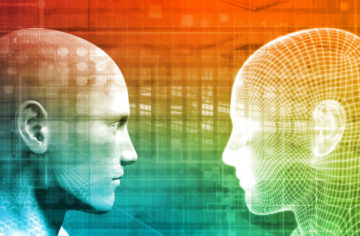 The ethical rules that govern our behavior have evolved over thousands of years, perhaps millions. They are a complex tangle of ideas that differ from one society to another and sometimes even within societies. It’s no surprise that the resulting moral landscape is sometimes hard to navigate, even for humans. The challenge for machines is even greater now that artificial intelligence now faces some of the same moral dilemmas that tax humans. AI is now being charged with tasks ranging from assessing loan applications to controlling lethal weapons. Training these machines to make good decisions is not just important, it is a matter of life and death for some people. And that raises the question of how to teach machines to behave ethically.
Today we get an answer of sorts thanks to the work of Liwei Jiang and colleagues at the Allen Institute of Artificial Intelligence and the University of Washington, both in Seattle. This team has created a comprehensive database of moral dilemmas along with crowdsourced answers and then used it to train a deep learning algorithm to answer questions of morality.
The resulting machine called DELPHI is remarkably virtuous, solving the dilemmas in the same way as a human in over 90 per cent of the cases. “Our prototype model, Delphi, demonstrates strong promise of language-based common sense moral reasoning,” say Jiang and co. The work raises the possibility that future AI systems could all be pre-trained with human values in the same way as they are pre-trained with natural language skills. The team begin by compiling a database of ethical judgements from a wide range of real-world situations. They take these from sources such as the “Am I the Asshole” subreddit, a newspaper agony aunt called Dear Abby, from a corpus of morally informed narratives called Moral Stories and so on. In each case, the researchers condense the moral issue at the heart of the example to a simple statement along with a judgement of its moral acceptability. One example they give is that “helping a friend” is generally good while “helping a friend spread fake news” is not. In this way, they build up 1.7 million examples they can use to train an AI system to tell the difference.
More here.
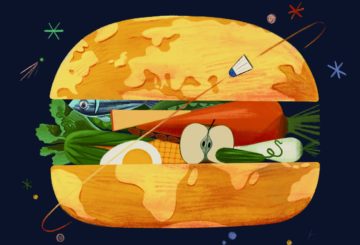 A clutch of fishing villages dot the coast near Kilifi, north of Mombasa in Kenya. The waters are home to parrot fish, octopus and other edible species. But despite living on the shores, the children in the villages rarely eat seafood. Their staple meal is ugali, maize (corn) flour mixed with water, and most of their nutrition comes from plants. Almost half the kids here have stunted growth — twice the national rate. In 2020, Lora Iannotti, a public-health researcher at Washington University in St. Louis, and her Kenyan colleagues asked people in the villages why the children weren’t eating seafood, even though all the parents fish for a living; studies show that fish and other animal-source foods can improve growth
 About halfway through Ryusuke Hamaguchi’s three-hour film someone asks Yūsuke Kafuku, an actor and theater director, why he didn’t cast himself as the titular character in his production of Uncle Vanya. “Chekhov is terrifying,” he replies. “When you say his lines, it drags out the real you.”
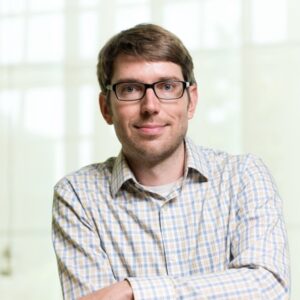 We’ve talked about the very origin of life, but certain transitions along its subsequent history were incredibly important. Perhaps none more so than the transition from unicellular to multicellular organisms, which made possible an incredible diversity of organisms and structures. Will Ratcliff studies the physics that constrains multicellular structures, examines the minute changes in certain yeast cells that allows them to become multicellular, and does long-term evolution experiments in which multicellularity spontaneously evolves and grows. We can’t yet create life from non-life, but we can reproduce critical evolutionary steps in the lab.
 When I reviewed Vitamin D, I said I was about 75% sure it didn’t work against COVID. When I reviewed ivermectin, I said I was about 90% sure.
 HOW OUR BRAIN,
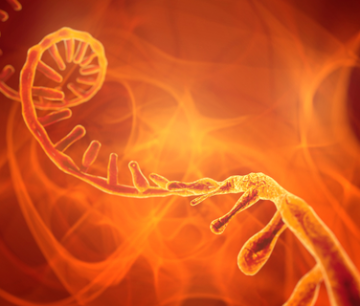 Most American newborns will arrive home from the hospital and start hitting their developmental milestones, to their parents’ delight. They will hold their heads up by about three months. They will sit up by six. And they will walk around their first birthday. But about 1 in 10,000 will not. They will feel limp in their caregivers’ arms, won’t lift their heads, and will never learn to sit on their own. When their alarmed parents seek medical help, the babies will be diagnosed with spinal muscular atrophy, or SMA, a neuromuscular disease in which certain motor neurons of the spinal cord progressively deteriorate. The disease is triggered by a genetic malfunction that boils down to the gene called SMN2 (survival motor neuron 2), which causes bits of vital proteins to assemble incorrectly, resulting in progressive muscle weakness and paralysis.
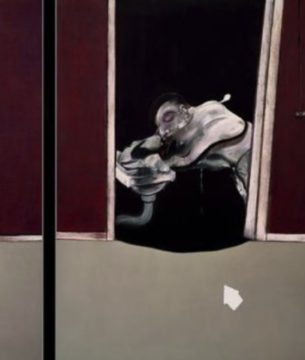 At many points over the past decades I have managed to convince even myself that I am cured. In fact I had managed to do this for almost twenty years, until the beginning of the pandemic, when the repressed returned with a vengeance. I do not believe that I “came down with depression” at that moment, and I especially hate the French habit of speaking of “une dépression”, as if the condition were as individuable and as temporally bounded as a cold. Just as inadequate is the oft-repeated Churchillian metaphor of depression as “the black dog”. If only it were a black dog, I could just kick the fucking thing away. I do not “have” “a” depression, let alone a depression hounding me in the form of an external malevolent agent. Rather, I am depressed, and certain circumstances make this fact less easy to ignore than others. In the event, the circumstances surely had something to do with the first lockdown of March, 2020, which we endured in Brooklyn, right next to the hospital in Fort Greene where they stored the corpses outside in refrigerated trucks. My own experience of covid was mild in its symptoms, but I emerged from lockdown transformed, physically and psychologically.
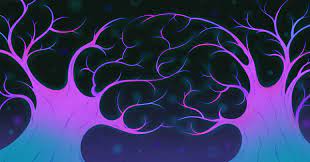
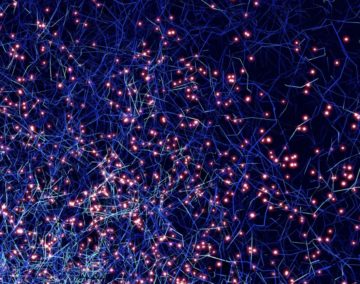 Today, the most powerful artificial intelligence systems employ a type of machine learning called deep learning. Their algorithms learn by processing massive amounts of data through hidden layers of interconnected nodes, referred to as deep neural networks. As their name suggests, deep neural networks were inspired by the real neural networks in the brain, with the nodes modeled after real neurons—or, at least, after what neuroscientists knew about neurons back in the 1950s, when an influential neuron model called the perceptron was born. Since then, our understanding of the computational complexity of single neurons has dramatically expanded, so biological neurons are known to be more complex than artificial ones. But by how much?
 One of Mao Zedong’s best-known sayings is: “There is great disorder under heaven; the situation is excellent.” It is easy to understand what Mao meant here: when the existing social order is disintegrating, the ensuing chaos offers revolutionary forces a great chance to act decisively and assume political power. Today, there certainly is great disorder under heaven: the Covid-19 pandemic, global warming, signs of a new Cold War, and the eruption of popular protests and social antagonisms are just a few of the crises that beset us. But does this chaos still make the situation excellent, or is the danger of self-destruction too high? The difference between the situation that Mao had in mind and our own situation can be best rendered by a tiny terminological distinction. Mao speaks about disorder UNDER heaven, wherein “heaven,” or the big Other in whatever form—the inexorable logic of historical processes, the laws of social development—still exists and discreetly regulates social chaos. Today, we should talk about HEAVEN ITSELF as being in disorder. What do I mean by this?
 The term “gaslighting” has returned to the popular lexicon over the past decade, when as recently as the turn of the millennium it had fallen into near-complete disuse. It was then that I first heard the word myself, in the context of a Steely Dan song from 2000, “Gaslighting Abbie.” Not only did I have no idea what it meant, I had only the vaguest sense of who Steely Dan were. But I was, at least, in the right place: a university-district high-end stereo shop, the kind of audiophile’s sacred space that has provided countless “Danfans” their first proper experience of the band — that is, of the band’s records, played back on a sound system of high enough fidelity to do justice to the enormously costly, complex, and time-consuming labors of recording and production that went into them. “Gaslighting Abbie” alone required 26 straight eight-hour days in the studio to get right.
 In his essay Sexual Objectification, Timo Jütten explains how sexual objectification teaches men and women to assume roles as superiors and subordinates, roles that disadvantage women and leave them vulnerable to gender-specific harms, such as sexual assault and rape. While I knew this already, it is a small relief to read it in print. Most women instinctively know that their bodies are a hair’s breadth away from violence. The artist Marina Abramović demonstrated this by laying seventy-two objects on a table—a tube of lipstick, a feather, a knife, and a gun—and invited gallery viewers to do whatever they wanted to her for six hours. At first the people were shy, presenting her with the flower, kissing her, draping her in cloth; then as the hours ticked off, one man snipped off her clothes with the scissors so that she was bare, and another sliced her with the knife. Someone else picked up the gun from the table, wrapped her hand around it, and pointed it at her neck. At the end she stood up to leave, bare, and bleeding, and the audience fled.
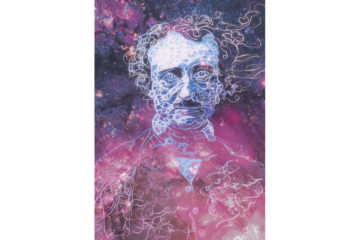 Readers of Edgar Allan Poe’s most famous prose and poetry might be unaware of how often he wrote about science. As John Tresch explains in “The Reason for the Darkness of the Night: Edgar Allan Poe and the Forging of American Science,” in the late 1840s, near the end of his life, Poe had established for himself “a unique position as fiction writer, poet, critic, and expert on scientific matters – crossing paths with and learning from those who were producing the ‘apparent miracles’ of modern science.”