Oh, Josh; Marsha; Ted; Lindsey … Sorry, Justice Jackson

Michelle Cottle in The New York Times:
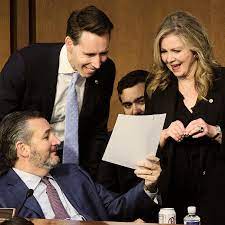
Top showboaters this time around included Ted Cruz, Tom Cotton, Marsha Blackburn, Josh Hawley and Lindsey Graham — a master of the self-righteous hissy fit. These folks really went the extra mile to turn the proceedings into a circus. So much performative outrage. So little interest in reality.

Surprising no one, Mr. Cruz was the most embarrassing of the lot. In a convoluted effort to paint Judge Jackson as a radical wokester (the asinine details of which are but an online search away for those interested), the senator whipped out a copy of the picture book “Antiracist Baby” and started tossing off bizarre, misleading questions such as, “Do you agree with this book that is being taught with kids that babies are racist?” (The book doesn’t teach that.)

Perhaps Mr. Cruz was feeling nostalgic for his freshman year in the chamber, when he gave a dramatic reading on the Senate floor of another kiddie book — Dr. Seuss’ “Green Eggs and Ham” — as part of a marathon speech protesting the Affordable Care Act. That speech is often mischaracterized as a filibuster. But a vote on the legislation had already been scheduled, meaning that nothing Mr. Cruz said, read or yodeled made a lick of difference. He was simply delivering an empty, blustery performance with an eye toward convincing his party’s voters of his fighting chops.

More here.
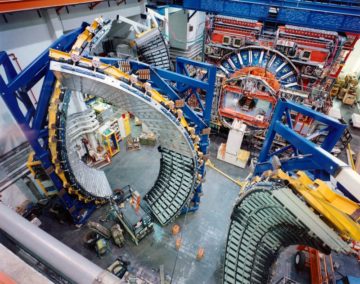
Particle’s surprise mass threatens to upend the standard model

From Nature:

From its resting place outside Chicago, Illinois, a long-defunct experiment is threatening to throw the field of elementary particles off balance. Physicists have toiled for ten years to squeeze a crucial new measurement out of the experiment’s old data, and the results are now in. The team has found that the W boson — a fundamental particle that carries the weak nuclear force — is significantly heavier than theory predicts.

Although the difference between the theoretical prediction and experimental value is only 0.09%, it is significantly larger than the result’s error margins, which are less than 0.01%. The finding also disagrees with some other measurements of the mass. The collaboration that ran the latest experiment, called CDF at the Fermi National Accelerator Laboratory (Fermilab), reported the findings in Science1 on 7 April. The measurement “is extremely exciting and a truly monumental result in our field”, says Florencia Canelli, an experimental particle physicist at the University of Zurich, Switzerland. If it is confirmed by other experiments, it could be the first major breach in the standard model of particle physics, a theory that has been spectacularly successful since it was introduced in the 1970s.

More here.

Friday Poem

The past is not dependent upon us for existence, but exists in its own right.
— Henry Steel Commager

The Past

All along certainly it’s been there, waiting for us, waiting to receive
……….. us, not to waver,
flickering shakily across the mind-screen, always in another shadow,
……….. always potentially illusion,
but out ahead, where it should be, redeemable, retrievable, accessible
……….. not by imagination’s nets
but by the virtue of its being, simply being, waiting patiently for us like
……….. any other unattended,
and other anticipated or not even anticipated—as much as any
……….. other fact rolling in . . .
All the project needs is patience, cunning, similar to that with which we
……….. outwit trembling death . . .
Not “history” but scent, sound, sight, the sensual fact, the beings and
……….. the doings, the heroes,
unmediated now, the holy and the horrid, to be worked across not like
………..a wistful map, but land.

by C.K. Williams
from C.K. Williams Selected Poems
Harper-Collins, 1994

Thursday, April 7, 2022

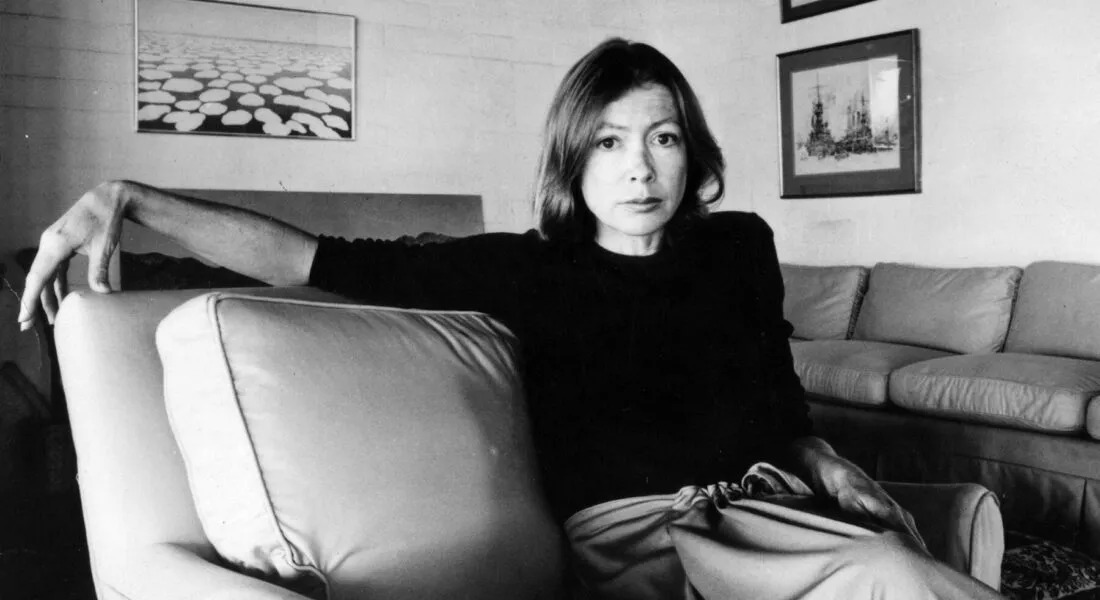
Joan Didion, Making the Sentence Chic

Ana Quiring in the Los Angeles Review of Books:

Upon the death of Joan Didion at age 87 at the close of 2021, her admirers shared a common adoration for one facet of her genius. “Her sentences — dear Lord, her sentences!” wrote The New York Times’s Frank Bruni in a tribute published on Christmas Eve. Twitter accolades from poets, journalists, and fans echoed this praise, to such repetitive vehemence that LARB’s own Phillip Maciak tweeted, “Joan Didion is one of the greatest writers of sentences to ever live on planet Earth. Sentences are different now because of the way she wrote. SENTENCES!”
This repeated accolade makes sense for such an eminent and prolific American writer, one whose legacy was secured long before her death. Brian Dillon anticipated Didion eulogies by writing a chapter about her “prose like a shiny carapace” in his 2020 book about the art of the sentence. All this praise is also, of course, a spectacular neg — a backhanded compliment that lauds her craft without engaging her ideas. We avert our eyes from the content of Didion’s writing, or at least make it secondary to style.

More here.

How Ukraine Unplugged from Russia and Joined Europe’s Power Grid with Unprecedented Speed

Anna Blaustein in Scientific American:

On February 24 Ukraine’s electric grid operator disconnected the country’s power system from the larger Russian-operated network to which it had always been linked. The long-planned disconnection was meant to be a 72-hour trial proving that Ukraine could operate on its own. The test was a requirement for eventually linking with the European grid, which Ukraine had been working toward since 2017. But four hours after the exercise started, Russia invaded.
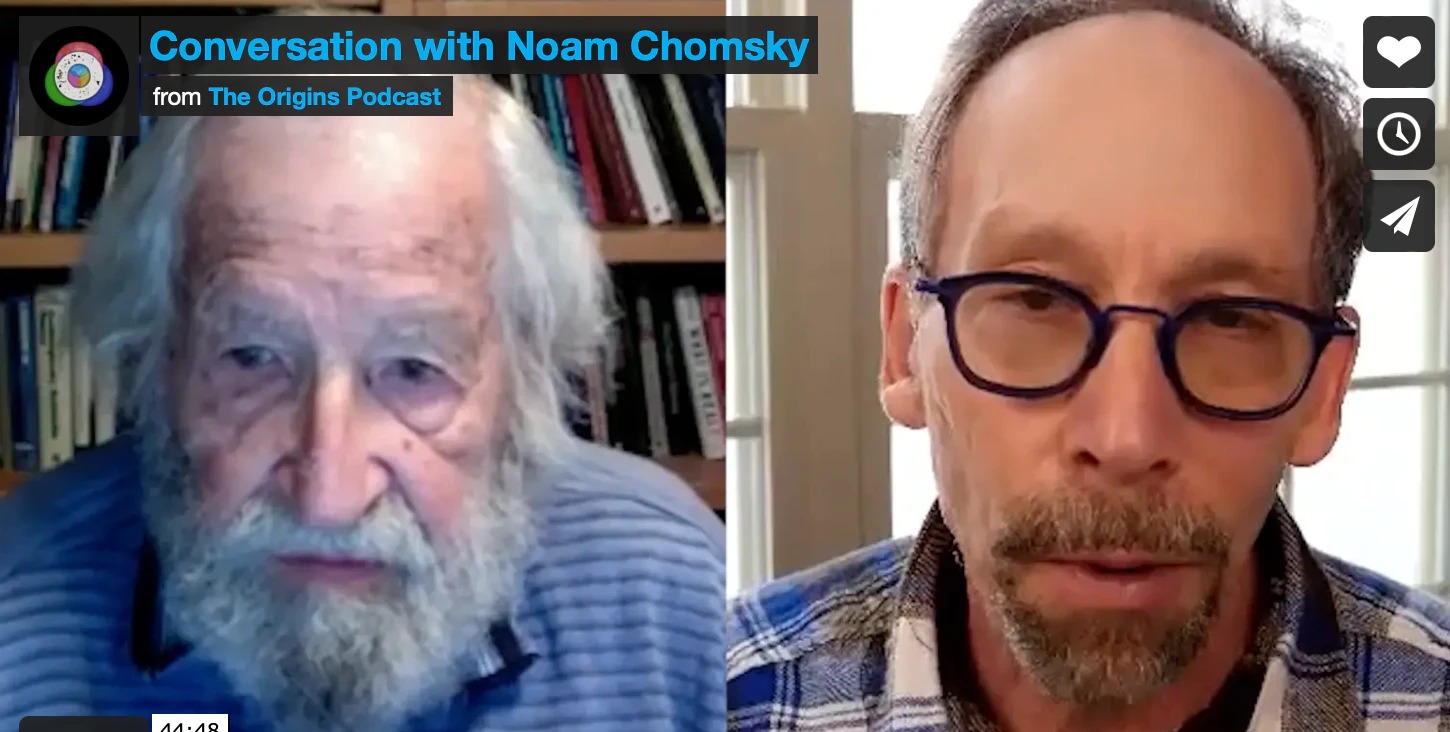
Ukraine’s connection to Europe—which was not supposed to occur until 2023—became urgent, and engineers aimed to safely achieve it in just a matter of weeks. On March 16 they reached the key milestone of synchronizing the two systems. It was “a year’s work in two weeks,” according to a statement by Kadri Simson, the European Union commissioner for energy.

More here.

Thursday Poem

The Mad Farmer in the City

“. . .a field woman is a portion of the field;
she has somehow lost her own margin . . .”
…………………………—Thomas Hardy

As my first blow against it, I would not stay.
As my second, I learned to live without it.
As my third, I went back one day and saw
that my departure had left a little hole
where some of its strength was flowing out,
and I heard the earthing singing beneath the street.
Singing quietly myself, I followed the song
among the traffic. Everywhere I went, singing,
following the song, the stones cracked,
and I heard it stronger. I heard it strongest
in the presence of women. There was one I met
who had the music of the ground in here, and she
was its dancer. “O Exile,” I sang, “for want of you
there is a tree that has borne no leaves
and a planting season that will not turn warm.”
Looking at her, I felt he tightening of roots
under the pavement, and I turned and went
with her a little way, dancing beside her.
And I saw a black woman still inhabiting
as in a dream the space of the open fields
where she had bent to plant and gather. She stood
rooted in the music I heard, pliant and proud
as a stalk of wheat with the grain heavy. No man
with the city thrusting angles in his brain
is equal to her. To reach her he must tear it down.
Wherever lovely women are the city is undone,
its geometry broken in pieces and lifted,
its streets and corners fading like mist at sunrise
above groves and meadows and planted fields.

by Wendell Berry
from
Farming- A Handbook
Harvest Books, 1967

Silver Screen Sphinxes: How Greta Garbo and Buster Keaton invented celebrity privacy

Christina Newland in The Baffler:

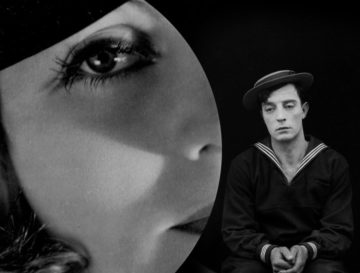
LIKE SO MANY YOUNG WOMEN of the immediate postwar years, my grandmother moved to Manhattan to seek a future. Born in rural West Virginia, the daughter of immigrant farmers, she snagged a job at a New York department store which as of today has been shuttered for half a century: Best & Company. It was there on Fifth Avenue, on a lunch break, that she saw Greta Garbo. She never forgot it. She described it like this: “She was very tall, in a big hat pulled down over her eye. She saw people staring, but she never stopped, and she never smiled.”

Garbo, once the preeminent goddess of the silver screen to which all other stars referred, is more likely to register to younger audiences today as a signifier of the vague, dusty glamour of a bygone age. But even when my grandmother glimpsed her in the late 1940s, Garbo had already withdrawn from the public eye. Having told the world with breathy certainty that she wanted to be alone, she disappeared from film after the Second World War. There was always something special about this icon of remote ennui on the screen; a movie star who had an eloquence of mien beyond most any other. Garbo radiated mystery because she was genuinely mysterious: self-possessed and private in a way that bordered on the compulsive. It only added to her mystique.

More here.

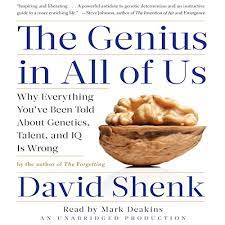
The Genius in All of Us

David Shenk in Delancey Place:

“‘It’s not that I’m so smart,’ Albert Einstein once said. ‘It’s just that I stay with problems longer.’
“Einstein’s simple statement is a clarion call for all who seek greatness, for themselves or their children. In the end, persistence is the difference between mediocrity and enormous success.

“The big question is, can it be taught? Can persistence be nur­tured by parents and mentors?

“Boston College’s Ellen Winner insists not. Persistence, she ar­gues, ‘must have an inborn, biological component.’ But the evi­dence indicates otherwise. The brain circuits that modulate a person’s level of persistence are plastic — they can be altered. ‘The key is intermittent reinforcement,’ says Robert Clonjnger, a Washington University biologist. ‘A person who grows up get­ting too frequent rewards will not have persistence, because they’ll quit when the rewards disappear.’

More here.

Wednesday, April 6, 2022

Kafka the hypochondriac

Will Rees in Aeon:

A few months before he died, Franz Kafka wrote one of his finest and saddest tales. In ‘The Burrow’, a solitary, mole-like creature has dedicated its life to building an elaborate underground home in order to protect itself from outsiders. ‘I have completed the construction of my burrow and it seems to be successful,’ the protagonist notes at the outset. Quickly, however, the creature’s confidence begins to wane: how can it know if its defences are working? How can it be certain?
Kafka’s protagonist wants nothing less than complete security, so nothing can be left out of its calculations. In the small world of its burrow, every detail is significant, a possible ‘sign’ of a looming attack. Eventually, the creature begins to hear a noise it believes to be that of an invader. The noise is equally loud wherever it happens to be standing. It would appear, then, to originate within the creature’s own body: the sound, perhaps, of its own heart beating, its own frantic breathing; life happening and ebbing away, while the creature is worrying about something else.

‘The Burrow’ seems to serve as a retrospective commentary upon Kafka’s own life. By the time he was diagnosed with tuberculosis at the age of 34, Kafka had already spent two decades worrying about disease.

More here.

IPCC report: ‘now or never’ if world is to stave off climate disaster

Fiona Harvey in The Guardian:

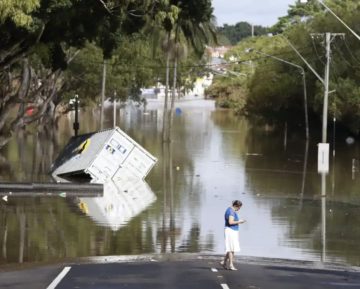
The world can still hope to stave off the worst ravages of climate breakdown but only through a “now or never” dash to a low-carbon economy and society, scientists have said in what is in effect a final warning for governments on the climate.
Greenhouse gas emissions must peak by 2025, and can be nearly halved this decade, according to the Intergovernmental Panel on Climate Change (IPCC), to give the world a chance of limiting future heating to 1.5C above pre-industrial levels.

The final cost of doing so will be minimal, amounting to just a few percent of global GDP by mid-century, though it will require a massive effort by governments, businesses and individuals.

But the chances were narrow and the world was failing to make the changes needed, the body of the world’s leading climate scientists warned. Temperatures will soar to more than 3C, with catastrophic consequences, unless policies and actions are urgently strengthened.

More here.

Why I Am Not A Liberal

Liam Kofi Bright at The Sooty Empiric:

Those of us in the contemporary academy who are not liberals ought give an account of why not. This asymmetric burden falls on us, I believe, because the presumption is so strongly that one does fit within the broad confines of liberalism that if one does not explicitly identify out and explain why one has done so then two things may occur. First, people may reasonably presume on statistical grounds that your politics are as such and engage with you with this in mind. This will make intellectual back and forth, the lifeblood of our profession, frustratingly congealed — always having to go back and check unstated presuppositions half way through a conversation, never getting to the meat of things. Second, one allows whatever thinking one does to accrue to the greater glory of an ideology you reject. Since the natural presupposition is that whatever insights you achieve have been achieved through the lens of liberal ideology, it will seem that whatever is good in your work is evidence that liberalism can support and sustain that good. Since, by hypothesis, I am addressing myself to people who are not liberals, this is presumably something you wish to avoid.

More here.  And see a response from Eric Schliesser, “Why I am not a Conservative”, here.

Gun Violence

Jonathan Shaw in Harvard Magazine:

EVERY YEAR, 40,000 PEOPLE in the United States are killed with firearms. But another 85,000 are shot and survive. A new study quantifying the impacts of gun violence on these survivors and their families finds that they face increased risk of mental health disorders and substantially higher healthcare spending. Spending on gunshot survivors alone in the first year after their injury is estimated at about $2.5 billion—most of that cost burden carried by employers, insurers, and publicly-funded health programs.

In addition to obvious physical injury, the study found that “there are substantial mental health repercussions for both the survivors and their family members through a year following a shooting,” says lead author and associate professor of health care policy Zirui Song, who is a physician at Massachusetts General Hospital. And there is an increased risk for substance abuse among survivors, who are often coping with pain. “Understanding how firearm injuries reverberate across peoples’ lives and families provides insights that we can use to provide better care for patients”—for example, by screening survivors and their family members for signs of mental health problems or substance use disorders.

More here.

What triggers severe COVID? Infected immune cells hold clues

Smiriti Malapaty in Nature:

Since the early days of the pandemic, research has suggested that inflammation leads to significant respiratory distress and other organ damage, hallmarks of severe COVID-19. But scientists have struggled to pinpoint what triggers the inflammation.
The latest studies implicate two types of white blood cells — macrophages in the lungs, and monocytes in the blood — which, once infected with the virus, trigger the inflammation. The studies also provide conclusive evidence that the virus can infect and replicate in immune cells — and reveal how it enters those cells. Evidence of such infections has been mixed until now.

The studies offer a plausible explanation for how severe COVID-19 progresses, says Malik Peiris, a virologist at the University of Hong Kong. “I don’t think it is the only or most important pathway, but it is certainly interesting.”

More here.

Wednesday Poem

Born Again

As the shadows lift, he yawns,
wipes dried vomit from his face
then crawls out of a side street ditch
in the heart of New Orleans.

Out of the internal dark,
he’s born again.

Still half-drunk from the night before,
he moves along with barefoot
gypsy girls who drink wine
and recite Nietzsche
in the gray dawn.

Tourist eyes, like daggers,
pierce the vagrant
as he crosses into the Quarter.

His calloused hand,
adorned with makeshift tattoos,
reaches down and snatches
a cigarette butt
from the gutter,
lights it,
takes a heavy drag
and blows it up
to the heavens.

Desolate but alive,
I look into the bloodshot eyes
of a shattered life. And there it is.
Birth, death, and all the madness
in between.
No love or too much love.
No peace or too much peace.
He lives untied from the anchor,
empty of essence,
devoid of possessions,
and somehow,
still able to cook up
a crooked smile
in spite of the
ruthless truth
of it all.

by Erik Rittenberry
from
Poetic Outlaws, 4/5/22

Tuesday, April 5, 2022

On Jennifer Egan’s ‘The Candy House’

Louisa Ermelino at The Millions:

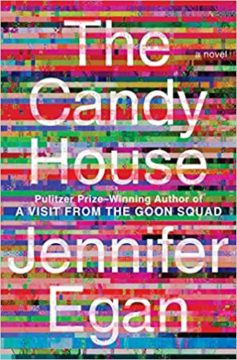
“I knew in Goon Squad that Bix would invent social media,” Jennifer Egan says of her character Bix Bouton, who returns from her Pulitzer Prize–winning A Visit from the Goon Squad to take up a central role in her new novel, The Candy House, coming April 5 from Scribner. “When I know something the reader doesn’t know, I know there’s a future story,” she tells me.
The Candy House begins in 2010 with Bix wandering the New York City streets, afraid he will never have a new idea, when he sees a flyer on a lamppost about a discussion group in an apartment near Columbia University following a lecture by anthropologist Miranda Kline. It was Kline’s theories of algorithms explaining trust and influence among members of a Brazilian tribe that Bix adapted to become a very rich and famous tech mogul.

More here.

Tropical forests have big climate benefits beyond carbon storage

Freda Kreier in Nature:

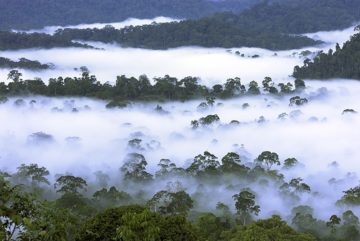
Tropical forests have a crucial role in cooling Earth’s surface by extracting carbon dioxide from the air. But only two-thirds of their cooling power comes from their ability to suck in CO2 and store it, according to a study1. The other one-third comes from their ability to create clouds, humidify the air and release cooling chemicals.

This is a larger contribution than expected for these ‘biophysical effects’ says Bronson Griscom, a forest climate scientist at the non-profit environmental organization Conservation International, headquartered in Arlington, Virginia. “For a while now, we’ve assumed that carbon dioxide alone is telling us essentially all we need to know about forest–climate interactions,” he says. But this study confirms that tropical forests have other significant ways of plugging into the climate system, he says.

More here.