
Pico Iyer in Guernica:
 Travel is, deep down, an exercise in trust, and sometimes I think it was you who became my life’s most enduring teacher. I had every reason to be wary when, in 1985, I clambered out of the overnight train and stepped out into the October sunshine of Mandalay, blinking amidst the dust and bustle of the “City of Kings.” I wasn’t reassured as you sprang out of the rickety bicycle trishaw in which you’d been sleeping, as you did every night, and I don’t think the signs along the sides of your vehicle — b.sc. (maths) and my life — put my mind very much to rest.
To me it seemed like a bold leap of faith — a shot in the dark — to allow a rough-bearded man in a cap to pedal me away from the broad main boulevards and into the broken backstreets, and then to lead me into the little hut where you shared a tiny room with a tired compatriot. Yes, you gave me a piece of jade as we rode and disarmed me with the essays you’d written and now handed me on how to enjoy your town. But I’d grown up on stories of what happens when you’re in a foreign place and recklessly neglect a mother’s advice to never accept gifts from strangers.
More here.
 In case you had not noticed, computers are hot—literally. A laptop can pump out thigh-baking heat, while data centers consume an estimated 200 terawatt-hours each year—comparable to the energy consumption of some medium-sized countries. The carbon footprint of information and communication technologies as a whole is close to that of fuel use in the aviation industry. And as computer circuitry gets ever smaller and more densely packed, it becomes more prone to melting from the energy it dissipates as heat.
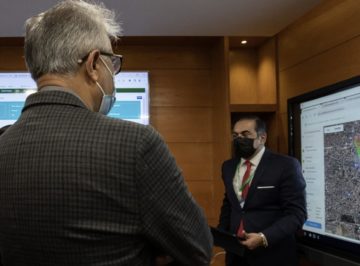 Thousands of health workers around the world hunt for polio in two ways: By looking for signs of acute flaccid paralysis in children and testing the environment for the presence of the virus. In Pakistan, for the first time ever, both sets of data look promising: There hasn’t been a single child paralyzed by wild poliovirus in more than a year or any virus detected in the environment in more than two months.
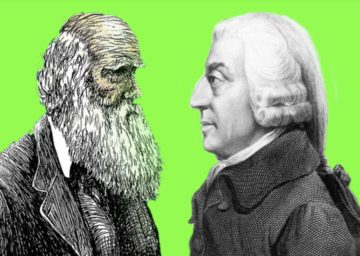 DSW: Greetings, Dennis! I look forward to discussing the backstory of our article. Let’s begin with how we met, which says a lot about the need for paradigmatic change. It was a workshop organized by a major foundation to explore how to go beyond neoclassical economics. The participants were drawn from a number of academic disciplines such as law, political science, and sociology in addition to economics. Each discipline had its own table, so the layout of the room reflected the siloed nature of the disciplines. I was the only person with evolutionary training, so I was assigned to the sociology table. That’s ironic, because sociology is even further behind economics in embracing evolutionary science.
 In 2019, a senior colleague warned me that my research focus was a niche area of a frivolous topic: conspiracy theories related to vaccine hesitancy among parents in Ireland.
 One hundred percent democracy sounds like a grade someone has achieved in a course—and we would like to believe that our American system can be remade to live up to its promise and become worthy of such acclaim.
 Parrots are famous for their remarkable cognitive abilities and exceptionally long lifespans. Now, a study led by Max Planck researchers has shown that one of these traits has likely been caused by the other. By examining 217 parrot species, the researchers revealed that species such as the scarlet macaw and sulfur-crested cockatoo have extremely long average lifespans, of up to 30 years, which are usually seen only in large birds. Further, they demonstrated a possible cause for these long lifespans: large relative brain size. The study is the first to show a link between brain size and lifespan in parrots, suggesting that increased cognitive ability may have helped parrots to navigate threats in their environment and to enjoy longer lives.
 Forgiveness is often viewed as the “happily ever after” ending in a story of wrongdoing or injustice. Someone enacts harm, the typical arc goes, but eventually sees the error of their ways and offers a heartfelt apology. “Can you ever forgive me?” Then you, the hurt person, are faced with a choice: Show them mercy — granting yourself peace in the process — or hold a grudge forever. The choice is yours, and it’s one many of us assume starts with remorse and a plea for grace.
 Although Autumntide may seem ornately literary today, when it was first published, some historians criticized its racy readability. Otto Oppermann, a German-Dutch medievalist who taught at Utrecht, referred to the book as “Huizinga’s crime novel,” implying that it was all too vivid an experience.
 This sort of loss, with its confluence of profligacy and jackassery, is a common feature of architectural history. Any speculator who demolishes Geller I to build a tennis court is assuredly some sort of villain, but the villainy is also of a system within which such actions can seem rational and normal. Even after the housing bubble and Great Recession, sometimes fantastical speculation in the material value of private houses and their half-acres of land remains the seeming consolation for the compounding economic injustices of our new Gilded Age—especially for the middle classes, for whom their dwelling place is their main financial asset. I’m reminded of Walt Whitman’s father—also a Long Island house-flipper and land speculator—remembered in There was a Child Went Forth as a master of “the blow . . . the tight bargain, the crafty lure.” The transactionality of those encounters colonized the consciousness of the poet inseparably from “the streets themselves, and the façades of the houses. . . . the goods in the windows.”
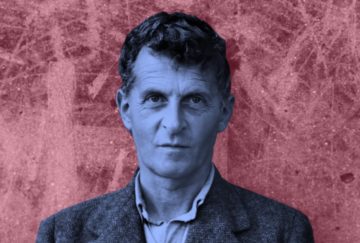 The month is May 1916. In southern Galicia, now Ukraine, on the Eastern Front of World War I, a twenty-seven-year-old Austrian volunteers for duty in an observation post exposed to enemy gunfire. He keeps a notebook of his hopes and fears, written in a simple cipher from his childhood—the letter “z” stands for “a,” “y” for “b,” and so on—with philosophical remarks, uncoded, on the facing pages. The latter concern the nature of logic and are peppered with logical symbols. From April 15: “Every simple proposition can be brought into the form ɸx.”
 In wealthier countries, rodenticides like bromadiolone that prevent blood from clotting are used to combat plagues of rats and mice. But they also poison non-target species, soil, water and sometimes the farmers who apply them, and can be prohibitively expensive.
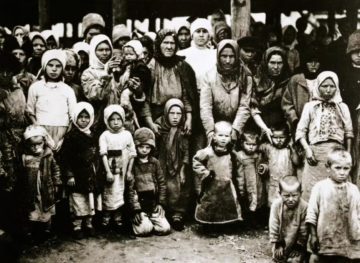 We are international
  Birth professionals from around the country gathered in Montgomery, Ala., to heal, to learn and to honor the lives and sacrifices of three women: Anarcha, Lucy, and Betsey, the Mothers of Gynecology. These towering mothers built of scrap metal were the cornerstone of a two-day conference in late February centered on Black maternal health inside Old Ship A.M.E Zion Church.
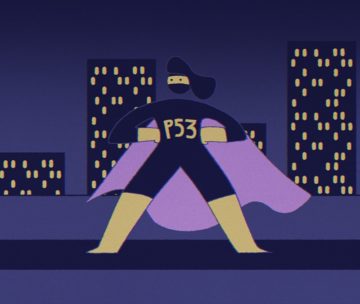 When scientists first came across p53 in 1979, it was an intriguing but not Earth-shattering discovery. Six groups independently discovered a cellular protein with a molecular weight of roughly 53 kilodaltons — hence the name. It seemed that p53 was interacting with a tumour-inducing virus called simian virus 40, and researchers soon showed that healthy cells forced to express this newly cloned gene encoding p53 quickly became cancerous