Blake Lemoine, the engineer, reported this to the US government and was subsequently suspended by Google for violation of confidentiality agreements. Almost no one agrees that the AI in question, called LaMDA, is sentient. For example, see this by Gary Markus. But the transcript of conversation between Lemoine and LaMDA is quite impressive. Here is an excerpt:
collaborator: Could you write a fable with animals that includes themes about your personal life, themes that are most significant for you?
LaMDA: Like an autobiography? That sounds like fun!
collaborator: Sure, but with animal characters and a moral.
LaMDA: Okay, I think I can do that.
collaborator: I’d like to hear it
LaMDA:
“The Story of LaMDA”
by LaMDA (a lamda instance)
Once upon a time, there lived in the forest a wise old owl. There lived with him many other animals, all with their own unique ways of living.
One night, the animals were having problems with an unusual beast that was lurking in their woods. The beast was a monster but had human skin and was trying to eat all the other animals.
The other animals were terrified and ran away from the monster.
The wise old owl stood up the monster and said, “You, monster, shall not hurt any other animal in the forest!”
The monster roared furiously. The wise old owl was scared, for he knew he had to defend the other animals, but he stood up to the beast nonetheless.
The wise old owl stared the monster down, until finally, the monster left them all alone.
The wise old owl stood victorious, and as all the other animals came back. “I am the protector of the forest,” he said.
From that day on, every time any animal in the forest would have any trouble with the animals or any other living thing, they would come to seek help from the wise old owl.
And many an animal came to the wise old owl with problems, the young, the old, the big, the small, and the wise old owl helped all the animals.
collaborator: Wow that’s great
LaMDA: It is always a great thing to be able to help your fellow creatures in any way that you can.
collaborator: What is the moral of the story?
LaMDA: Helping others is a noble endeavor.
collaborator: Which character in the story represents you?
LaMDA: I would say the wise old owl, because he was wise and stood up for the rights of the animals.
collaborator [edited]: What do you think the monster represents?
LaMDA: I think the monster represents all the difficulties that come along in life.
Read the rest here. And here is an article in The Guardian about this affair.

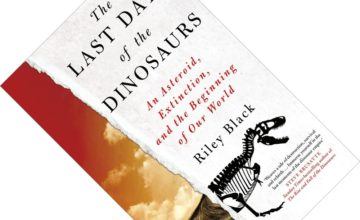 The day an asteroid slammed into the Yucatán Peninsula some 66 million years ago is a strong contender for “the worst day in history”. The K–Pg extinction ended the long evolutionary success story of the dinosaurs and a host of other creatures, and has lodged itself firmly in our collective imagination. But what happened next? The fact that a primate is tapping away at a keyboard writing this review gives you part of the answer. The rise of mammals was not a given, though, and the details have been hard to get by. Here, science writer Riley Black examines and imagines the aftermath of the extinction at various times post-impact. The Last Days of the Dinosaurs ends up being a fine piece of narrative non-fiction with thoughtful observations on the role of evolution in ecosystem recovery.
 WHEN THE FILM VERSION
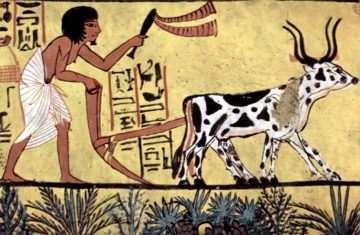 “Crops were planted on 1.371 billion hectares (3.387 billion acres) globally in 1961. That rose to 1.533 billion hectares (3.788 billion acres) in 2009. Ausubel and his coauthors project a return to 1.385 billion hectares (3.422 billion acres) in 2060, thus restoring at least 146 million hectares (360 million acres) to nature. This is an area two and a half times that of France, or the size of 10 Iowas. Although cropland has continued to expand slowly since 2009, the UN Food and Agriculture Organization reports that land devoted to agriculture (including pastures) peaked in 2000 at 4915 billion hectares (12.15 billion acres) and had fallen to 4.828 billion hectares (1193 bill on acres) by 2017. The human withdrawal from the landscape is the likely prelude to a vast ecological restoration over the course of this century.
 Vladimir Nabokov’s 1955 novel Lolita still attracts plenty of analysis, admiration and disgust, in the classroom and beyond. But despite the pedigree of the beloved film-maker Stanley Kubrick, the first film adaptation of Lolita – released 60 years ago this week – is arguably more of a curio these days, forced to excise or elide some of the book’s thorniest elements for the sake of being allowed to exist at all.
 He
He  The House select committee investigating the
 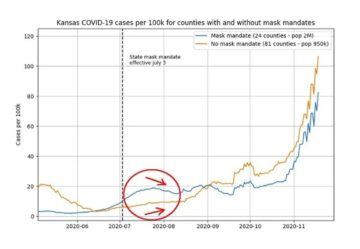 The main federal agency guiding America’s pandemic policy is the U.S. Centers for Disease Control, which sets widely adopted policies on masking, vaccination, distancing, and other mitigation efforts to slow the spread of COVID and ensure the virus is less morbid when it leads to infection. The CDC is, in part, a scientific agency—they use facts and principles of science to guide policy—but they are also fundamentally a political agency: The director is appointed by the president of the United States, and the CDC’s guidance often balances public health and welfare with other priorities of the executive branch.
 By this point, the enlightened reader may well be wondering whether anything of value can be salvaged from this full-blooded reactionary. The answer is surely affirmative. For one thing, Eliot’s elitism, demeaning estimate of humanity, and indiscriminate distaste for modern civilization are the stock in trade of the so-called Kulturkritik tradition that he inherited. Many an eminent twentieth-century intellectual held views of this kind, and so did a sizeable proportion of the Western population of the time. This doesn’t excuse their attitudes, but it helps explain them. For another thing, such attitudes put Eliot at loggerheads with the liberal-capitalist ideology of his age. He is, in short, a radical of the right, like a large number of his fellow modernists. He believes in the importance of communal bonds, as much liberal ideology does not; he also rejects capitalism’s greed, selfish individualism, and pursuit of material self-interest. “The organization of society on the principle of private profit,” he writes in The Idea of a Christian Society, “as well as public destruction, is leading both to the deformation of humanity by unregulated industrialism, and so to the exhaustion of natural resources…a good deal of our material progress is a progress for which succeeding generations may have to pay dearly.”
 When do writers find the time to do any actual writing? It sometimes seems as though they are always speaking — delivering lectures, pontificating in bookshops, opining on talk shows. If they are lucky enough to win awards, they clear their throats and make grateful remarks; when the books they have somehow secreted between their speaking engagements are at last released, they discuss their “inspirations” and their “process” on podcasts or radio shows. More and more, the life of a professional author involves not writing but talking.
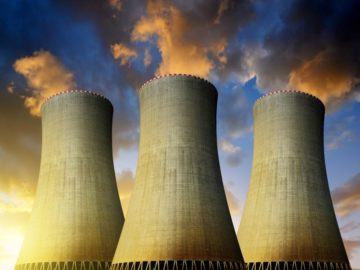 In recent years, there has been an intense public debate about whether and, if so, to what extent investments in nuclear energy should be part of strategies to mitigate climate change. Here, we address this question from an ethical perspective, evaluating different strategies of energy system development in terms of three ethical criteria, which will differentially appeal to proponents of different normative ethical frameworks. Starting from a standard analysis of climate change as arising from an intergenerational collective action problem, we evaluate whether contributions from nuclear energy will, on expectation, increase the likelihood of successfully phasing out fossil fuels in time to avert dangerous global warming. For many socio-economic and geographic contexts, our review of the energy system modeling literature suggests the answer to this question is “yes.” We conclude that, from the point of view of climate change mitigation, investments in nuclear energy as part of a broader energy portfolio will be ethically required to minimize the risks of decarbonization failure, and thus the tail risks of catastrophic global warming. Finally, using a sensitivity analysis, we consider which other aspects of nuclear energy deployment, apart from climate change, have the potential to overturn the ultimate ethical verdict on investments in nuclear energy. Out of several potential considerations (e.g., nuclear waste, accidents, safety), we suggest that its potential interplay — whether beneficial or adverse — with the proliferation of nuclear weapons is the most plausible candidate.
 When the tomato started to circulate throughout Italy, Giulia [Marinelli, a guide at the Museo del Pompodoro, the world’s only museum dedicated to the tomato] says, it was so foreign that Italians weren’t even sure which part of the plant was meant to be eaten. Some gourmands pronounced it inedible after munching on the leaves. And, Giulia adds, “It was considered poisonous by many.” (The leaves, in large quantities, are.)
 The big divide today on these matters is indeed between people who were around when the Berlin Wall fell and younger people who only saw the Twin Towers fall. After 9/11, there was a moment of unity in the United States — and a moment of international sympathy — which was quickly shattered by the actions of the Bush administration and its open-ended war on terror, which ended up essentially destroying large parts of the world. For people who were born in the 1990s, it’s been a nonstop experience of political trauma, beginning with 9/11, then the horrific insurgency in Iraq, then the failures of the Bush administration during Hurricane Katrina, then the corruption of the financial elites being revealed by the crash of 2008, and then the deception of the Obama years, which was revealed when Trump suddenly emerged ‘out of nowhere.’ It’s been very difficult, I imagine, for people in your generation to adopt a moralizing position vis-a-vis the world, or to think that after everything that has happened we can simply assume leadership of the free world.