
John Guillory at the website of the University of Chicago Press:
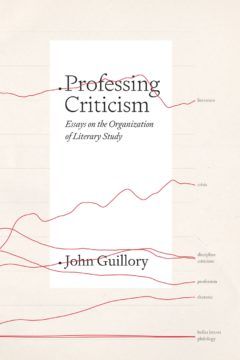 In this essay, I argue for a reorientation of discourse about the humanities to the objects of humanistic study rather than claims for their value or effect. Returning to an essay Erwin Panofsky published in 1940, “The History of Art as a Humanistic Discipline,” I build on Panofsky’s rich distinction between “monuments” and “documents” as the two sides of the humanistic object of study. By “monuments,” Panofsky refers to all of those human artifacts, actions, or ideas that have urgent meaning for us in the present. By “document,” he refers to all of those traces or records by means of which we recover monuments. Monuments and documents bring the long time of human existence, past or future, into relation to the short time of human life, a relation that defines the objects of study in all the humanities and confirms the undeniable interest of that study.
More here.

 Ben Bernanke at the Brookings Institution in Washington DC, Douglas Diamond at the University of Chicago in Illinois and Philip Dybvig at Washington University in St. Louis, Missouri, shared equal parts of the 10-million-Swedish-krona (US$915,000) award, formally known as the Sveriges Riksbank Prize in Economic Sciences in Memory of Alfred Nobel.
 When the blackbird flew out of sight,
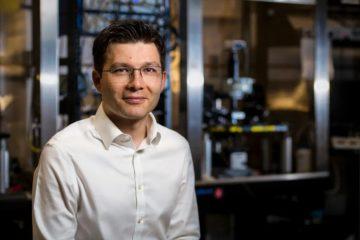 Scientists have successfully transplanted clusters of human neurons into the brains of newborn rats, a striking feat of biological engineering that may provide more realistic models for neurological conditions such as autism and serve as a way to restore injured brains.
 In the US, we are feeling the sickening after-effects of
  Actually, until 1961, when I was 16, I’d never given any thought to Sweden at all, but everything shifted on a dime when my Dad shared the 1961 Nobel Prize in Physics. That December, our family flew to Stockholm for the ceremonies and it was unforgettable. Not only were the solemn, yet deeply joyous, festivities a once-in-a-lifetime occurrence, but I was powerfully struck by the classic European beauty of Stockholm in the midst of that romantically dark and snowy Scandinavian winter—such a clean and sophisticated city with its old-fashioned trams, its glittering neon signs, its colorful store windows, its elegant ladies and gentlemen, and, last but not least, its strange, alien language.
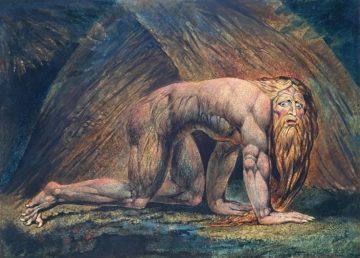 In 1977, Ken Olsen declared that ‘there is no reason for any individual to have a computer in his home.’ In 1995, Robert Metcalfe predicted in InfoWorld that the internet would go ‘spectacularly supernova’ and then collapse within a year. In 2000, the Daily Mail reported that the ‘Internet may be just a passing fad,’ adding that ‘predictions that the Internet would revolutionise the way society works have proved wildly inaccurate.’ Any day now, the millions of internet users would simply stop, either bored or frustrated, and rejoin the real world.
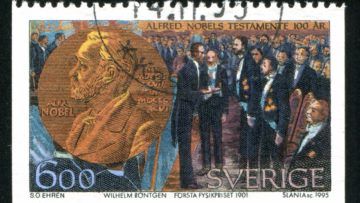 Nobel Prizes used to be awarded fairly quickly after the discovery, achievement, or event that prompted them. The instructions left by Alfred Nobel seemed to warrant this speed. However, this has occasionally led to awards for discoveries that later turned out to be bunk. Perhaps no case of this is clearer-cut than the 1926 prize in medicine, which was awarded “for [Fibiger’s] discovery of the Spiroptera carcinoma.”
 The House committee tasked with investigating the Jan. 6 attack on the Capitol made its closing arguments to the American public today and voted 9-0 to subpoena former President Donald Trump. They highlighted snippets from more than a million Secret Service communications in the days and hours leading up to the breach of the Capitol, bolstering their thesis that then-President Donald Trump had incited a mob and bears singular responsibility for the violence that ensued. “Armed and Ready, Mr. President!” read one snippet of intelligence presented in a Secret Service email on Dec. 24, 2020, about two weeks before the Jan. 6 joint session of Congress to formalize Joe Biden’s election victory.
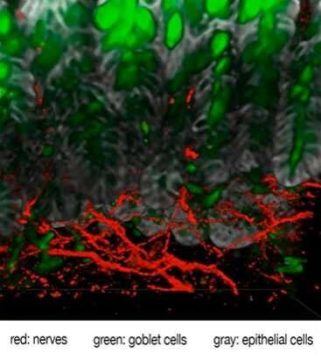 Pain has been long recognized as one of evolution’s most reliable tools to detect the presence of harm and signal that something is wrong—an alert system that tells us to pause and pay attention to our bodies. But what if
  Cihan Tugal in Sidecar:
 Samir Sonti and JW Mason in Phenomenal World: