
 Ingrid Robeyns in Crooked Timber:
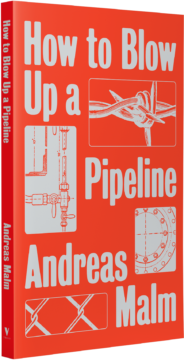
In his book How to Blog Up A Pipeline, Andreas Malm writes about the need for the climate movement to have a more radical wing (which would do things like blowing up pipelines, or other forms of property destruction). His view is that the climate movement is making a mistake by subscribing to radical forms of non-violence, since the climate crisis is getting worse year by year, while the tactics of the climate movement remain the same – and, in his view, have proven to be ineffective (or at least, insufficiently effective).
One of Malm’s targets is Extinction Rebellion (XR), one of the most visible groups within the climate movement. Local groups of XR are staging various forms of protest, but always non-violent; they do not destroy property. Malm argues that XR has a flawed understanding of how in the past movements operated who were fighting to abolish slavery or abolish apartheid in South Africa, or fighting for women’s political rights or equal civil rights in the US. They all first tried to reach their goals in a peaceful way, but at some point resorted to violence (against property, thereby doing their best to avoid hurting people). And that paid off, since it had the effect of making the claims of the non-violent part of the movement more acceptable to mainstream politics. Malm believes that what XR and other groups in the climate activist movement should learn from the history of the social justice movements, is to have a fraction or a wing in the movement that doesn’t shy away from destroying property. Hence the metaphor of blowing up a pipeline (in case anyone was wondering, Malm doesn’t tell his readers how to actually go about blowing up a pipeline).
More here.
 This is a song that does no favors for anyone, and casts doubt on everything.
 In June 1794,
  Analytic philosophers avoided the subject of meaning in life till relatively recently. The standard explanation is that they associated it with the meaning of life question they considered bankrupt. But it’s surely also because the subject conflicts with some of the core tendencies of the analytic tradition. “What gives point to life?” is a sweeping question that invites the synoptic approach associated with continental philosophy, not the divide-and-conquer method favored by Anglo-Americans. The question also wears its angst on its sleeve, making it an awkward fit with the dispassionate mode employed in the mainstream academy.
 In Alysson Muotri’s laboratory, hundreds of miniature human brains, the size of sesame seeds, float in Petri dishes, sparking with electrical activity.
 In November of 1660, at Gresham College in London, an invisible college of learned men held their first meeting after 20 years of informal collaboration. They chose their coat of arms: the royal crown’s three lions of England set against a white backdrop. Their motto: “Nullius in verba,” or “take no one’s word for it.” Three years later, they received a charter from King Charles II and became what was and remains the world’s preeminent scientific institution: the Royal Society.
 Researchers who grew a brain cell culture in a lab claim that they taught the cells to play a version of
 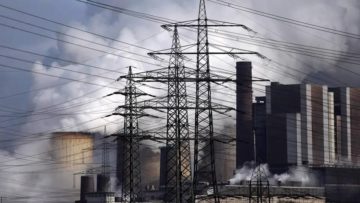 The energy crisis incited by Russia’s war in Ukraine has triggered intense debates in many countries about whether the windfall profits that energy companies are now making should be taxed. While this question concerns all companies that produce coal, gas, or oil, the focus currently is on electricity producers. Since a high gas price is driving up electricity prices across the board, suppliers with power plants that use other fuels or renewables can reap extremely high profits. And the immense burden of rising electricity prices on consumers has ratcheted up political pressure to tax “unjustified” profits.
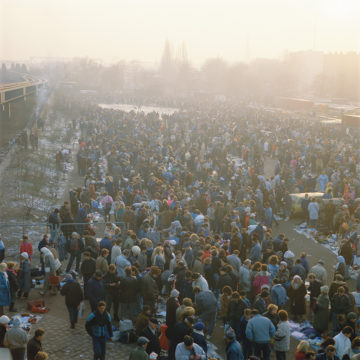 WOLFGANG TILLMANS HAS CREATED an image of contemporary Europe that a lot of people carry around in their heads. Not the Colosseum or the Arc de Triomphe or even the Eiffel Tower, but easyJet, English, Berghain. These keywords are both the technologies and the coordinates of Tillmans’s practice, the atmosphere and infrastructure that support his work, though they are not necessarily visible in his pictures. And yet he has created images—indeed, icons—that are somehow correlates for them, that use these things as scaffolding. I know this is a big claim to make about an artist, given that the profession today no longer has much to do with the way things look. The task of imaging has largely been left to the stylist, the executive, and the influencer. But by leveraging photography’s many lives (as art, as document, as fashion editorial, as reportage, and as publicity), Tillmans has been able to thread the needle through an increasingly vast network of image production, and its sites of display, in order to create a new kind of image—a moving image not simply in the affective sense, but in the circulatory one, too. His images get around, change shape. They are promiscuous. We can call them images in motion.
 ONE MAN ALONE
 “You know you’re a nerd when you store DNA in your fridge.”
 T
T In 2015, The New York Times Book Review posed the question “Whatever happened to the Novel of Ideas?” to the writers Pankaj Mishra and Benjamin Moser. On the question of “whether philosophical novels have gone the way of the dodo bird,” Mishra answered in the affirmative and—not a writer who shies away from generalizations—charged that the culprit was the MFA program. “America’s postwar creative-writing industry,” Mishra claimed, has “hindered literature from its customary reckoning with the acute problems of the modern epoch” and “boosted instead a cult of private experience.”
 Humans have for the first time proved that they can change the path of a massive rock hurtling through space. NASA has announced that the spacecraft it slammed into an asteroid on 26 September succeeded in altering the space rock’s orbit around another asteroid — with better-than-expected results.
 A new paper,