
Chris Blattman in the Boston Review:
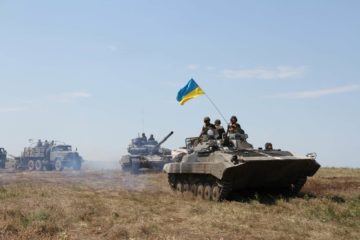 Nothing destroys progress like conflict. Fighting massacres soldiers, ravages civilians, starves cities, plunders stores, disrupts trade, demolishes industry, and bankrupts governments. It undermines economic growth in indirect ways too. Most people and business won’t do the basic activities that lead to development when they expect bombings, ethnic cleansing, or arbitrary justice; they won’t specialize in tasks, trade, invest their wealth, or develop new ideas. These costs of war incentivize rivals to steer clear from prolonged and intense violence.
Of course, it seldom feels like peace is our natural state. “The story of the human race is war,” said Winston Churchill, “except for brief and precarious interludes, there has never been peace in the world.” Certainly it often seems so, especially today as a major conflict rages in Ukraine and the number of civil wars in the world climbs to levels not seen since the 1990s.
But that sentiment is misleading and comes from ignoring the quieter moments of compromise.
More here.
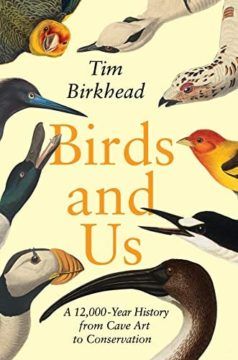 Relationships between ancient humans and birds had a deeply religious element. Birkhead locates the “ground zero” of an early human civilization built around animal worship in ancient Egypt. Within the catacombs at Tuna el-Gebel in Egypt, there are four million mummified birds contained in jars and coffins. In addition to mummifying ibises, ancient Egyptians preserved a variety of creatures in cemeteries throughout the Nile Valley. Birds, however, are among the most prominent animals. Clearly, the lovingly embalmed birds were considered sacred; and ancient Egypt was a civilization in which humans and birds lived in harmony.
 Protests enter their second week. I’m waiting on the street for the taxi to arrive when I see an old religious man coming towards me. At first, I’m afraid he wants to mention I’m not wearing a hijab. All of a sudden, he brings his phone in front of me and shows me Mahsa Amini’s photo, saying, “Can you believe it, ma’am? They killed someone’s daughter. I myself have a daughter. I swear to God, I haven’t slept for a week.”
 Ned and Sunny stretch out together on the warm sand. He rests his head on her back, and every so often he might give her an affectionate nudge with his nose. The pair is quiet and, like many long-term couples, they seem perfectly content just to be in each other’s presence.
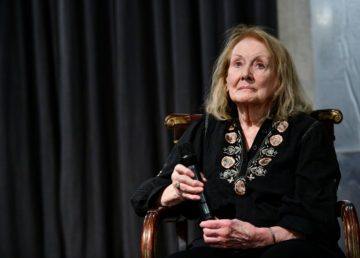 Annie Ernaux, who was awarded the Nobel Prize in Literature last Thursday, was not on the other end of the telephone when the committee rang to deliver the news. Last year, she received a prank text telling her she had won the illustrious award, which might be one reason why her first response when the committee did get through to her was incredulous: “Are you sure?”
 Matrix multiplication, which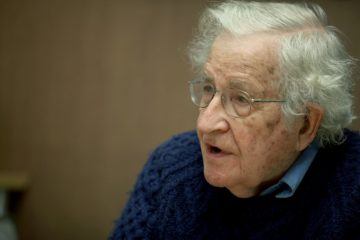
 Last year, according to data from the BP Statistical Review of World Energy, in both the US, and the world as a whole, the growth in hydrocarbons—oil, natural gas, and coal—far exceeded the growth of wind and solar by huge margins.
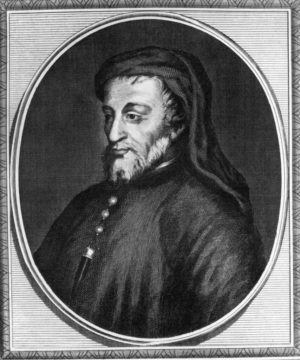 For nearly 150 years, a cloud has hung over the reputation of Geoffrey Chaucer, the author of “The Canterbury Tales,” long seen as the founder of the English literary canon.
 I
I Kate Aronoff in The New Republic (Image: Ahmed Shurau/ Getty Images):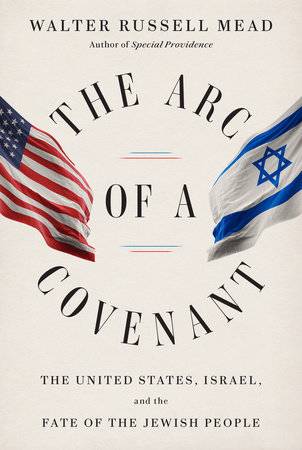
 Tobias Hübinette in Boston Review: