Two new books examine the ordinary roots of our extraordinary regime of high-tech monitoring

Sophia Goodfriend in the Boston Review:

These days automated systems have replaced secret agents. The protagonists of state-sanctioned surveillance are cybersecurity experts hacking into smart phones’ operating systems from a suburban office park, Microsoft engineers refining a biometric camera’s algorithm from their home office, and plain-clothes soldiers parsing through geolocation data for someone else to carry out a drone strike. Most of the people involved are not called agents or spies. They are product managers, engineers, data analysts, or “intelligence researchers.” Often their work feels so ordinary they might forget they are in the business of espionage. Sometimes they might not even realize it to begin with.

Two recent books—Brian Hochman’s The Listeners: A History of Wiretapping in the United States and Roberto González’s War Virtually: The Quest to Automate Conflict, Militarize Data, and Predict the Future—join a cascade of new titles on the genealogy, impact, and future of contemporary surveillance regimes.

More here.

Tuesday Poem

A Reporter from New York Asks Edith Mae Chapman,
Age Nine, What Her daddy Tells her about the Strike

We ain’t to go in the company store, mooning
over peppermint sticks, shaming ourselves like a dog
begging under the table. They cut off our account
but we ain’t no-account. We ain’t to go to school
so’s the company teacher can tell us we are.
The ain’t going to meeting and bow our heads
for the company preacher, who claims it is the meek
will inherit the coal fields, instead of telling
how the mountains will crumble and rocks
rain down like fire upon the heads
of the operators, like it says in the Bible.
We ain’t to talk to no dirtscum scabs
and we ain’t to talk to God. My daddy
is very upset with the Lord.

by Diane Gilliam
from Kettle Bottom
Perguia Press, 2004

Understanding the Results of a Randomized Trial of Screening Colonoscopy

Editorial in The New England Journal of Medicine:

For more than two decades, colonoscopy has been recommended as one of several available options for colorectal cancer screening, and it has been the predominant form of screening for colorectal cancer used in the United States. However, the best evidence to support its use has been limited to data from cohort studies, which have estimated that this type of screening has been associated with a 40 to 69% decrease in the incidence of colorectal cancer and a 29 to 88% decrease in the risk of death from this disease.1 Unlike randomized, controlled trials, which have provided support for fecal occult blood testing and sigmoidoscopy,2 cohort studies probably overestimate the real-world effectiveness of colonoscopy because of the inability to adjust for important factors such as incomplete adherence to testing and the tendency of healthier persons to seek preventive care.

This evidence gap is addressed by the landmark Nordic-European Initiative on Colorectal Cancer (NordICC) trial, the results of which are now reported in the Journal by Bretthauer et al.3 This pragmatic trial involved nearly 85,000 men and women who were randomly assigned either to receive an invitation to undergo screening colonoscopy or to receive usual care (i.e., no screening). In the intention-to-screen analysis, colonoscopy was found to reduce the risk of colorectal cancer over a period of 10 years by 18% (risk ratio, 0.82; 95% confidence interval [CI], 0.70 to 0.93). However, the reduction in the risk of death from colorectal cancer was not significant (risk ratio, 0.90; 95% CI, 0.64 to 1.16).

More here.

Female birds disguised as males get extra food

Tim Caro in Nature:

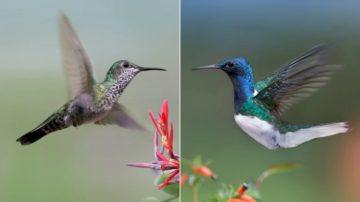
The breathtaking palette of colours seen in nature is the fuel that drives many of us to become biologists, and is the reason why some researchers try to understand the biological basis of animal and plant coloration1. Normally, the drivers of such evolutionary processes can be bracketed into categories that result in colour for protection, signalling or physiological reasons2Writing in Proceedings of the Royal Society B, Falk et al.3 propose an evolutionary driver with a new twist.

Variation in coloration occurs between species but also within them — leopards (Panthera pardus), for example, can have a black or mottled tawny coat, and the flowers of Iris lutescens can be purple or yellow. These colour differences are variations in form called polymorphisms. For some scientists, it is sufficient to know that such colour polymorphisms exist, but for others, the underlying genetics of such variation must be understood. Formally, a polymorphism is “the occurrence together in the same habitat of two or more distinct forms of a species in such proportions that the rarest of them cannot be maintained by recurrent mutation”4. In other words, for the rare forms to be present, a new mutation doesn’t have to occur each time.

More here.

Sunday, October 9, 2022

Why does time go forwards, not backwards?

Martha Henriques at the BBC:

The issue is that Newton’s laws work about twice as well as we might expect them to. They describe the world we move through every day – the world of people, the hands that move around a clock and even the apocryphal fall of certain apples – but they also account perfectly well for a world in which people walk backwards, clocks tick back afternoon to morning, and fruit soars up from the ground to its tree-branch.

“The interesting feature of Newton’s laws, which wasn’t appreciated till much later, is that they don’t distinguish between the past and the future,” says the theoretical physicist and philosopher Sean Carroll, who discusses the nature of time in his latest book The Biggest Ideas in the Universe. “But the directionality to time is its most obvious feature, right? I have photographs of the past, I don’t have any photographs of the future.”

The problem is not confined to the centuries-old theories of Newton. Virtually all of the cornerstone theories of physics since then have worked just as well going forward in time as they do backwards, says physicist Carlo Rovelli of the Centre for Theoretical Physics in Marseille, France, and the author of books including The Order of Time.

More here.

As Himalayan Glaciers Melt, a Water Crisis Looms in South Asia

Vaishnavi Chandrashekhar at the Yale School of the Environment:

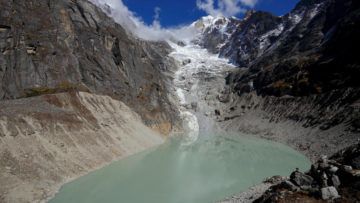
Spring came early this year in the high mountains of Gilgit-Baltistan, a remote border region of Pakistan. Record temperatures in March and April hastened melting of the Shisper Glacier, creating a lake that swelled and, on May 7, burst through an ice dam. A torrent of water and debris flooded the valley below, damaging fields and houses, wrecking two power plants, and washing away parts of the main highway and a bridge connecting Pakistan and China.

Pakistan’s climate change minister, Sherry Rehman, tweeted videos of the destruction and highlighted the vulnerability of a region with the largest number of glaciers outside the Earth’s poles. Why were these glaciers losing mass so quickly? Rehman put it succinctly. “High global temperatures,” she said.

Just over a decade ago, relatively little was known about glaciers in the Hindu Kush Himalayas, the vast ice mountains that run across Central and South Asia, from Afghanistan in the west to Myanmar in the east. But a step-up in research in the past 10 years — spurred in part by an embarrassing error in the Intergovernmental Panel on Climate Change’s 2007 Fourth Assessment Report, which predicted that Himalayan glaciers could melt away by 2035 — has led to enormous strides in understanding.

More here.

History shows that free trade can’t buy world peace

Jacob Soll in Politico:

One of the most enduring ideas in economics is that free markets bring peace between countries. It comes from the notion that commerce drives humans to follow their mutual material interests rather than make destructive war due to passions.

This was the animating force behind the U.S. granting China its “most-favored-nation” trade status in 2000, which allows for free trade and economic cooperation. Republicans and Democrats alike assured the public that the deal would bring “constructive engagement” and expose communist China to America’s “ideals” of democracy. Where are we today? Beijing has moved closer to authoritarianism, economic competition is fiercer than ever, and American and Chinese diplomatic relations are near a crisis point, with both countries brandishing threats of war. Free trade has brought some peace, but it has not brought lasting friendship between the world’s two superpowers.

More here.

Bruno Latour, French philosopher and anthropologist, dies aged 75

Lucy Knight and Angelique Chrisafis in The Guardian:

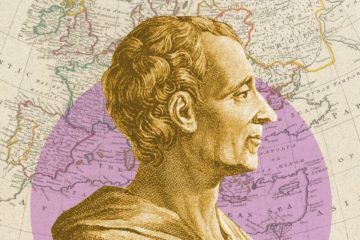
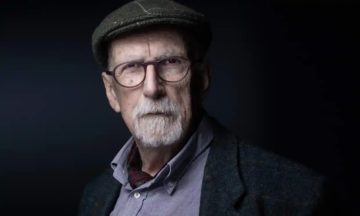
The French thinker Bruno Latour, known for his influential research on the philosophy of science has died aged 75.

Latour was considered one of France’s most influential and iconoclastic living philosophers, whose work on how humanity perceives the climate emergency won praise and attention around the world.

He won the Holberg prize, known as the Nobel of the humanities, in 2013, hailed for a spirit that was “creative, imaginative, playful, humorous and – unpredictable”.

Emmanuel Macron tweeted that as a thinker on ecology, modernity or religion, Latour was a humanist spirit who was recognised around the world before being recognised in France. The French president said Latour’s thoughts and writing would continue to inspire new connections to the world.

More here.

Sunday Poem

Quitting Time

The hosed-down chamfered concrete pleases him.
He’ll wait a while before he kills the light
on the cleaned up yard, its pails and farrowing crate,
And the cast-iron pump immobile as a herm
Upstanding elsewhere, in another time.
More and more this last look at the wet
Shine of the place is what means most to him —
And to repeat the phrase “My head is light,”
Because it often is as he reaches back
And switches off, a home-based man at home
In the end with little. Except this same
Night after nightness, redding up the work,
The song of the tubular steel gate in the dark
As he pulls it and starts his uphill trek.

by Seamus Heaney
from District and Circle
Farrar, Straus and Giroux, 2006

Life Is Hard

Helena de Bres in LARB:

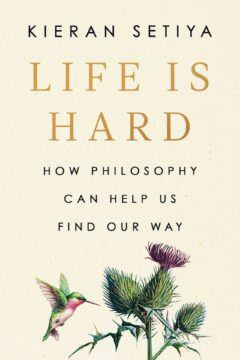
HAVE YOU NOTICED lately that everything is shit? Things were very shitty the year before last, they became even shittier last year, and now everything is just indescribably shit. As a species, we’ve been stuck with this aspect of the human condition for around 300,000 years. But the question of how to respond to it intellectually and emotionally arises with fresh urgency in each new generation. And in the face of each fresh piece of shit. Traditionally, one role of philosophy has been to aid us in this task. Friar Lawrence advises Romeo, banished from his city and the arms of his girl, to sip “Adversity’s sweet milke, Philosophie.” However, over the past couple of centuries, with the transformation of philosophy into an academic discipline, its connection with self-help has largely been severed. The aim of Kieran Setiya’s new book Life Is Hard is to recapture philosophy’s ancient mission of “helping us find our way” in the face of life’s afflictions.

One storied philosophical response to our situation is to claim that, when you really think about it, Nothing Is Shit. The 17th-century poster child for this view was Gottfried Leibniz, who argued that everything that’s apparently terrible and senseless is in fact a necessary, even beautiful part of God’s benevolent scheme. Today we’re more likely to find the suggestion on Instagram, in a sunset-saturated image exhorting us to exude “GOOD VIBES ONLY” or “MANIFEST JOY.” I don’t know about you, but the bare reading of these phrases makes me bust out bad vibes like octopus ink, and Setiya is a kindred spirit here. It’s pretty clear that the universe contains significant pointless suffering, and we do ourselves no favors in denying the fact. “What we need in our affliction,” Setiya writes, isn’t self-deception or distraction but “acknowledgment.” Engage that core and lean in.

More here.

Iran’s Protests Are the First Counter-Revolution Led by Women

Robin Wright in The New Yorker:

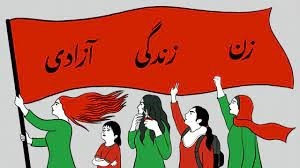
The girls and women of Iran are just bitchin’ brave, flipping the bird at its Supreme Leader in a challenge to one of the most significant revolutions in modern history. Day after dangerous day, on open streets and in gated schools, in a flood of tweets and brazen videos, they have ridiculed a theocracy that deems itself the government of God. The average age of the protesters who have been arrested is just fifteen, the Revolutionary Guard’s deputy commander claimed last week. In the process, they have captured the world’s imagination; sympathy rallies have been held from London to Los Angeles, Sydney to Seoul, and Tokyo to Tunis.

Iran’s protests may well be the first time in history that women have been both the spark and engine for an attempted counter-revolution. “The role played by Iranian women right now seems very unprecedented,” Daniel Edelstein, a political scientist at Stanford and an expert on revolutions, told me. One of the few possible parallels was the role of Parisian female poissonières, or market workers, who stormed Versailles to prevent the king from turning against the National Assembly and crushing the nascent French Revolution, he said. In that case, however, “the women were seeking to prevent counter-revolution, not contributing to it.” During the Russian Revolution, bread riots led by women in Petrograd played a pivotal role in the tsarist empire’s collapse, Anne O’Donnell, a Russia historian at New York University, told me. But Iran’s protests have been unique because, she said, “this is not just an upheaval involving women, it is an upheaval about women and women’s freedom, and that makes it very special.”

More here.

Saturday, October 8, 2022

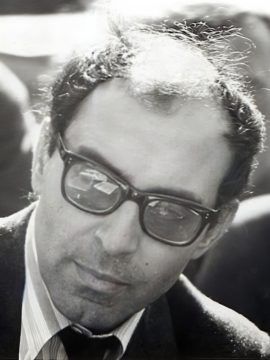
Concerning Godard

Fredric Jameson in Sidecar:

After decades in which inscrutable titles signed Godard popped up as regularly as clockwork in the film festivals, while the image of their maker deteriorated from rebel into dirty old man, if not technologically obsessed sage, it is stunning, leafing through the filmographies, to remember how much these films counted as events for us as we waited for each new and unexpected one in the 1960s, how intensely we scrutinized the political engagements of the Dziga Vertov group, with what genuinely engaged curiosity we asked ourselves what the end of the political period would bring, and later on what we were to do with the final works of the ‘humanist’ period, where they came from, and whether they meant a falling off or a genuine renewal.

Throughout all this we were entertained or provoked by the increasingly ignoble ‘thoughts’ or paradoxes which either demanded meditation or inspired a mild contempt, tempered by the constant reminder that visuality, if it thinks, does so in a way not necessarily accessible to the rest of us; while his films went on ‘thinking’ in chiasmatic images: Belmondo imitating Bogart, Piccoli inviting Bardot to use his bathwater (‘I’m not dirty’), the world conquerors exhibiting their picture postcards, Mao’s Cultural Revolution taking the form of the most infectious music, the world ending in a traffic jam, a character scarfing up yoghurt with a finger in the bathroom, two African garbage collectors reciting Lenin, our favourite film stars baffled by their new roles, an interpolated series of interview-interrogations in which ten-year-olds are asked about class struggle, and fun-loving models, about the latest decisions of the CGT, ‘la musique, c’est mon Antigone!’ – narrative deteriorating steadily all the while only to end up in 3-D or in images as thick as butterflies in front of the face.

More here.

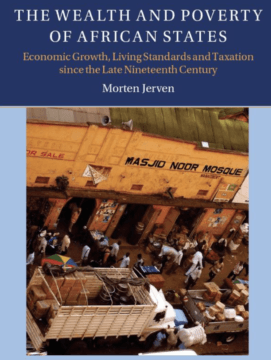
Africa’s Century of Growth?

Alden Young in Phenomenal World:

On May 1, 2014, Nigeria’s then-president, Goodluck Jonathan, addressed a crowd of workers in the country’s capital Abuja.  He declared that “the challenge of the country is not poverty, but redistribution of wealth.” The prompt for his comment was a report issued only a few days prior, which labeled Nigeria, Africa’s most populous country, as one of only five nations that are home to two-thirds of the world’s population living in extreme poverty. Rejecting the categorization of Nigeria as a poor country, President Jonathan pointed to the country’s Gross Domestic Production (GDP), which he declared was “over half a trillion dollars.” Moreover, the economy, he maintained, was “growing at close to 7 percent.”

It was only a week before the president’s address that the official figure for Nigeria’s GDP had been significantly revised. The first reexamination of the structure of the Nigerian economy since 1990 showed an increase in the country’s 2013 GDP by 89 percent. Scholars were surprised by the dramatic growth in the banking and telecommunications sectors and the significant decline in the relative size of the hydrocarbon sectors.

More here.

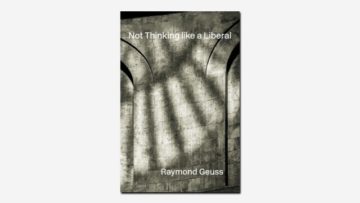
An Illiberal Life

Blake Smith in American Affairs:

Raymond Geuss, Cambridge philosopher, is a prominent critic of liberalism and neoliberalism, and of the tradition of anglophone analytic political philosophy that he sees as their ideological prop. His scholarship, since the 1970s, can be read as an attempt to model another form of thinking, an approach inspired by classical antiquity, Nietzsche, and the Frankfurt school. Against what he sees as the pallid abstractions of Anglo-American political philosophy, Geuss presents himself as a champion of a more skeptical, historically informed way of thinking about politics. In his new book, Not Thinking Like a Liberal, Geuss gives an account of the autobiographical origins of this mode of thought and, more ambitiously, though also more vaguely, gestures toward an alternative to liberalism.1

Not Thinking Like a Liberal traces Geuss’s education, first at an unusual Catholic boarding school in the 1950s, and then at Columbia University with figures such as Sidney Morgenbesser. As a memoir, the book is not particularly compelling. It contains little in the way of events, psychology, or gossip. Geuss underplays, for example, the con­flict with Morgenbesser that eventually led to their break and, in a notable silence, avoids discussion of Robert Nozick, who was also Morgenbesser’s student (as an undergraduate) during that era. Nozick became one of the most prominent philosophers in the tradition Geuss despises and is a frequent target of his polemic in other writings.

Not Thinking is rather a paean to Geuss’s influences. This mode of exposition allows him to express his political and philosophical commit­ments without having to argue for them, presenting them instead as aspects of his character acquired through engagement with his teachers. Geuss sees it as his good fortune that these influences equipped him to avoid the almost irresistibly stultifying influence of liberalism on Ameri­cans’ minds. He was able to escape this stupefaction, he writes, thanks to the peculiar combination of Catholic and Marxist influences among the refugee clergymen who staffed his school.

More here.

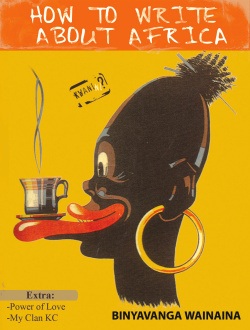
‘How to Write About Africa’ by Binyavanga Wainaina

Nesrine Malik at The Guardian:

It’s beginning to seem like Binyavanga Wainaina’s satirical essay How to Write About Africa might be, after the Bible, the most read English-language text on the African continent. It skewered cliched writing with a roll call of stereotypes that appear to be obligatory in descriptions of the continent. “Readers will be put off,” he writes, “if you don’t mention the light in Africa. And sunsets – the African sunset is a must.”

The essay touched a nerve, and alongside the short story Discovering Home, which won the Caine prize for African Writing in 2002, established the Kenyan author as both a literary talent and an uncompromising commentator. But neither of these pieces fully does him justice. His death in 2019, at just 48, deprived us of a fierce talent, a real pan-African in both experience and orientation.

more here.