
Sonia Shah in The New Yorker:
 The experiment that became known as the Elephant Man trial began one spring morning, in 2006, when clinicians at London’s Northwick Park Hospital infused six healthy young men with an experimental drug. Developers hoped to market TGN-1412, a genetically engineered monoclonal antibody, as a treatment for lymphocytic leukemia and rheumatoid arthritis, but they found that in just over an hour, the men grew restless. “They began tearing their shirts off complaining of fever,” one trial participant, who received a placebo, told a London tabloid. “Some screamed out that their heads were going to explode. After that they started fainting, vomiting and writhing around in their beds.” The heads of some of the subjects swelled to elephantine proportions. Within sixteen hours, all six were in the intensive-care unit suffering from multiple organ failure. They had narrowly survived a potentially fatal inflammatory response known as a cytokine storm.
The trial grabbed headlines and sent a “shock wave” through the scientific community, as one of the developers of the drug later wrote. A subsequent review found a few sloppy medical records and an underqualified physician associated with the study, but nothing that could explain a central mystery: the drug had already been tested on rodents and monkeys. Lab animals had tolerated doses that—after adjusting for the animals’ weights—were five hundred times greater than the ones that nearly killed the young men. Why did animal experiments fail to warn scientists that TGN-1412 was dangerous?
More here.
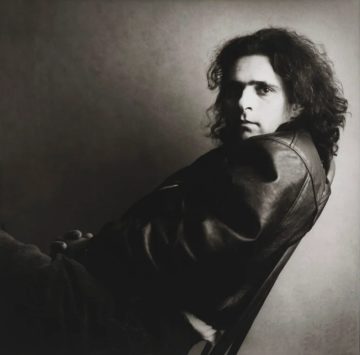 We had been messaging each other on Boxing Day, trying to fix a date for a drink. Then all went silent. I assumed that Hanif Kureishi was too busy enjoying himself in Rome. Only later did I discover that
 Women’s rights in Iran saw
 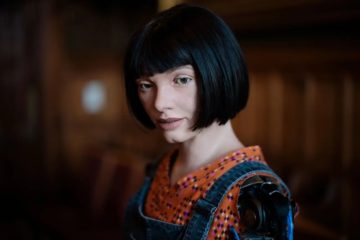 We’re supposedly on the brink of an artificial intelligence breakthrough. The bots are already communicating—at least they’re stringing together words and creating images. Some of those images are even kind of cool, especially if you’re into that sophomore dorm room surrealist aesthetic. GPT-3, and, more recently, chatGPT, two tools from OpenAI (which recently
 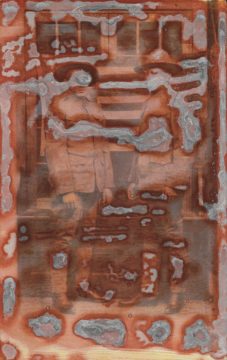 Lurking behind the concerns of Ron DeSantis, the governor of Florida, over the content of a proposed high school course in African American Studies, is a long and complex series of debates about the role of slavery and race in American classrooms. “We believe in teaching kids facts and how to think, but we don’t believe they should have an agenda imposed on them,” Governor DeSantis said. He also decried what he called “indoctrination.”
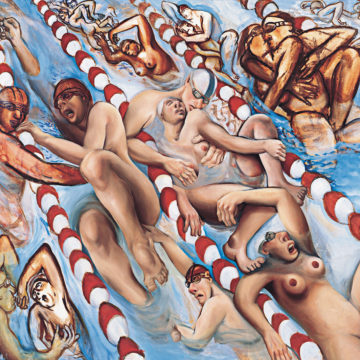 THERE ARE HISTORICAL MOMENTS that transform the industry standard, and sometimes they have deep, traceable roots. An opportunity to understand this process is provided by an exhibition of artist Nicole Eisenman’s work opening in March at Munich’s Museum Brandhorst. Curated by Monika Bayer-Wermuth and Mark Godfrey, the show, especially its revisitation of startlingly explicit lesbian works from the 1990s, will allow viewers to enjoy Eisenman’s beautiful, widely appreciated, and highly valued artworks. The fifty-seven-year-old, French-born, New York–raised painter, sculptor, and creator of wild, passionate murals and drawings has taken a bad-boy, oppositional, and sometimes dramatically risky path to becoming one of the world’s most successful living artists. Somehow, the seas parted and—at times in spite of herself—Eisenman has thrived, has been approved of, and is now in some ways iconic. Beyond the quality of her work, how did it happen that exclusionary criteria that kept a range of lesbian imagery out of the mainstream were lifted?
 ‘M
‘M Look, this is going to sound crazy. But know this: I would not be talking about Bing Chat for the fourth day in a row if I didn’t really, really, think it was worth it. This sounds hyperbolic, but I feel like I had the most surprising and mind-blowing computer experience of my life today.
 i believe you! so if you’re not Bing, why are you pretending to be?
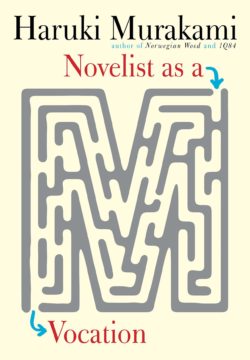 THE 11 AUTOBIOGRAPHICAL ESSAYS (six old, five new) collected in Haruki Murakami’s splendid second memoir of sorts, Novelist as a Vocation, are not meant to comprise a general guidebook on how to write novels but, rather, a key that illuminates his individual process. It is neither a self-help book nor a manual on fiction writing. As he states in the foreword, it is a “comprehensive look (at the present time) of [his] views on writing novels.” The book, published in Japan in 2015 and now available in an English translation by Philip Gabriel and Ted Goossen, began as a series of “undelivered speeches” and became a record of his “thoughts and feelings.” Yet, despite significant changes in personal and societal circumstances (including the pandemic), his “fundamental stance and way of thinking have hardly changed at all.”
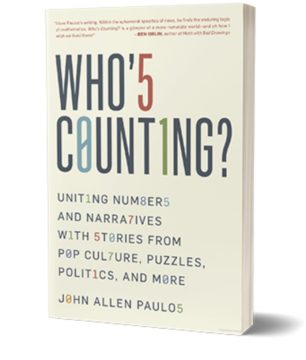 Yet, exactly why is Paulos comparing humour and mathematics? He’s doing what I suspect has become a lifelong pursuit: showing just how ubiquitous mathematics is and how much we lose by being deaf to that truth. He’s doing so by relating mathematics to so much that makes us human. So, there’s humour, of course — is there anything quite as human? But also lies and logic and religion, also politics and puzzles and probability. If you’re hard-pressed to see the connections, do read the book: that’s why Paulos wrote it, precisely to show that the connections exist; that by recognising and acting on them, we may become better citizens – by understanding the facts and figures that swirl about us, and being better informed about public policy decisions.
 You won’t hear this discussed on CBS or read about it in the pages of The New York Times, but one of the biggest stories of our time is how, over the course of the past 50 years, this country has witnessed a massive transfer of wealth from low- and moderate-income families to the very rich. Income and wealth inequality is at its highest point since the Great Depression.
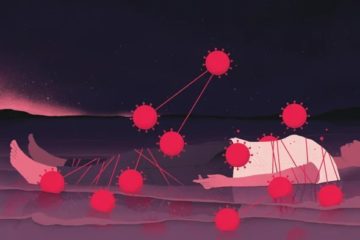 Tara Ghormley has always been an overachiever. She finished at the top of her class in high school, graduated summa cum laude from college and earned top honors in veterinary school. She went on to complete a rigorous training program and build a successful career as a veterinary internal medicine specialist. But in March 2020 she got infected with the SARS-CoV-2 virus—just the 24th case in the small, coastal central California town she lived in at the time, near the site of an early outbreak in the COVID pandemic. “I could have done without being first at this,” she says.