The World, The Text and the Reader
by Chris Horner What should we look for in literature? And in the arts and humanities in general? It’s a large question with many answers, some better than others: entertainment, edification, elevation – and much more. A more limited question might be: what is the point of studying it? Let’s stick with literature as our…
Stoicism as Symptom
by Chris Horner The general terms ‘true’ and ‘good’ or ‘wisdom’ and ‘virtue’, with which stoicism is stuck, are on the whole undeniably uplifting, but because they cannot in fact end up in any kind of expansion of content, they quickly start to become tiresome. —Hegel [1] Stoicism seems to be everywhere at the moment,…
The Myth of Free Thinking
by Chris Horner The illusion of rational autonomy The world is full of people who think that they think for themselves. Free thinkers and sceptics, they imagine themselves as emancipated from imprisoning beliefs. Yet most of what they, and you, know comes not from direct experience or through figuring it out for oneself, but from…
Patience With What is Strange: In Praise of Slow Art
by Chris Horner Less disappointing than life, great works of art do not begin by giving us all their best. —Proust …for here there is no place that does not see you. You must change your life. —Rilke Everything demands our attention. A ceaseless stream of electronic information and entertainment flows through and around us.…
Fire Alarm
by Chris Horner The alarm bells are deafening, and the evidence is irrefutable: greenhouse gas emissions from fossil fuel burning and deforestation are choking our planet and putting billions of people at immediate risk.…[…] We are sleepwalking to climate catastrophe. […] It is a a “code red for humanity. —António Guterres, United Nations Secretary General. The…
Things to Come: See, Hear and Read in 2023
Seen and Heard
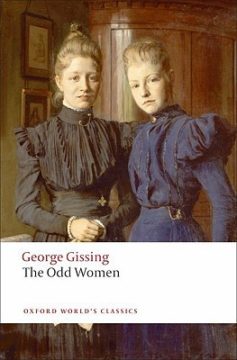
by Chris Horner A choice of ‘cultural things’ I enjoyed in 2022 and which you might like, too. Some were from well before this year, but discovered by me in ’22. Novel, non fiction, concert, recording, exhibition. Here we go: Novel: The Odd Women – George Gissing. This is the kind of novel which when…
Dickens’ Thing
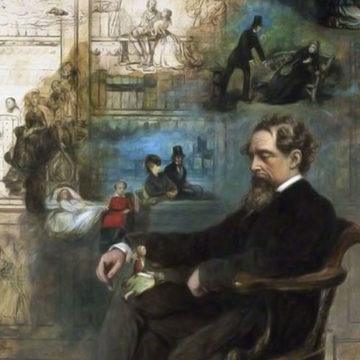
by Christopher Horner Man is that night, that empty Nothingness, which contains everything in its undivided simplicity: the wealth of many representations, images, of which none belongs to him—or which are not present. This night, the interior of nature, that exists here—pure self—in phantasmagorical representations, is night all around it, in which here shoots a…
Darkness Visible
by Christopher Horner Port Sunlight was a model village constricted in the Wirral, in the Liverpool area, by the Lever brothers, and especially under the inspiration of William Lever, later lord Leverhulme. Their fortune was based on the manufacture of soap, and the village was built next to the factory in the Victorian/Edwardian era, for the…
Attention, Please!
by Chris Horner They all want it: the ‘digital economy’ runs on it, extracting it, buying and selling our attention. We are solicited to click and scroll in order to satisfy fleeting interests, anticipations of brief pleasures, information to retain or forget. Information: streams of data, images, chat: not knowledge, which is something shaped to…
More than Daffodils
by Chris Horner Deprivation is for me what daffodils were for Wordsworth –Philip Larkin Wordsworth as the poet of loss and lack William Wordsworth’s poetry can seem all too familiar, what with all that wandering lonely as a cloud. But he is stranger than we often remember him. Take this, for example: Twilight was coming…
The Judgment of Beauty
by Christopher Horner Kant on Beauty Immanuel Kant is perhaps the most influential philosopher of modern times. His Critique of Pure Reason (1781) and Critique of Practical Reason (1788) famously investigated the the limits to human knowledge and the nature (as he saw it) of true morality respectively. But in 1790 he turns his attention…
Music for Pleasure
by Chris Horner No man is a hypocrite in his pleasures —Dr Johnson Without music life would be a mistake —Nietzsche Music started for me with whatever was blaring out of the radio, and later those 45 rpm ‘single’ records that were the main vehicles of listening pleasure for teenagers in the late twentieth century.…
Out of Focus
by Chris Horner There’s a widespread belief that the world is really run by dark forces, or hidden actors we cannot see or know, but which operate like puppet masters somehow ‘behind the scenes’. On this view, only by a painstaking piecing together can we arrive at the truth about what is really going on.…
‘What-aboutism’ and the Universal
by Chris Horner Two Scenarios First scenario: you attempt to criticise, condemn or otherwise focus on an unjust regime, act of aggression, atrocity, or cruelty. An example: a school has been bombed and children have died. It is a war crime and you name it as such as an evil, criminal thing. Soon after the…
The Problem With Equity
by Chris Horner Equality v Equity How should society go about the business of redistributing resources? Many people will be acquainted with the image featured at the top of this article. It is supposed to show the superiority of the notion of ‘equity’ – that is, giving people what they need to succeed, thus satisfying…
A Thoughtless Man
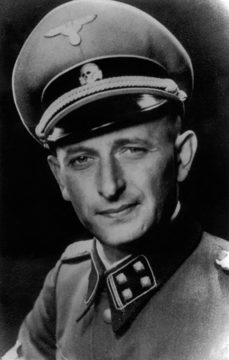
by Christopher Horner Adolf Eichmann was hanged in Jerusalem on June 1st 1962, a little after midnight. He had been found guilty by an Israeli court of ‘crimes against the Jewish people’ and ‘crimes against humanity’. One of the reasons he is still remembered – apart from the sheer scale of the crimes committed by…
Signifying Bullshit
by Chris Horner It is everywhere: the production of words designed to promote the fiction that something positive and good is happening, even though it isn’t. It comes courtesy of the people you work for, the retail outlets you shop from, and the government organisations that regulate your life. An example: a large organisation develops…
Philosophy of Right: Hegel in the 21st Century
by Chris Horner Among the books of the nineteenth century that have something important to say to us now Hegel’s Elements of the Philosophy of Right (1820) deserves a prominent place. It’s not the obvious contender for a popular read in the 21st century. He doesn’t make it easy for himself, if getting readers was…