by Andrea Scrima
1.
What is power? The answer is relative, contingent on context. We speak of the power of sexual allure, the power of persuasion, of charisma, but these only rarely translate into sustainable structures of actual dominance. In a capitalist democracy, power is generally economic and political; it’s less frequently defined as intellectual or moral force. As an artist and writer whose works are not, as sometimes happens in other political systems, banned (which would enhance their power in a different intellectual economy), but merely sell poorly, I have relatively little power, and so my words come from the position of a person frequently, in one way or another, subject to the will of others.
Given the vast difference in agency prevailing between artists and patrons, is an intellectual, artistic, ethical discussion on equal terms even possible? Wealth inspires conflicting emotions in people who don’t have it: envy for the ease and security it affords, because so many of the problems that plague us can be solved with money; frustration that the notion of equitable taxation is evidently a utopian impossibility; dismay at the injustices of wealth distribution and the damage the ever-widening economic divide between the haves and have-nots has inflicted on society, the environment, and world peace. But without wealth, it’s said, we would never have had the splendor of kingdoms and courts; the magnificent cathedrals and palaces would never have been built, the arts would never have flourished. The concentration of wealth and the judicious application of its power is what makes civilizations thrive. Indeed, people working in the arts will always find themselves in happy or unhappy alliance with those in a position to fund their endeavors and will forever speculate on the underlying motivations of those who give so “generously.” The relationship that binds the arts to wealth is inherently problematic, a form of co-dependence in which power is negotiated according to ever-shifting terms. Read more »
 Today marks eight years since I had my last drink. Or maybe yesterday marks that anniversary; I’m not sure. It was that kind of last drink. The kind of last drink that ends with the memory of concrete coming up to meet your head like a pillow, of red and blue lights reflected off the early morning pavement on the bridge near your house, the only sound cricket buzz in the dewy August hours before dawn. The kind of last drink that isn’t necessarily so different from the drink before it, but made only truly exemplary by the fact that there was never a drink after it (at least so far, God willing). My sobriety – as a choice, an identity, a life-raft – is something that those closest to me are aware of, and certainly any reader of my essays will note references to having quit drinking, especially if they’re similarly afflicted and are able to discern the liquor-soaked bread-crumbs that I sprinkle throughout my prose. But I’ve consciously avoided personalizing sobriety too much, out of fear of being a recovery writer, or of having to speak on behalf of a shockingly misunderstood group of people (there is cowardice in that position). Mostly, however, my relative silence is because we tribe of reformed dipsomaniacs are a superstitious lot, and if anything, that’s what keeps me from emphatically declaring my sobriety as such.



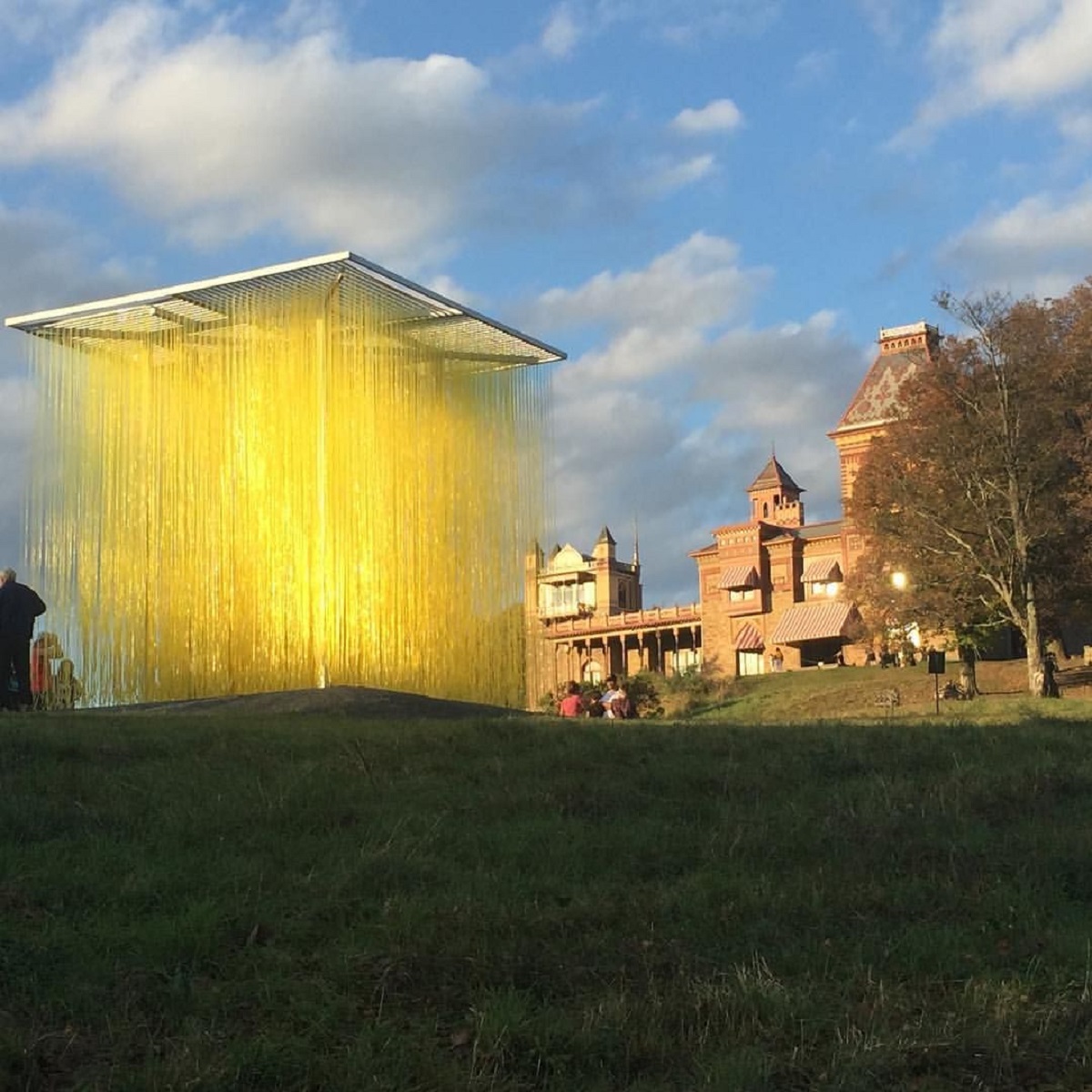 Jesus Rafael de Soto. Penetrable, at Olana State Historical Site, New York.

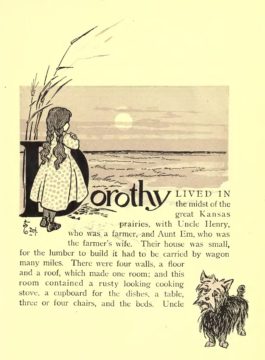 On a small paper bag maybe from a bookstore, one side Romeo’s soliloquy, “But soft! What light from yonder window breaks?” On the other side, these words: “Dorothy lived in the midst of the great Kansas prairies, with Uncle Henry, who was a farmer, and Aunt Em, who was the farmer’s wife. Their house was small, for the lumber to build it had to be carried by wagon many miles. There were four walls, a floor and a roof, which made one room; and this room contained a rusty looking cook stove, a cupboard for the dishes, a table, three of four chairs, and the beds. Uncle Henry and Aunt Em had a big bed in one corner, and Dorothy a little bed in another corner. There was no garret at all, and no cellar–except a small hole dug in the ground, called a cyclone cellar, where the family could go in case one of those great whirlwinds arose, mighty enough to crush any building in its path. It was reached by a trap-door in the middle of the floor, from which a ladder
 I’ve recently started playing pickup basketball again. When I was younger, I played basketball all the time. At two or three years old, we had a toy hoop with a bright orange rim, white backboard, blue pole, and black base. It was, I believe, a “Little Tikes” brand hoop; I’ve just looked it up online, and my research seems to confirm this. In any case, I will now remember it this way—the vague memory I hold has solidified into one canonical version. But it might have been a different brand, the base of the hoop might have been a different color.