by Ryan Sayre
It's been a hectic week. My adopted country has suffered 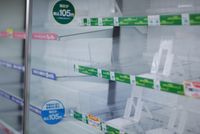 an earthquake, a tsunami, a nuclear disater, and is now knee deep in an energy crisis. This is to say nothing of the fact that my half-finished dissertation, an ethnographic account of none other than earthquake disaster preparedness in Japan, in the space of five minutes last week, become an artifact. In order to be in the midst of things I returned to Tokyo five days after the quake; not necessarily to gain perspective like a journalist might do, but to lose it, to get swept away in the particularities of life in this time of crisis.
Notes:
After five hours in a line that was slowly inching forward, it started to become clear to Mr. Oe that there had never been any bus. The line, he realized, had been moving forward not as a result of passengers boarding and deboarding, but because, one after the next, those at the front gradually began giving up, peeling off, and walking home. No one, it seems, thought to communicate back down the line what was going on. When I asked Mr. Oe if he himself talked to anybody on his long walk home, he laughed nervously and then conceded, “We all moved through the streets silently like a band of ants.”
The area where I’m staying in Kanagawa is designated as Group 2 on the rolling blackout map. This means that we'll be off the grid from 9:20am − 1:20pm today. Blackouts will continue in this manner across eastern and northern Japan, we’re being told, until the end of April. After the television clicked off ten minutes ago, my friend begins to fill the silence by reading aloud the Kanagawa Prefecture news reports on her iPhone. An eighteen year old on a motor scooter, she reads, was killed at an intersection during the blackout last night. The police had apparently not put an officer on duty when the traffic lights went black. As she reads, I am busy scooping hot water out of a electric kettle with a measuring cup. I remember when I was a child and the power would go off. I was continually struck by how few things needed electricity to function: the gas, the water, the telephone. In this apartment building here in Japan, electric pump systems ensure that I can neither get a glass of water from the faucet nor flush the toilet. I can neither use the wireless telephone nor the electric stove. Here in Group 2, even a hot water kettle, equipped as it is with an electric pouring mechanism, is of limited use. Only now, as I am writing this, not even 24 hours after my arrival, does it strike me that I am not thinking about the earthquake victims, or the nuclear threat, but instead am already caught up in the thick everydayness of little things.
The crisis in this local neighborhood south of Tokyo is not a nuclear crisis, but an energy crisis. With eastern Japan operating at a 20% energy deficit owing to the loss of power from the Fukushima plant, these blackouts seem oddly enough to be experienced less an object lesson in the dangers of nuclear power and more as a ghost-of-christmas-future image of life as it would be without nuclear power in Japan.
Read more »



![Anselm_Kiefer_Des_Meeres_und_der_Liebe_Wellen_2011_a4_1[1]](/wp-content/legacy/6a00d8341c562c53ef014e86eea699970d-400wi "Anselm_Kiefer_Des_Meeres_und_der_Liebe_Wellen_2011_a4_1[1]")