by Quinn O'Neill
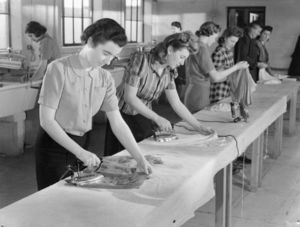
It’s seems respectable in Western society to be really busy. People who show up to work early, work long hours, come in on the weekends, and take their work home with them are described in flattering terms; they’re dedicated and hard working. The on-the-go, life-in-the-fast-lane way of living has been glamourized and marketed to us like fast food and squeezable tubes of yogurt. It’s not good for us, not as individuals and especially not as a civilization.
“I wish I hadn’t worked so hard” is a common regret of the dying. Palliative care nurse, Bronnie Ware, says that she heard this from every male patient that she cared for. Women also had this regret, she explains, but were less likely to have been the breadwinners, since her patients were of an older generation. The men regretted missing their children’s youth and their partner’s companionship for life on “the treadmill of a work existence”.
When we devote all of our time to one thing, we necessarily neglect other things and some of them are bound to be important. It may be our health or our family and friends, or we may lose touch with what’s going on in the world around us.
At the risk of looking like a slacker, I recently perused news items on my computer at work. Reading a headline, I announced to a colleague that it been 1000 days that Bradley Manning had been in jail without trial. “Who’s that?” she responded. She hadn’t heard of him or seen the Collateral Murder video. It seems a lot of people haven’t. Manning’s taken a huge risk and already paid a hefty price, because, as he put it, “I want people to see the truth … regardless of who they are … because without information, you cannot make informed decisions as a public.” With a heavily biased media and a well-distracted public, truth is disappointingly impotent.