by Evert Cilliers aka Adam Ash
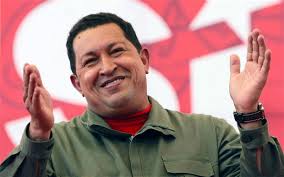 Hugo Chavez did two great things for Venezuela. He wiped out illiteracy, and reduced the poverty rate from 80% to 20%. In other words, he empowered the poor. He had the imagination to think big (like promoting a South American Bolivarian Union) and the cojones to act big (like nationalizing oil, banking and land).
And what do our leaders do in America?
Nothing big. Nothing much. Unless it's wasting time and money and words on fake problems like the deficit and “reforming” Social Security, or trying to stop Iran from getting a nuclear bomb.
What are our real problems?
I see four big ones: unemployment, rising health costs, income/opportunity inequality, and Wall Street fraud.
So how can we solve them?
There's a simple solution to rising health costs: Medicare for all. Put it out there as an option, and watch everyone sign up except the rich who can afford to pay doctors, hospitals, Big Pharma and the health insurance industry the exorbitant rates they like to get away with. The state of Vermont has Medicare for all already, and maybe other states will follow suit, so that the Feds won't ever have to get around to it, which they are constitutionally unable to do anyway.
As for unemployment, we don't ever have a real discussion about it. Add up the officially unemployed of 12 million, the underemployed of 8 million, the 6.8 million who are not counted in the labor force but say they want a job, and you have 26.8 million unemployed and underemployed. That's a pretty big chunk out of the 155 million employed Americans.
What's to be done? Perhaps we should be talking about some imaginative solutions, ferchrissake. Just for starters.
Like maybe we should be talking about a four-day work week. What with machines taking over, there might not be enough work for everybody anyway, so we could employ more people if we shorten the work week.
Or maybe we should discuss a massive investment in a new Public Works Administration. Here we are paying out gazillions in unemployment insurance to our millions of unemployed, when our government could pay them wages instead to work on fixing our infrastructure (rated F by our engineers), and building new infrastructure.
Those are two real solutions, and they're not even being discussed.
Then there's the fact that Wall Street gets away with fraud (and laundering drug lord money and terrorist funds), and therefore will continue to do so, which will continue to sabotage our economy. When he had the chance, Obama lacked the imagination to nationalize the big banks, fire their management, break them up and sell the parts back to private industry, as advocated by no less an economist than Nobel Prize-winner Joseph Stiglitz. And this week Eric Holder admitted that Wall Street banks are too big to jail. In other words, he's not man enough to prosecute Wall Street fraudsters. Doesn't have the balls. Take them to court if you can't take them to jail: that might be enough to scare them into behaving. He doesn't even have the balls to prosecute HSBC for laundering millions in drug cartel money despite being warned not to. But he does have the balls to go after medical marijuana suppliers. What an asshole.
As for income equality: well, at least Obama has put raising the minimum wage on the table — except he wants it to go to only $9 an hour, when doubling it will inject a huge amount of spending into our economy, which our big corporations are not doing, even though they're making bigger profits than ever before. If some of their big profits were diverted into the pockets of their employees, our entire economy would benefit.
Read more »