by Bill Benzon
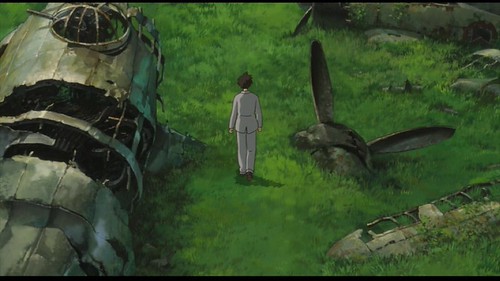
No, I don’t think it is, morally repugnant; quite the contrary. But it IS controversial and problematic, and that’s what I want to deal with in this post. But I don’t want to come at it directly. I want to ease into it.
As some of you may have gathered, I have been trained as an academic literary critic, and academic literary criticism forswore value judgments in the mid-1950s, though surreptitious reneged on the deal in the 1980s. In consequence, overt ethical criticism is a bit strange to me. I’m not sure how to do it. This post is thus something of a trial run.
I take my remit as an ethical critic from “Literature as Equipment for Living” by the literary critic, Kenneth Burke [1]. Using words and phrases from several definitions of the term “strategy” (in quotes in the following passage), he asserts that (p. 298):
… surely, the most highly alembicated and sophisticated work of art, arising in complex civilizations, could be considered as designed to organize and command the army of one’s thoughts and images, and to so organize them that one “imposes upon the enemy the time and place and conditions for fighting preferred by oneself.” One seeks to “direct the larger movements and operations” in one’s campaign of living. One “maneuvers,” and the maneuvering is an “art.”
Given the subject matter of The Wind Rises, Burke’s military metaphors are oddly apt, but also incidental. The question he would have us put to Mizayaki’s film, then, might go something like this: For someone who is trying to make sense of the world, not as a mere object of thought, but as an arena in which they must act, what “equipment” does The Wind Rises afford them?
I note that it is one thing for the critic to answer the question for his or herself. The more important question, however, is the equipment the film affords to others. But how can any one critic answer that? I take it then that ethical criticism must necessarily be an open-ended conversation with others. In this case, I will be “conversing” with Miyazaki himself and with Inkoo Kang, a widely published film critic.