“The scent, the scent alone is enough for our beasts.”
~ Marinetti
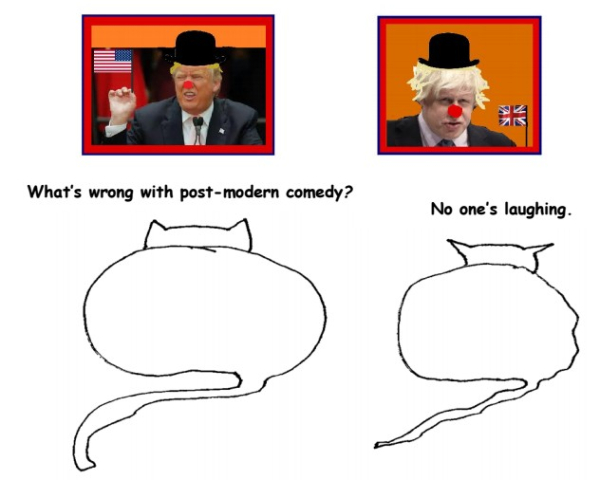
And no one, least of all Fukuyama, could have predicted the circus slated to begin in Cleveland, with the most unlikely candidate in recent political history about to receive the nomination of the Republican Party for President. Actually, I should amend that: perhaps Upton Sinclair did, 80 years ago. But Sinclair had the dubious benefit of witnessing firsthand the rise of fascism; few people are alive today who remember how wide the Overton Window actually used to be. We need to get much, much weirder.
But it's not just that things are getting weirder. Even more germane is that things are getting weirder, faster. This is nowhere more evident than in the ways in which technologies are insinuating themselves into the social fabric. As I've argued before, each technological development creates the substrate upon which a further, faster and even more unpredictable set of technologies and their circumstances manifests. Perhaps I'm biased, since I've been observing these phenomena for a while, but consider a few recent developments.
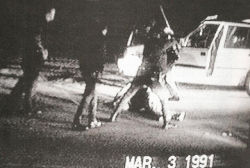
Exhibit A: Racially inflected police brutality is an old story. But awareness of it has skyrocketed in the past few years with the prevalence of video cameras. However, this prevalence was only made possible when video recording was bundled into the larger rubric of the smart phone. If video cameras as objects were sufficient unto themselves, we would have seen a very different trajectory following the 1991 Holliday videotape of the Rodney King beating. But it took nearly a full generation for the creation of not only the means of cheap and easy recording, but also its equally cheap and easy distribution. And until recently, even this latter infrastructure was fairly staid: YouTube and perhaps a few other platforms.