by Carl Pierer
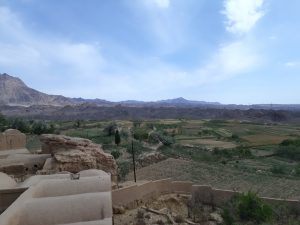
Yazd, one of the big three Tourist destinations in central Iran, has a rather challenging climate. With summer temperatures often exceeding 40C and hardly any precipitation at all (49 mm per year), water is a major concern. The city is rightfully famous for its wind towers (بادگیر) and qanats (قنات). While the former were and sometimes still are used for cooling houses, water reservoirs or storage rooms, the latter used to provide the city with water. Walking through the city, located in this rather inhospitable environment, one is constantly reminded that question of water dominates many aspects of life: from the garden and parks to agriculture and industry, from housing location to food storage and cooling. For many of these, the ingenious use of qanats provided an answer.

Writing in 1968, Paul English [2] states that in Iran alone 15 million acres (roughly 6 million hectares, or 60.000 km2) of cultivated land are watered by 37.500 qanats. This, at the time, corresponded to between one-third and a half of the total cultivated land. Historically, they provided up to ¾ of the water used in Iran. [1] Being such an important feature of Iranian cities, it is worth looking at some of their technical details. Read more »

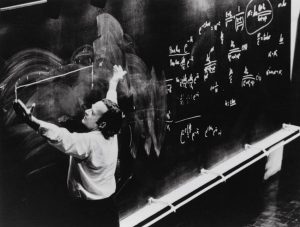 On May 11th, to mark the 100th anniversary of Richard Feynman’s birth, Caltech put on a truly dazzling evening of public talks. I heard that tickets sold-out online in four minutes; and this event was so popular that attendees started queueing up to enter the auditorium an hour before the program began. Held in Caltech’s
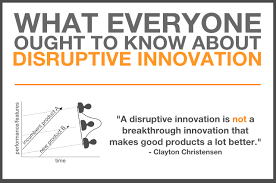 30 years ago I moved from the UK to New York City and I gave up my car. I had mixed feelings about doing so at the time – I was only 21 and driving was still a novelty and an expression of independence. When I moved out of New York City to upstate 13 years later, I again became a car owner and regular driver. After my divorce, when I moved back to New York City, I once again gave up my car, this time happily. I would honestly be thrilled if I never had to get behind the wheel of a car again. I don’t enjoy driving, I’m not the most confident driver (I cannot reverse to save my life even after over 30 years of driving) and I generally would prefer to be driven. My transportation needs are now taken care of by a combination of public transport, ride sharing services and a boyfriend with a car who is very good about driving me around. And thanks to online shopping, the retail convenience of a car ownership has almost totally disappeared. As far as I’m concerned, this is a perfect state of affairs.
  The freer the market, the more people suffer.
 It’s with a certain pleasure that I can recall the exact moment I was seduced by the musical avant-garde. It was in the fourth grade, in a public elementary school somewhere in New Jersey. Our music teacher, Mrs. Jones, would visit the classroom several times a week, accompanied by an ancient record player and a stack of LPs. You could always tell when she was coming down the hall because the wheels of the cart had a particularly squeak-squeak-wheeze pattern. However, such a Cageian sensibility was not the occasion of my epiphany. I’m also not sure if fourth-graders are allowed to have epiphanies, or, which is likelier, if they are not having them on a daily basis.


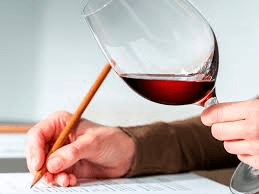 If by “objectivity” we mean “wholly lacking personal biases”, in wine tasting, this idea can be ruled out. There are too many individual differences among wine tasters, regardless of how much expertise they have acquired, to aspire to this kind of objectivity. But traditional aesthetics has employed a related concept which does seem attainable—an attitude of disinterestedness, which provides much of what we want from objectivity. We can’t eliminate differences among tasters that arise from biology or life history, but we can minimize the influence of personal motives and desires that might distort the tasting experience.