by Gabrielle C. Durham
 In the immortal words of Prince Rogers Nelson’s party gem from 1982:
“But life is just a party, and parties weren’t meant to last . . .
“So tonight I’m gonna party like it’s 1999.”
So much fun stuff happened in 1999: rampant concern about Y2K; the movie “The Matrix” came out; Bill Clinton’s ongoing inability to keep his dick in his pants and subsequent impeachment and acquittal; former pro wrestler Jesse Ventura became governor of Minnesota; U.S. military college The Citadel graduated its first female cadet; the Elian Gonzalez controversy raged in the States; and Cher’s single “Believe” was released.
But do you remember what you said? Do you remember when something made you laugh, not LOL? It was not actually all that long ago, TBH. Back in 1999, reading a text typically meant applying a highlighter, most likely in neon yellow, to the testable information in a book or handout that the teacher assigned. It has a very different meaning from today’s pithier text message. In a score of years, English has changed. Duh, language is always changing; that’s how it stays alive. But if we think about it at all, we think of language change as being in evolutionary terms – something that takes generations, but it actually happens much more quickly. Read more »


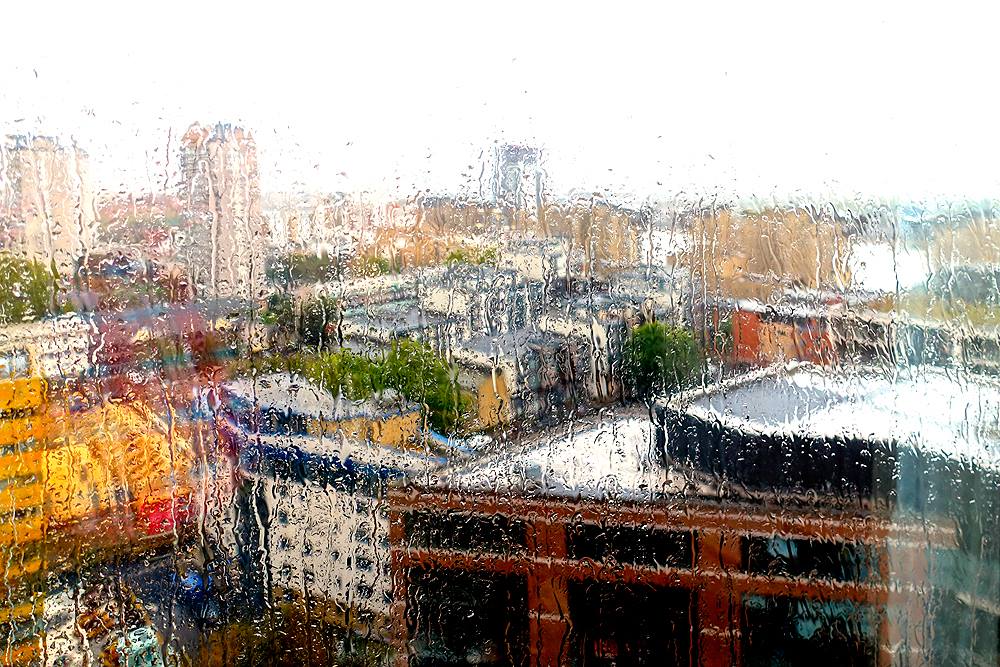
 first day. To the ancients, the sun was God Himself–the Egyptians had Ra, and the Aztecs,
  monuments to track it. In the dark days of winter we brighten our homes with candles and holiday lights. Winter religious holidays like Christmas and Chanukah emphasize lights and candles to brighten the darkness, while other holidays come during spring, when the days get longer. Many of us feel the need to travel south in
  the dead of winter, to get a few days of bright light and longer days.
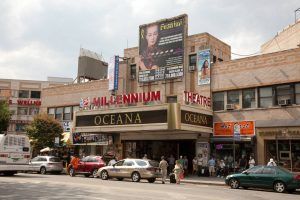 “Eets beeg place. Millennium Theater. Brighton Beach. You see it. We start seven. Very good band. Leader has gigs coming up. I tell him you coming.”

 Like millions of other people in the US, I often begin the day by listening to ‘Morning Edition,’ the early morning news program on National Public Radio. Sometimes, though, I get so disgusted by the rubbish spewed by the politicians being interviewed, or so infuriated by the flimsiness of the questions put to them, that I just can’t stand it and have to take myself out of earshot. Friday was a case in point.
 . . . I want to thank Professor Owens once again for his electrifying lecture on determining the outcome of any baseball season by crunching the data from a ten-game sample, reducing the number of games played by 152. Like so much breakthrough research, this also produced an unintended benefit: the freeing up of nearly 10,000 extra hours on TBS for reruns of The Big Bang Theory. I know we are all grateful.
 In October of 2014, a bunch of young men and women did their university proud. A couple of engineers, two finance graduates, a biology major, some finishing accounting and business degrees, and a clutch from the school of humanities and social sciences; Muslims mostly, two Christians, a lone Hindu, one Buddhist wannabe, and two oblivious to religion though aware of its place in other folks’ lives. They came together from Sahiwal, Karachi, Gilgit, Swat, Peshawar, Gujranwala, one from Quetta (non-Baluchi), and two from Delhi via the University of Texas. Though the majority of students and faculty stayed away, these young men and women with similar features and skin tones, in colorful flowing kurtas, chooridars, skinny jeans, funky T-shirts, and hijabs, got together to celebrate Diwali, a festival that celebrates Ram’s return from exile.


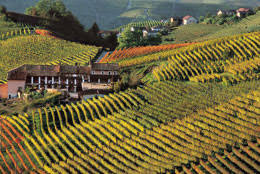 Discussions of the factors that go into wine production tend to circulate around two poles. In recent years, the focus has been on grapes and their growing conditions—weather, climate, and soil—as the main inputs to wine quality. The reigning ideology of artisanal wine production has winemakers copping to only a modest role as caretaker of the grapes, making sure they don’t do anything in the winery to screw up what nature has worked so hard to achieve. To a degree, this is a misleading ideology. After all, those healthy, vibrant grapes with distinctive flavors and aromas have to be grown. A “hands off” approach in the winey just transfers the action to the vineyard where care must be taken to preserve vineyard conditions, adjust to changes in weather, plant and prune effectively and strategically, adjust the canopy and trellising methods when necessary, watch for disease, and pick at the right time.