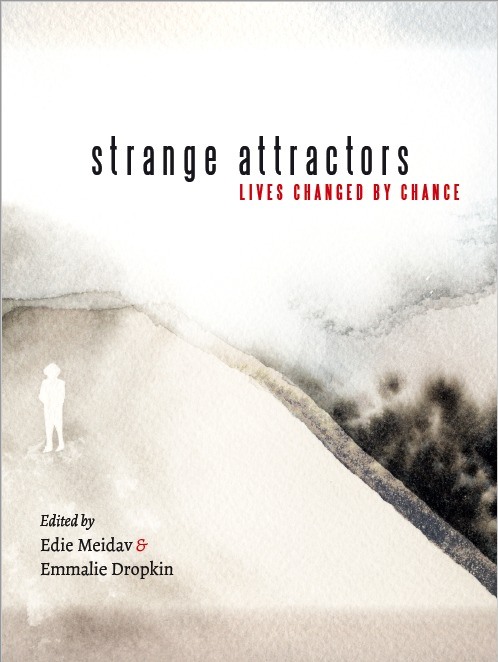
Liesl Schillinger and Andrea Scrima are two of the authors in Strange Attractors, an anthology that’s just come out with University of Massachusetts Press, edited by Edie Meidav and Emmalie Dropkin. The thirty-five pieces in the collection explore unsettling experiences of magnetism and unanticipated encounter irresistible enough to change or derail the course of a life. In chaos theory, “strange attractor” is the term given to the fractal variety of attractor that arises out of a dynamic system; its defining unpredictability makes this mathematical concept an apt metaphor for the twists of fate that send us reeling, but can sometimes feel oddly inevitable in hindsight. In her piece for the anthology, “Children and All That Jazz,” Liesl Schillinger weaves the music and heartache of Joan Baez into the lives and longings of a family in the American Midwest in the 1970s; in Andrea Scrima’s excerpt “all about love, nearly,” the narrator explores the dimensions of a world transfigured, and then dissembled, by passion.
 A.S.: Liesl, I love the part in your story where a pack of kids is playing “Murder in the Dark” and the young narrator’s crush, who plays the part of the killer, draws near her in the dark yard: “I didn’t try to back away, I thought maybe he was going to kiss me, but then he killed me which was so predictable.”
L.S.: It’s funny, as a child, my belief in the importance of love—fed by the nineteenth-century novels I devoured—from Louisa May Alcott to Dickens and Austen and Stendhal—was unshakeable. I was always waiting for the coup de foudre. But that was paired with an instinctive pessimism, or maybe resignation. My mother gave me a reading list, I was expected to read a book a week, and didn’t consider not doing that. But I also read the twentieth-century novels on my parents’ bedroom shelves. John Irving, Shirley Hazzard, V.S. Naipaul, and Graham Greene did a lot to temper my romantic idealism. Or maybe to undermine it. I hoped for love to work out, but didn’t expect it to; and was somehow always relieved, I think (eventually), when one of my castles in the air collapsed, and I was back on solid ground.
A.S.: I guess my piece in the anthology covers the other, unhealthier side of things: when love makes you lose your footing and even your hold on reality: “my crazy, exalted, euphoric collusion in my own demise.”
L.S.: There’s a conversation between (Shakespeare’s) Antony and Cleopatra that I’ve never forgotten, though this is a paraphrase—Cleopatra says something to the effect of: “I will not have love as my master.” Antony responds, “Then you will not have love.” I’ve had a long and occasionally turbulent romantic history, and Antony and Cleopatra’s exchange reflects my experience. Read more »
 Now in this damp, stiff swollen fingers, mine, once slender, of gossamer touch, which pierced skin with steel, silk, molded spheres, to be kicked by heroes, turned warriors, turned champions, turned angels in distant lands, on green fields and roaring theaters of fierce contest of fury and cheer. Yet I am not there, at the game, but I am present, in every single game. They don’t know do they, that without me, the game would not be, that without me, they, howling with joy, howling in expectant yowls and cheers awash in victorious and defeated tears, and beer, this ritualistic collective catharsis, all of this, without me, would not happen, would not be. This story. Where am I in it? What is history but unspeakable violence, erasure and invisibility, spat and polished into and put a sheen upon, to create a mirror for those who look. Yes, a mirror, after all that effort to put a spin on it, we can’t get away can we from ourselves? Won’t we all in trying to cross drown in our collective grief? It is I, bobbing in steel on these shores, not allowed in, who’s fingers bloodied by a thousand pierces, who’s eyes blinded by constant attention who brings them this. These intricate delicate, fine, exquisite fingers, this attentive keen sight, this laboring, I bring them this, the very thing they claim as their soul a distilled meaning and morphing to something sublime. I who they bar from entering. I, who has been left un-reading, unread, now thirsty, hungry, suffocating. I who makes all of this. I who am their constant dread. Left for dead. But I am here, here, off shore, there in that field, in that theater, amidst the squeals of joy. No, the game does not happen without me. And now, hidden here, bobbing, stealing away in steel, floating, lurching on waves upon waves, broken away from that bondage of needles and stretching skin for a perfect sphere for kicking, I am here. A prisoner of contained fates. The Adriatic laps outside: the smell of salt, octopus, fir, citrus and jasmine presents itself in the way of salvation in the way of pain, unforgettable almost impossible to conjure in language, in memory, how to give words to the scent of lavender and black pine and Crni bor. Or those left behind. Equally uncontained perfumed keys unlocking the mind. No, the game doesn’t happen without the likes of me. But I am suffocating now, I am contained here in a coffin of steel, upon the sea, unwanted, unwelcomed, unseen, listening to the cheering roar of a crowd ecstatic as some adored gladiator whips it into net—that sphere of skin I have sewn. The game, I cannot enter, does not happen without me.
 community, which he found, and a decade later founded the Second Vermont Republic, which advocated Vermont secession from the USA to become an independent state, which it had been from 1777 to 1791. Time magazine named the Second Vermont Republic as one of the “Top 10 Aspiring Nations” in the world as recently as 2011.


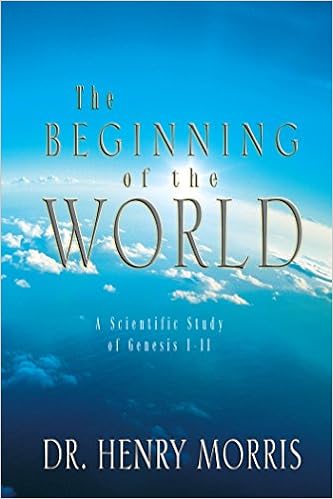 All this is spelt out in Morris’s 1977 book, The Beginning of the World, most recently reprinted in 2005 (in Morris’s lifetime, and presumably with his approval), and available from Amazon as a paperback or on Kindle.

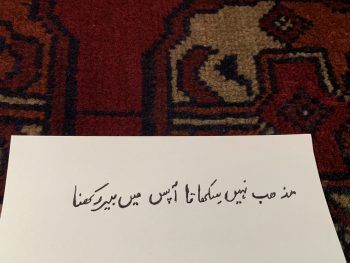 Less than a month ago, the Indian Air Force conducted airstrikes inside Pakistan. The last attack of this kind took place in 1971, before I was born, and though tensions between the two countries have never ceased, even the family’s fragmented recollections of blackouts, travel restrictions and patriotic songs on the radio had become a distant memory for me until the moment I found myself stranded in Karachi due to airspace closure and witnessed not just military crossfire but that of the media of the two countries. The outbursts on news channels, as well as social media were interspersed with slogans and songs. One Indian patriotic song in particular, a ghazal by Allama Iqbal who is known as Pakistan’s national poet, sung not only in the voices of India’s celebrity singers and sweet-faced schoolchildren, but also adapted to their military march tune, caught my attention.

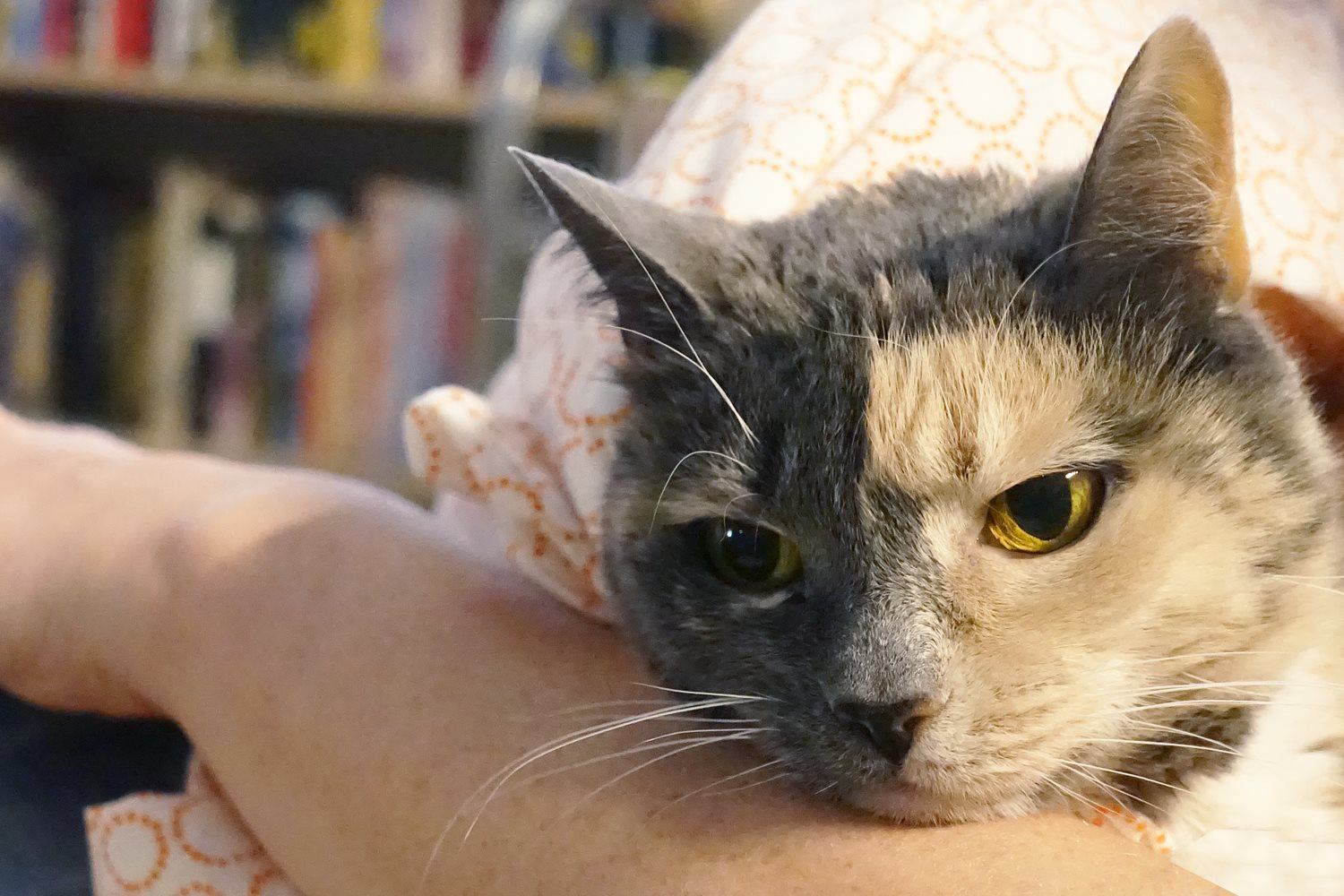
 In this world of divisive and indeed, not infrequently, ugly politics, particularly in the United States under the present administration, and the British pursuit of an exit from the European Union, any opportunity for finding relief from the ‘angst’ of day to day politics is to be welcomed. The reading of Peter Wohlleben’s The Mysteries of Nature Trilogy: The Hidden Life of Trees, The Secret Network of Nature and The Inner Life of Animals provided me with such an opportunity.
 In the next couple of months two of the largest democracies in the world—India and Indonesia—will have their national elections. At a time when democracy is under considerable pressure everywhere, the electoral and general democratic outcome in these two countries containing in total more than one and a half billion people (more than one and a half times the population in democratic West plus Japan and Australia) will be closely observed.
 There is a sense in certain quarters that both experimental and theoretical fundamental physics are at an impasse. Other branches of physics like condensed matter physics and fluid dynamics are thriving, but since the composition and existence of the fundamental basis of matter, the origins of the universe and the unity of quantum mechanics with general relativity have long since been held to be foundational matters in physics, this lack of progress rightly bothers its practitioners.