
How, then, do we get from H. Rider Haggard to Anthony Bourdain? Let’s start with the easy and straightforward. Both are white men, as are Joseph Conrad and Francis Ford Coppola for that matter. Haggard was British; he was born in the 19th century and died in the 20th (1856-1925). Bourdain was American, born in the 20th and died in the 21st, at his own hand (1956-2018). It’s easy enough to interpolate the other two: Joseph Conrad, Polish-British (1857-1924); Francis Ford Coppola, American (1939 and still living).
So much for bare biography. It’s the imaginative life that interests.
Haggard wrote a ton of novels, many of them well-known. The Allan Quatermain stories, starting with King Solomon’s Mines, are said to have inspired the character Indiana Jones. She: A History of Adventure marked the beginning of a different series and is one of Haggard’s best-known novels. If not exactly a high-culture masterpiece, it has been quite influential as one of the founding texts of “lost world” fiction. Wikipedia tells us that it’s been made into 11 films and sold over 83 million copies, making it an all-time fiction best seller, and has been translated into 44 languages.
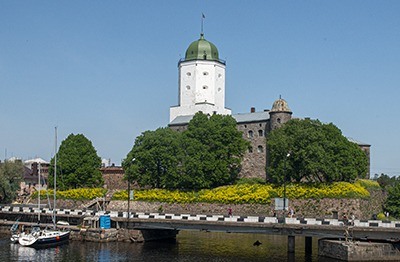 As early as 1293 a Swedish marshal built a castle in Vyborg, now Russian. The castle traded hands repeatedly between the Swedes and the then Republic of Novgorod. With the collapse of the Soviet Union and loss of fortresses in Narva, Tallinn and Riga,






 Racing down a German autobahn at impossible speeds is like running past a smorgasbord when you don’t have time to eat. Exit signs fly by, pointing to delicious, iconic destinations that whet the appetite but that one has no time for: Hameln, Wittenberg, Quedlinburg, Eisenach, Erfurt, Altenburg, Jena, Weimar, Dessau—markers of histories whose tentacles reach into the present in ways that belie their sleepy status on the map. You suppress the urge to slow down and take the off-ramp instead of moving right along to a big-city destination You opt to remain on the asphalt treadmill with arrival anxiety, telling yourself that one day you will take the time to explore all this, just not right now.
 Two weeks ago the 9th US Circuit Court heard



 The Big Bang Theory has been one of the most successful sitcoms in TV history. Last month it ended. In many ways, it ended a long way from where it had begun; many commentators have noticed how the show
 The Doomsday Scenario, also known as the Copernican Principle, refers to a framework for thinking about the death of humanity. One can read all about it in a recent