
by Bill Murray
A few months ago, Mikhail Saakashvili, ousted leader of the former Soviet Republic of Georgia and the Ukrainian town of Odessa, predicted that Russia would next attack either Sweden or Finland. A few days ago I visited the Finnish and Russian border towns of Lappeenranta and Выборг (Vyborg), and if war preparations in these two places are any indication, Sweden had better man the barricades.
For people of a certain age, coming to Russia from any direction sends up a certain Cold War frisson. Today we shall cross the border from Finland, which has been fought over and traded between Sweden and Russia for centuries.
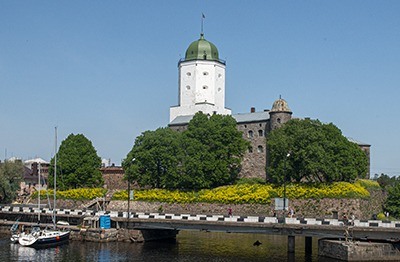 As early as 1293 a Swedish marshal built a castle in Vyborg, now Russian. The castle traded hands repeatedly between the Swedes and the then Republic of Novgorod. With the collapse of the Soviet Union and loss of fortresses in Narva, Tallinn and Riga, Vyborg Castle is the only European-style medieval castle in Russia. Its current iteration is touted as a prime tourist destination but appears to be randomly, and arbitrarily, closed for renovation.
Viipuri, in the Finnish appellation, was capital of Finnish Karelia and a vital outlet to the sea until Vyborg was seized by the Red Army in June of 1944. John H. Vartenen, in a 1979 New York Times article:
The Finns felt that to some extent they had won the war on the ground by forcing the Russians to come to the negotiating table. On the other hand, they felt that they lost at the table because, though the Russians had never moved more than 50 miles into Finland, the Finns lost eastern Karelia, including the area’s second‐largest city, Viipuri.
While Vyborg is almost exactly the same size today as when it was taken from the Finns, for 75 years it has been Russified. If you were twelve years old on the day Viipuri fell and had a child of your own five years later, that child would now be 70. Teaching Finnish was out of the question in early Russian-occupied Vyborg, but even for those who quietly did so, use of the language is dying – except in tourism. Read more »

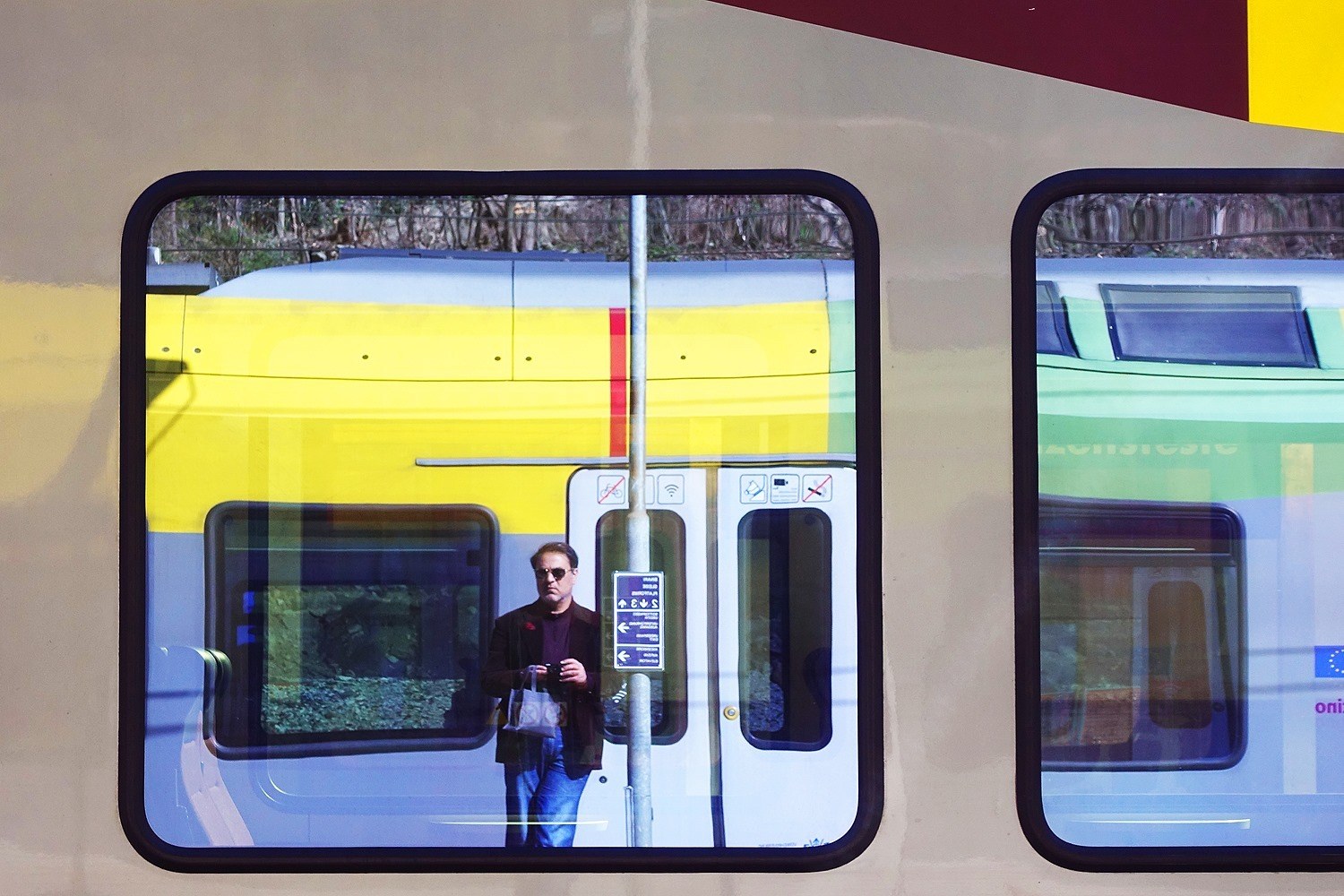
 Racing down a German autobahn at impossible speeds is like running past a smorgasbord when you don’t have time to eat. Exit signs fly by, pointing to delicious, iconic destinations that whet the appetite but that one has no time for: Hameln, Wittenberg, Quedlinburg, Eisenach, Erfurt, Altenburg, Jena, Weimar, Dessau—markers of histories whose tentacles reach into the present in ways that belie their sleepy status on the map. You suppress the urge to slow down and take the off-ramp instead of moving right along to a big-city destination You opt to remain on the asphalt treadmill with arrival anxiety, telling yourself that one day you will take the time to explore all this, just not right now.
 Two weeks ago the 9th US Circuit Court heard

 The Big Bang Theory has been one of the most successful sitcoms in TV history. Last month it ended. In many ways, it ended a long way from where it had begun; many commentators have noticed how the show
 The Doomsday Scenario, also known as the Copernican Principle, refers to a framework for thinking about the death of humanity. One can read all about it in a recent
 ![Henri Matisse created many paintings titled 'The Conversation'. This, from 2012, is of the artist with his wife, Amélie. [Hermitage Museum, St. Petersburg, Russia].](https://3quarksdaily.com/wp-content/uploads/2019/06/Matisse_Conversation-360x292.jpg)