Azra Raza, author of the forthcoming book The First Cell: And the Human Costs of Pursuing Cancer to the Last, oncologist and professor of medicine at Columbia University, and 3QD editor, decided to speak to 26 leading cancer investigators and ask each of them the same five questions listed below. She videotaped the interviews and over the next months we will be posting them here one at a time each Monday. Please keep in mind that Azra and the rest of us at 3QD neither endorse nor oppose any of the answers given by the researchers as part of this project. Their views are their own.
1. We were treating acute myeloid leukemia (AML) with 7+3 (7 days of the drug cytosine arabinoside and 3 days of daunomycin) in 1977. We are still doing the same in 2019. What is the best way forward to change it by 2028?
2. There are 3.5 million papers on cancer, 135,000 in 2017 alone. There is a staggering disconnect between great scientific insights and translation to improved therapy. What are we doing wrong?
3. The fact that children respond to the same treatment better than adults seems to suggest that the cancer biology is different and also that the host is different. Since most cancers increase with age, even having good therapy may not matter as the host is decrepit. Solution?
4. You have great knowledge and experience in the field. If you were given limitless resources to plan a cure for cancer, what will you do?
5. Offering patients with advanced stage non-curable cancer, palliative but toxic treatments is a service or disservice in the current therapeutic landscape?
A nationally-recognized authority on leukemia, Dr. Guido Marcucci has lectured around the world and authored more than 270 scholarly papers on the subject. His ultimate goal is to make leukemia a thing of the past. He has received numerous competitive NCI grants for his clinical and research work focused on the pathogenesis, treatment and prognostic assessment of patients with acute myeloid leukemia. Dr. Marcucci currently serves on the editorial board of three journals, including Blood and the Journal of Clinical Oncology.
 When I watched the 2019 documentary on Apollo 11, it carried me back not to the summer of 1969, when it happened, but to the mid-1980s, when I was an undergrad. I was eight when Apollo 11 launched; of course I was aware of the space program and the moon landings, but I don’t have any memories of everyone gathering around to watch those first steps on another world. My parents weren’t particularly interested, and I don’t remember being caught by the spirit of the times myself.
 cinematic representations of Muslims. Stage One features stereotyped figures (the taxi driver, terrorist, cornershop owner, or oppressed woman). Stage Two involves a portrayal that subverts and challenges those stereotypes. Finally, Stage Three is ‘the Promised Land, where you play a character whose story is not intrinsically linked to his race’. Does
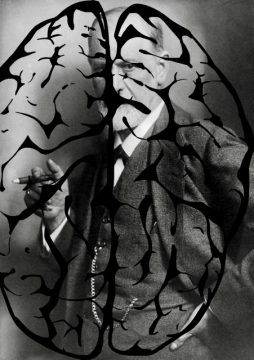 Our expectations sculpt neural activity, causing our brains to represent the outcomes of our actions as we expect them to unfold. This is consistent with a growing psychological literature suggesting that our experience of our actions is biased towards what we expect. —
 Into the Woods
 My friend does not use punctuation when he texts, so there is a stream-of-consciousness quality to much of his communications. According to the fine folks at
 The right to own guns is typically justified by the fundamental right to self-defense against bad guys, either our fellow citizens or the state itself if it were to turn tyrannical. Both of these have a superficial appeal but fail in obvious ways. Guns are an effective means of defending oneself against bad guys only so long as they don’t have guns too (because being equally armed doesn’t add up a defense against those who can pick and choose their moment of aggression). Civilians with guns are also ineffective against the armies and ruthless terroristic violence of a truly tyrannical regime.
 So goes a popular snippet from Seinfeld. In a 2014 article in The Guardian titled “Smug: The most toxic insult of them all?” Mark Hooper opined that “there can be few more damning labels in modern Britain than ‘smug.'” And CBS journalist Will Rahn declared, in the wake of Donald Trump’s 2016 electoral victory, that “modern journalism’s great moral and intellectual failing [is] its unbearable smugness.”

 I was perhaps ten years old when I had unending cups of Eatmore’s fresh handmade mango ice cream while sitting on the lawns of Services Club Sialkot. It was one of the brightest days of my life, with my parents all to myself, undistracted by the demands of their daily doings, and the crystal cups of ice cream brought to us. We sat on reclining garden chairs on the perfectly manicured lawn, bordered by fragrant