
by John Schwenkler
 The community of philosophers is mourning the loss of Barry Stroud, one of the great philosophers of the past half-century, who died on Friday, August 9 of brain cancer. Stroud earned his B.A. from the University of Toronto and his Ph.D. from Harvard University. From 1961 he taught at the University of California, Berkeley, where I knew him during my time as a graduate student there.
Stroud’s important paper of 1968, “Transcendental Arguments,” followed Immanuel Kant in distinguishing two sorts of question that a philosopher can raise about the concepts human beings use in thinking about ourselves and our world. The first, which Kant associates with John Locke, is the question of fact that concerns which concepts we do have and how we came to possess them. To explore our concepts in this way is to engage in what Kant, in his Critique of Pure Reason, called a “physiology of human understanding.” It is to give a causal account of how our minds came to be the way they are—an important project, but not one that is distinctively philosophical, since empirical disciplines such as psychology, sociology, and anthropology also take it up.
Kant’s other way of reflecting on human concepts, which is the one he undertakes in the first Critique, raises instead a question of right. This question asks, given that we have the concepts we do and have come to possess them in whatever way we did, whether we really are justified in possessing those concepts and using them to think about things. It is a question of whether our ways of thinking allow us to have an objective grasp of reality rather than a merely subjective conception of how things are. Read more »


 I live and work in two different cities; on the commute, I continuously ask my phone for advice: When’s the next train? Must I take the bus, or can I afford to walk and still make the day’s first meeting? I let my phone direct me to places to eat and things to see, and I’ll admit that for almost any question, my first impulse is to ask the internet for advice.
 To follow the popular discourse about the gender wage gap in the United States is to confront perpetual confusion. It is a confusion created at least in part by pronouncements of the type many of us have heard: “Women are paid only 82 cents for every dollar men earn! It is high time for women to earn equal pay for equal work!” Two sentences, each true standing alone, but in juxtaposition creating the impression that the
 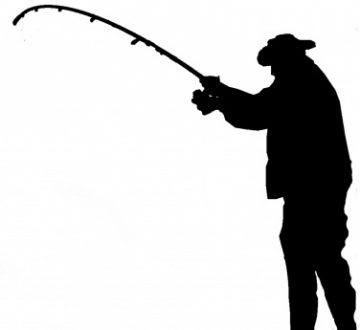 On occasions, while meandering the various English countryside and woodland paths, I have been pleasantly surprised to come across anglers. I have met fishermen dangling their lines in either a pond in some remote corner of the low-lying areas, or wading in water and casting a line down through the waters of a gently flowing river.

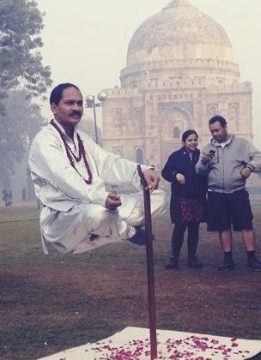

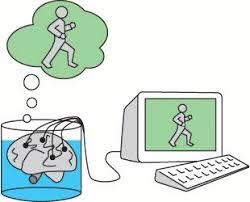 Unfortunately, you have a brain tumor. You don’t know it yet. Your doctor doesn’t know it yet. But you are beginning to have symptoms. The tumor is pressing on surrounding brain tissue and causing you develop a number of delusional beliefs. You believe you are the best swimmer in the world. You believe that dogs and cats are aliens. You believe that you invented the apostrophe. You also, as it happens, believe that you have a brain tumor.
 “Taxi to Bethlehem, taxi to Jericho!” the man at a tourism kiosk is shouting, as I make my way from the tram to Jaffa Gate, known also as Hebron Gate, to Muslims as “Bab al Khalil,” or “door of the friend,” named after Hebron where the prophet Ibrahim/Abraham (Khalil al Allah “God’s Friend”) is laid to rest. Of significance too, is the association of this gate with King David’s (prophet Dawud’s) chamber, for followers of the three Abrahamic faiths: the crusaders named it “King David’s Gate.” It is one of the seven main stone portals of the walled city of Jerusalem.
 Calls for a Manhattan Project–style crash effort to develop artificial intelligence (AI) technology are thick on the ground these days. Oren Etzioni, the CEO of the Allen Institute for Artificial Intelligence, recently issued such a call on
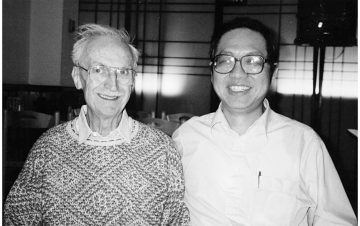
 Fans are the people who know the quotes, the dates of publication, the batting averages, the bassist on this album, the team that general manager coached before. I am not a fan. Don’t get me wrong. I’m full of enthusiasms. But I can’t match you statistic for statistic. I haven’t read the major author’s minor novel. I don’t care who the bassist was. You win. I’m an amateur.