
by Pranab Bardhan
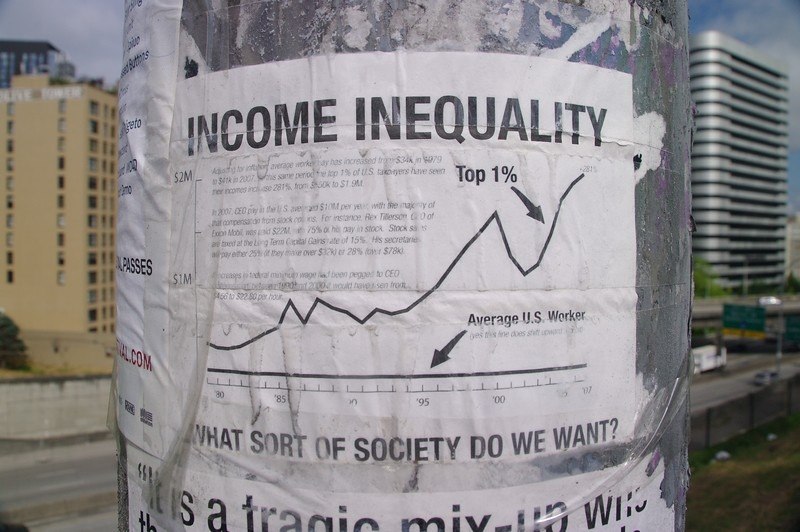 There is widespread concern about increasing or high economic inequality in many countries, both rich and poor. At a global level, according to the World Inequality Report 2018, the richest 1% in the world reaped 27% of the growth in world income between 1980 and 2016, while bottom 50% of the population got only 12%. Over roughly the same period, however, absolute poverty by standard measures has generally been on the decline in most countries. By the widely-used World Bank estimates, in 2015 only about 10 per cent of the world population lived below its common, admittedly rather austere, poverty line of $1.90 per capita per day (at 2011 purchasing power parity), compared to 36 per cent in 1990. This decline is by and large valid even if one uses broader measures of poverty that take into account some non-income indicators (like deprivations in health and education) for the countries for which such data are available.
If absolute poverty is declining, while measures of relative inequality (of income or wealth) show a significant rise (or remain very high), this implies that the conditions of the poor may be improving, but those for the rich may be improving much more. But if people are less poor than before, should we be concerned about high or rising inequality, about how much better-off the rich are, and, if so, why? This is an important question on which more clarity is needed, as quite often when people tell you why they dislike inequality many of the examples they cite are really about their aversion to the stark poverty around them. Read more »

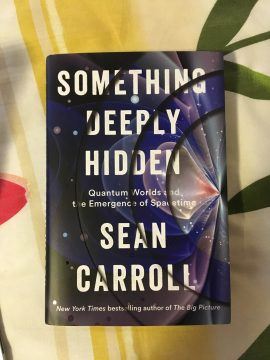 For me, a highlight of an otherwise ill-spent youth was reading mathematician John Casti’s fantastic book “
 Have you ever been in this situation where you had to get a group of 3 men and their sisters across a river, but the boat only held two and you had to take precautions to ensure the women got across without being assaulted?
 Last weekend, a bat got into my house somehow. I first heard it in the small hours of Friday night as it scratched around somewhere near the furnace flue. I didn’t know if it was an animal settling into a new home in my attic, or if perhaps it was going out periodically to get food and bringing it back to feed babies in an established nest. All became clear very late the next night, when the bat managed to get out of the enclosure around the flue and then exit the closet where the furnace is. After some drama that I need not recount here, it flew out the front door, and I stopped gibbering on my front walk and went back inside.
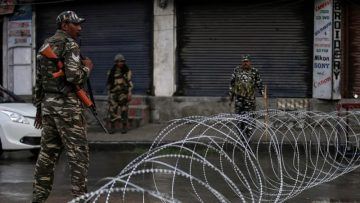 Trapped



 A recent article by Jane Mayer in The New Yorker, “The Case of Al Franken,”
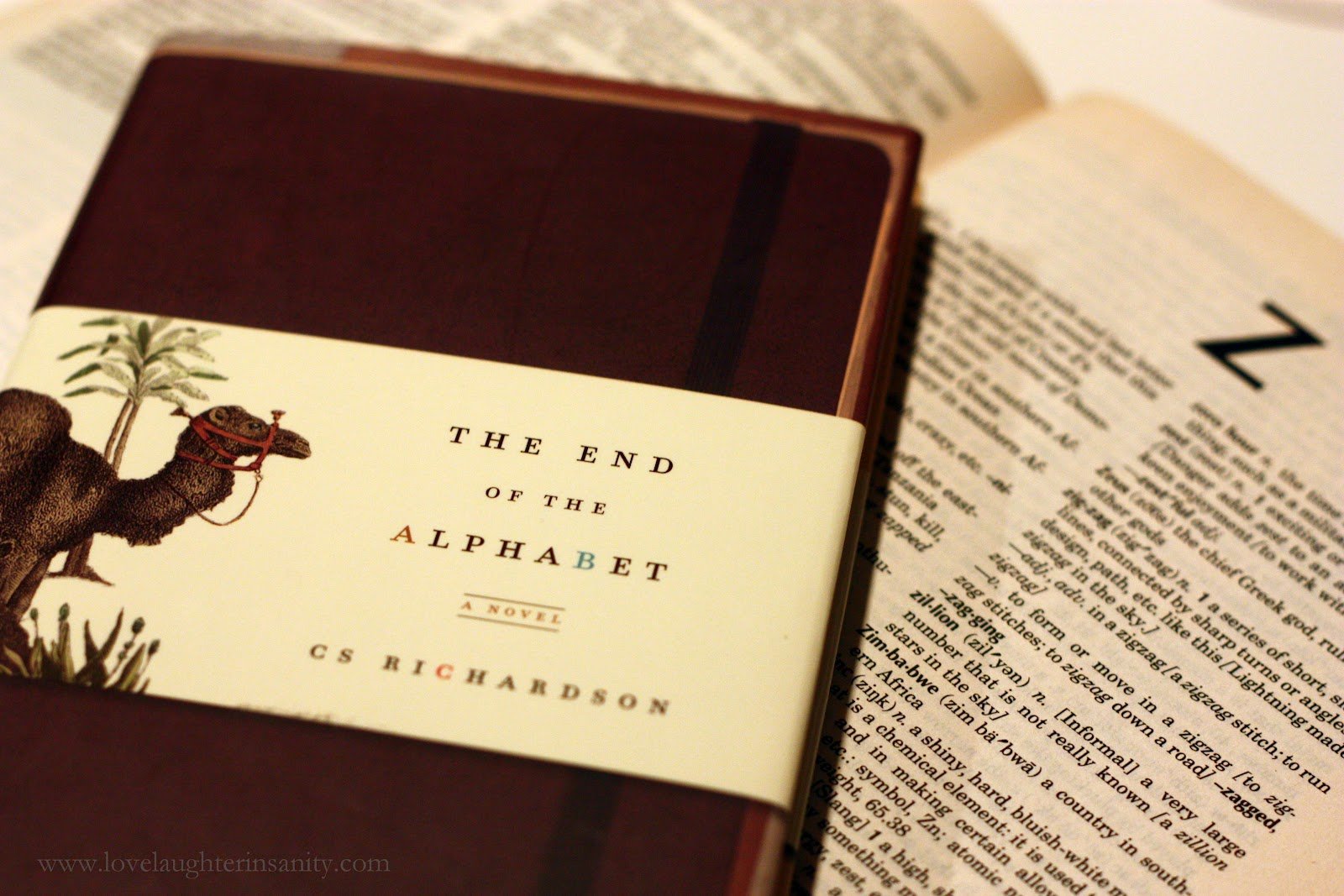 Ambrose finds out he has only weeks to live. How to spend that time is the premise of The End of the Alphabet (2007). It’s a condensed weepie in which Ambrose decides to visit a series of places with his wife that will take them through the alphabet. Somehow Richardson manages to stick to a minimalist elegance which probably saves the book from being schmaltzy book club fodder. And heck, you’d almost look forward to dying the way it’s put. Bucket list: die like this.