by Andrea Scrima
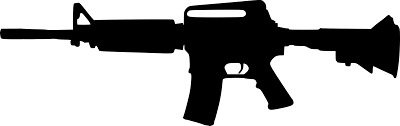
Tragedies like the mass shootings in El Paso, Dayton, and most recently (since this panel first aired last month) in Odessa bring everything to a stop. As we read the details and look at the pictures, we all pause, look around, and take stock of our priorities and what we hold dear. Writers are no different, except for the work we do. We’re often in the middle of describing a particular part of the world—when another part is suddenly falling apart.
Jon Roemer and David Winner polled a handful of active writers and asked how public tragedies impact their current and future work—projects that may or may not portray mass shootings. We aimed to gauge how writers deal with such landmark events in practical ways and how, if at all, their writing engages with violence in America.
QUESTION 1
In The New Yorker last year, Masha Gessen described the difficulty of defending the values and institutions currently under attack, because it requires “preserving meanings” and is “the opposite of imagination.” She aspired to “find a way to describe a world in which… imagination is not only operant but prized and nurtured.” On Facebook the Monday after the shootings in Dayton and El Paso, a different writer, Grant Faulkner, simply posted two words—“another killing”—over and over, hundreds of times. Gessen described traditionally crafted work, while the Facebook post is visceral and immediate. Where do you think your next work will land?
ANSWERS:
Jon Roemer: The Facebook post reflects what I was feeling the Monday after the shootings. But the fiction I’m writing now probably won’t be read for a year or more. So I think hard about its relevance, especially if we keep rushing toward more violence. Part of the job is to be forward-thinking. Just wish I could write and publish faster.
Zachary Lazar: I’m writing the most traditional novel of my life right now (though that isn’t saying much). I simultaneously have no faith in the power of novels and total commitment to the novel as a thing, an art form, something I like. Mass shootings seem to me to be one symptom among many of our culture’s failure to address meaninglessness, to create meaning, and even though I don’t believe there is such a thing as meaning, the active pursuit of it is essential to sanity. I just don’t give a shit about social media. I guess it did good work during the Arab Spring but I think the role it plays in the U.S. right now is more or less comparable to the crack epidemic of the ’80s and ’90s. It makes TV look nourishing. Read more »
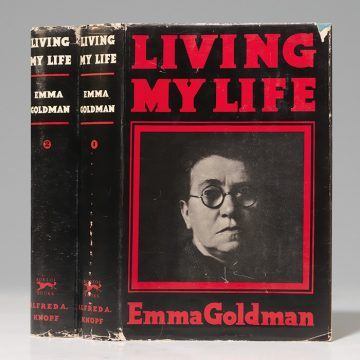 In a political era where many of the ‘isms’ in radical politics: Marxism, socialism, communism, anarchism, Trotskyism have either been discredited or have lost their appeal and force in western democracies, I found it refreshing to visit the life of one individual deeply involved in shaping those radical movements in the twentieth century: the anarchist, Emma Goldman, in her autobiography Living My Life.
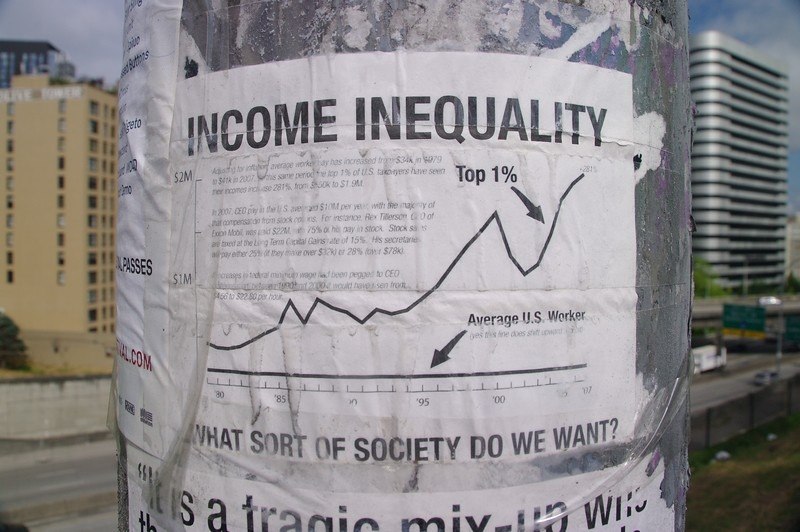 There is widespread concern about increasing or high economic inequality in many countries, both rich and poor. At a global level, according to the World Inequality Report 2018, the richest 1% in the world reaped 27% of the growth in world income between 1980 and 2016, while bottom 50% of the population got only 12%. Over roughly the same period, however, absolute poverty by standard measures has generally been on the decline in most countries. By the widely-used World Bank estimates, in 2015 only about 10 per cent of the world population lived below its common, admittedly rather austere, poverty line of $1.90 per capita per day (at 2011 purchasing power parity), compared to 36 per cent in 1990. This decline is by and large valid even if one uses broader measures of poverty that take into account some non-income indicators (like deprivations in health and education) for the countries for which such data are available.
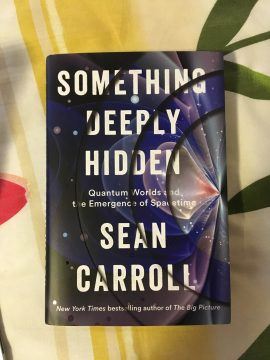 For me, a highlight of an otherwise ill-spent youth was reading mathematician John Casti’s fantastic book “
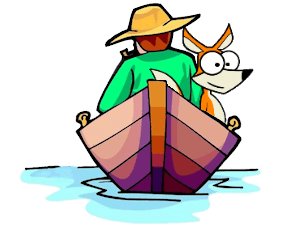 Have you ever been in this situation where you had to get a group of 3 men and their sisters across a river, but the boat only held two and you had to take precautions to ensure the women got across without being assaulted?

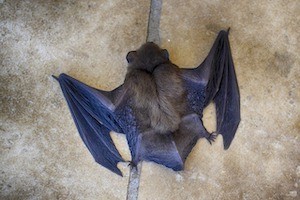 Last weekend, a bat got into my house somehow. I first heard it in the small hours of Friday night as it scratched around somewhere near the furnace flue. I didn’t know if it was an animal settling into a new home in my attic, or if perhaps it was going out periodically to get food and bringing it back to feed babies in an established nest. All became clear very late the next night, when the bat managed to get out of the enclosure around the flue and then exit the closet where the furnace is. After some drama that I need not recount here, it flew out the front door, and I stopped gibbering on my front walk and went back inside.
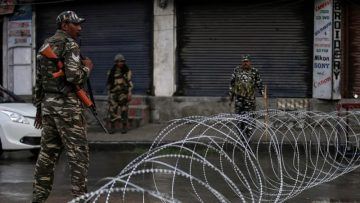 Trapped