
by Holly A. Case (Interviewer) and Tom J. W. Case (Hermit)
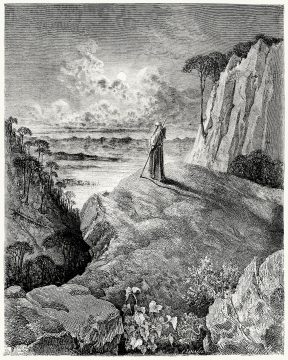
The following is part of a written interview with Tom, a pilot who has largely withdrawn to a small piece of land in rural South Dakota.
Interviewer: So first of all, thanks for agreeing to this interview. I know a lot of readers are interested to learn more about hermit life, but are probably thinking: “How can I find a hermit?” or “Would a hermit even want to talk with me?” or “If I were a hermit, probably the last thing I’d want is to be pestered with questions. Isn’t that what hermits are trying to avoid?” As you can see, people (not me, of course, but other people) tend to make a lot of assumptions about hermits without really knowing what they’re about. So it’s especially great to have this opportunity. Thank you so much! [pause—awkward silence] Right, so my first question is: How did you become a hermit?
Hermit: I think the relevance is in the “becoming,” more so than the arrival at some particular state—the state of being a hermit in this case. The word hermit puts a bit of a full-stop at the end of what might otherwise be a transcendent experience. In my case, however, if indeed I have become a hermit, it goes something like this: I think we all have an inner hermit living in our minds, very much alone, and each person’s internal processes of hermit-thinking and rationalization are adapted and transmuted into the ways they ultimately interact with the outside world. To put into practice the being of a hermit, then, all I have done is allow the inner hermit to exist on its own terms outside of my mind and body. Subsequently I act a hermit in the outside world in much the same, solitary way as one might behave inside their own mind. The full release of said inner hermit, however, is ripe with responsibility. At least it seems so. In much the same way one cannot just decide one day that stop signs are not to their liking, disregard them without consequence, it only seems fair to fully act oneself in relative solitude so as to not conflict with crossing traffic.
Interviewer: Do hermits brush their teeth?
Hermit: The short answer is yes. Certainly not for vanity, certainly not after every meal, but because teeth are critical and easy to reach. It is possible to tell when teeth need a good brushing, and that is when they get it. Perhaps once per week, sometimes more, sometimes less. In the meantime, chewing on things like twigs and coarse grass stems, consuming apple cider vinegar (followed by clean water), does an amazing job. I imagine every hermit has their own routine. Read more »


 This morning I rode an Uber to JFK from my apartment in Queens. I do this regularly and normally don’t worry too much about it, but this morning, there was just something about the driver that concerned me, though I couldn’t put my finger on what. But every time his, very loud, GPS gave him a direction, in a language I couldn’t pin down, I just had this sense that he truly had no idea where he was going. And in case you’re not familiar with NYC, if you drive a car for a living, you’ve probably driven from the city to JFK more than a few times and do know where you’re going. Anyway, we arrived at JFK, I reminded him I wanted terminal 2 and I thought, “I guess my worries were for nothing”. And almost as soon as I thought that, he missed the sign for terminal 2. I mean, I guess it can happen, but it’s never happened to me before in all my many years of flying out of that airport. The signs don’t exactly creep up on you. I tell him he’s missed it; we start on a loop back around the airport and I say, “the green sign’s for terminal 2”, then he misses it again. And it turns out, the reason he kept missing it was because his GPS was telling him something contrary. I pointed out to him that I hadn’t put terminal 2 in Uber, so how would its GPS know that? The third time around the airport, I rather lost my temper and told him to stop listening to his phone and to listen to me. And third time lucky, we reached terminal 2.








 The Biophilia Effect: A Scientific and Spiritual Exploration of the Healing Bond Between Humans and Nature, by Austrian biologist Clemens G. Arvay, is a mind-expanding read. It is part of the relatively recent resurgence of interest in incorporating exposure to nature into physical and psychological healing regimens. Until recently, the notion of “taking the cure” by relaxing at a Swiss resort in a natural setting was seen as archaic, thought to have been prescribed only because medicine had not advanced to a point where a “real” treatment could be used. Not that everyone had abandoned the idea: Erich Fromm used the term “biophilia” in his 1973 work The Anatomy of Human Destructiveness to describe “the passionate love of life and of all that is alive.” American biologist Edward O. Wilson published Biophilia in 1984, positing genetic bases for humans’ tendency to gravitate to nature. Now scientists en masse are studying nature’s extraordinary healing effects. In Japan, shinrin-yoku–“taking in the forest atmosphere,” or as it is more often translated in the West, “forest bathing”– is officially recognized as a method of preventing disease as well as a supplement to treatment. In 2012, Japanese universities created an independent medical research department called Forest Medicine. Scientists around the world have begun to participate in this research.
 Two months ago I
 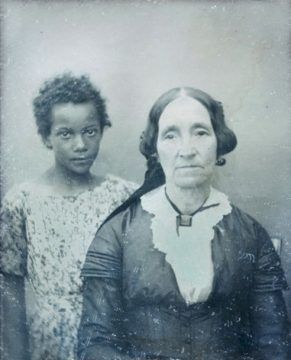 Many feminists, and indeed scholars more generally, frequently, and rightly, decry the writing of women out of history. Books such as Cathy Newman’s Bloody Brilliant Women, attempt to redress the historical omission and accord recognition to women who have made major contributions to the progress of humanity. However, while these developments are to be welcomed, it has to be acknowledged that women’s history has its darker side also: women have been complicit in the perpetration of historical wrongs. Sarah Helm’s If This Is A Woman documents the dehumanisation of female prisoners by female guards at the notorious all woman concentration camp at Ravensbrück during World War II; Laura Sjoberg and Caron E. Gentry’s Mothers, Monsters, Whores: Women’s Violence in Global Politics points out the potential of women to support and participate in acts of genocide. And, as Stephanie E. Jones-Rogers’s They Were Her Property: White Women as Slave Owners in the American South informs us, women were deeply involved in another historical wrong: slavery in the United States. Women were, as Jones-Rogers’ says, ‘co-conspirators’ in the institution of slavery in the US, and their involvement constitutes an aspect of the wider history of white supremacist organisations in the US.

 Now that the Emmys are over and we Americans have patted ourselves and a few Brits on the back for outstanding work, it’s time to consider one of the grandest achievements of the past year, a Netflix series from South Korea called Mr. Sunshine, which has, inexplicably, been ignored by media critics in the West.
 Oversized photography equipment. Tangled wires.
 A few days ago I finished watching a new