by Samia Altaf
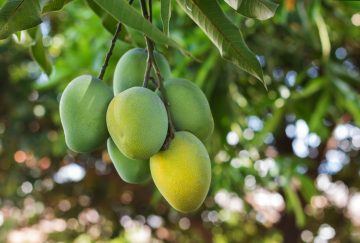 I could not believe my luck when I woke up this morning. It had rained last night, but this morning the sky was blue the breeze gentle,and the wild grass along the smelly sluggish, open sewer that meanders through the swanky Defense Housing Authority—home to lush golf courses and palatial villas—past the gates of the elite Lahore University of Management Sciences, was audaciously green. The mango tree in the front yard of my mother’s house—quiet after a fertile summer of exuberant fruiting—balances the crow’s nest full of chattering chicks in its gently swaying branches. All God’s creations bask in the mellow sunshine. No more the snow and ice and cold of Eastern US. For these weeks, it’s going to be this bliss in Lahore. I was glad to be me, and to be alive. I say to myself “Thank God I am on this side of the earth, rather than under it.” What a beautiful world. So much to see and so much to do. I could live like this for a hundred years like William Hazlitt, who claimed to have spent his life “reading books, looking at pictures, going to plays, hearing, thinking, writing on what pleased me best.” I’ll add eating to that list, at the top of it, fried eggs and buttered toast.
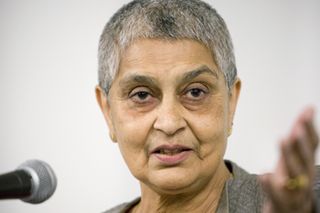
In addition to the sunshine and the crows, and trees waving gently in the breeze, there are books to read, newspapers to follow, old trunks to sort through and the joy of restoring broken things. And now, thanks to the miracle of YouTube, music to listen to, movies to watch, many enlightening videos to engage with. This is no time to die! Although it seems unlikely, I have been hooked onto Gayatri Spivak since I heard her speak here in Lahore some years ago. That formidable woman and her harangue about the subalterns, a word I associated with the military, which I was quite intrigued to learn that evening applies to me as well. Not a word of what she says about subalterns makes sense to me but I love to hear her speak. She really is something. She said things that evening, to a crowded hall of Pakistani college students, activists and others, about Derrida and Gramsci —names I heard for the first time. Read more »


 American writer Rebecca Solnit laments that few writers have had quite as much scrutiny directed toward their laundry habits as Transcendentalist writer Henry David Thoreau, best known for his 1854 memoir Walden. “Only Henry David Thoreau,” she claims in Orion Magazine’s article “Mysteries of Thoreau, Unsolved,” “has been tried in the popular imagination and found wanting for his cleaning arrangements.”
 Among the best books I’ve read about wine are the two by wine importer Terry Theise.

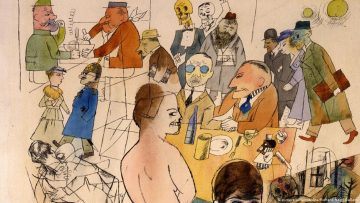
 I saw Joker last week. I think it’s an excellent film. But the two friends I was with, whose tastes often overlap with my own, really hated it, and we spent the ensuing 90 minutes examining and debating the film. Critics are likewise fiercely divided. Towards the end of our conversation, one friend admitted that, love it or hate it, the film evokes strong reactions; it’s difficult to ignore.
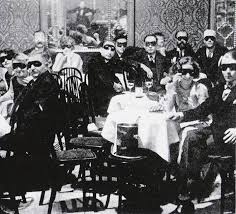 The terror of the unforeseen is what the science of history hides, turning a disaster into an epic. —Philip Roth, The Plot Against America
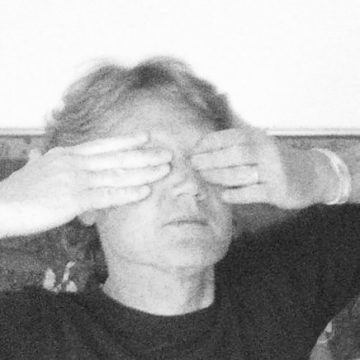 “What is hidden is for us Westerners more ‘true’ than what is visible,” Roland Barthes proposed, in Camera Lucida, his phenomenology of the photograph, almost forty years ago. In the decades since, the internet, nanotechnology, and viral marketing have challenged his privileging of the unseen over the seen by developing a culture of total exposure, heralding the death of interiority and celebrating the cult of instant celebrity. The icon of this movement, the selfie, is now produced and displayed, in endless daily iterations, in a ritual staging of eyewitness testimony to the festival of self-fashioning.
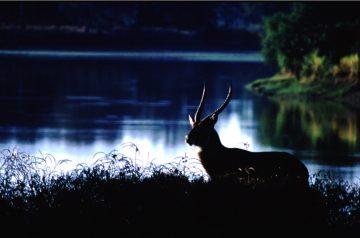 Late morning heat rises in waves over tall grass. It’s an hour and a half drive, sand flies buzzing, to Luwi bush camp, a seasonal camp with just four huts of thatch and grass on a still lagoon, far out into Zambia’s South Luangwa National Park, about 300 miles north of Lusaka.