
by Joan Harvey

1) invisibility
I’ve been pondering how, in all the Covid-19 turmoil, so many who believe in an invisible God have become the last to give credence to actually existing but invisible substances. There is some irony in people risking their lives by crowding together to pray to something for which there is no evidence. Pray for what? Long life? Their mothers’ health? People can imagine some great dude in the sky, but not that something unseen but proven by science can actually hurt them, or that by carrying it unknowingly they could accidentally hurt others. In some cases, of course, they believe that because of Jesus, they are immune.
Barbara Adam points out that imagination is a necessity when considering the latent effects of invisible forces over time:
Since we have no sense organ for time, we need. . . the entire complement of our senses working in unison with our imagination before we can experience its workings in our bodies and the environment. Such an effort at the level of imagination is needed if we are to be able to take account in our dealings with the environment of latency and immanence, pace and intensity, contingency and context dependence. . . the influence of the past and the projection into an open future.[i]
The majority of infectious diseases are at their most infectious before symptoms appear. Meanwhile, as I write, Florida and Texas still consider worship an essential activity. Even if one lacks imagination, one can believe in God, I suppose, because of lifetimes of indoctrination. We are certainly a gullible nation and apparently at least half of Americans “are absolutely certain Heaven exists, ruled over by a person God—not some vague force or universal spirit but a guy.”[ii] I don’t mean to dismiss those who believe deeply in God and yet also take science seriously. But those are generally not the ones who have been crowding megachurches and claiming the virus is a hoax. And, of course, believers are being grossly manipulated for both economic and political aims. Read more »
 For the same reason as large parts of the world, I spend even more time indoors these days than I already would. One thing I have been doing is rereading the Harry Potter books – or paying Stephen Fry to read them to me.
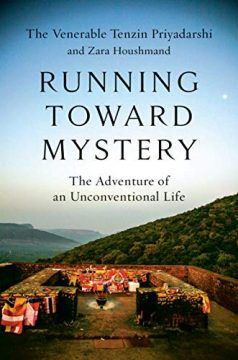 In the memoir, Running Toward Mystery: The Adventure of an Unconventional Life, the Venerable Tenzin Priyadarshi chooses to become a monk at the peak of his youthful potential. He rejects the spiritual path as a mere life enhancer and encourages readers to embark on a more totalizing journey of self-actualization. By embracing mystery, as opposed to cultural explanations, we can arrive at deeper questions. This wish bookends this carefully written memoir, which is co-authored by Zara Houshmand. Despite an already crowded landscape of books depicting religious quests and spiritual advice- both classics and new works – this book is bound to be widely read if for no other reason than Priyadarshi’s current role as a thought leader while serving as the first Buddhist chaplain at Massachusetts Institute of Technology (MIT).
 Among other things Covid-19 is a moral crisis. It requires suspending the usual rules about who deserves what, firstly because it is impossible for many of us to pay what we owe in these conditions, and secondly because of the priority of the humanitarian duty to save as many lives as possible. Nevertheless we must not forget about justice. In particular we must make sure that the costs of this crisis are not born disproportionately by the poor, those least able to afford the burden but also least able to escape it.
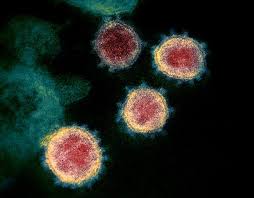 The current Covid 19 pandemic is undoubtedly a disaster for millions of people: for those who die, who grieve for the dead, who suffer through a traumatic illness, or who, suddenly lacking work and income, face the prospect of dire poverty as the inevitable recession kicks in. And there are other bad consequences that one might not describe as ‘disastrous” but which are certainly significant: the stress experienced by all those providing care for the sick; the interruption in the education of students; the strain put on families holed up together perhaps for months on end; the loneliness suffered by those who are truly isolated; and the blighted career prospects of new graduates in both the public and the private sectors.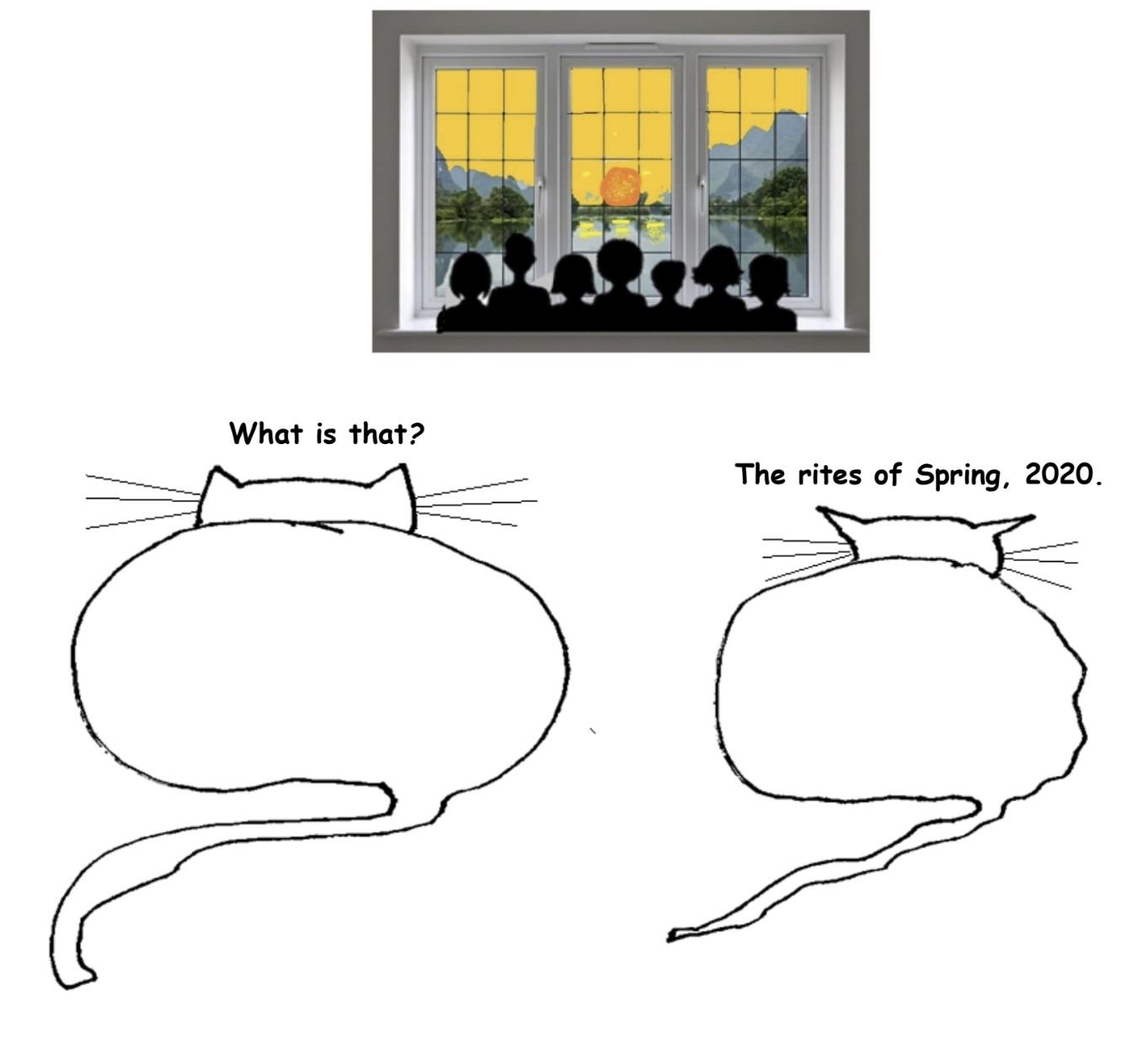
 The coronavirus amounts to an ongoing, real-world experiment in societal response to an international calamity. The pandemic will be studied for decades, but COVID has already taught us much about the relationship between science and decision-making.
 “Will we survive this?” my husband asks me as we lounge around the living room, glued to our laptops. “We are in the vulnerable group.” I look up at a bald man with thinning gray tufts over his ears, peering anxiously at me over black-rimmed glasses. Yes, we are certainly in the vulnerable group. What happened to that bright-eyed young man with fifteen pounds of black hair on his head, the one sporting sideburns that put Elvis to shame? Over his shoulder I see our son also looking expectantly at me, Camus’s The Plague in hand, open halfway.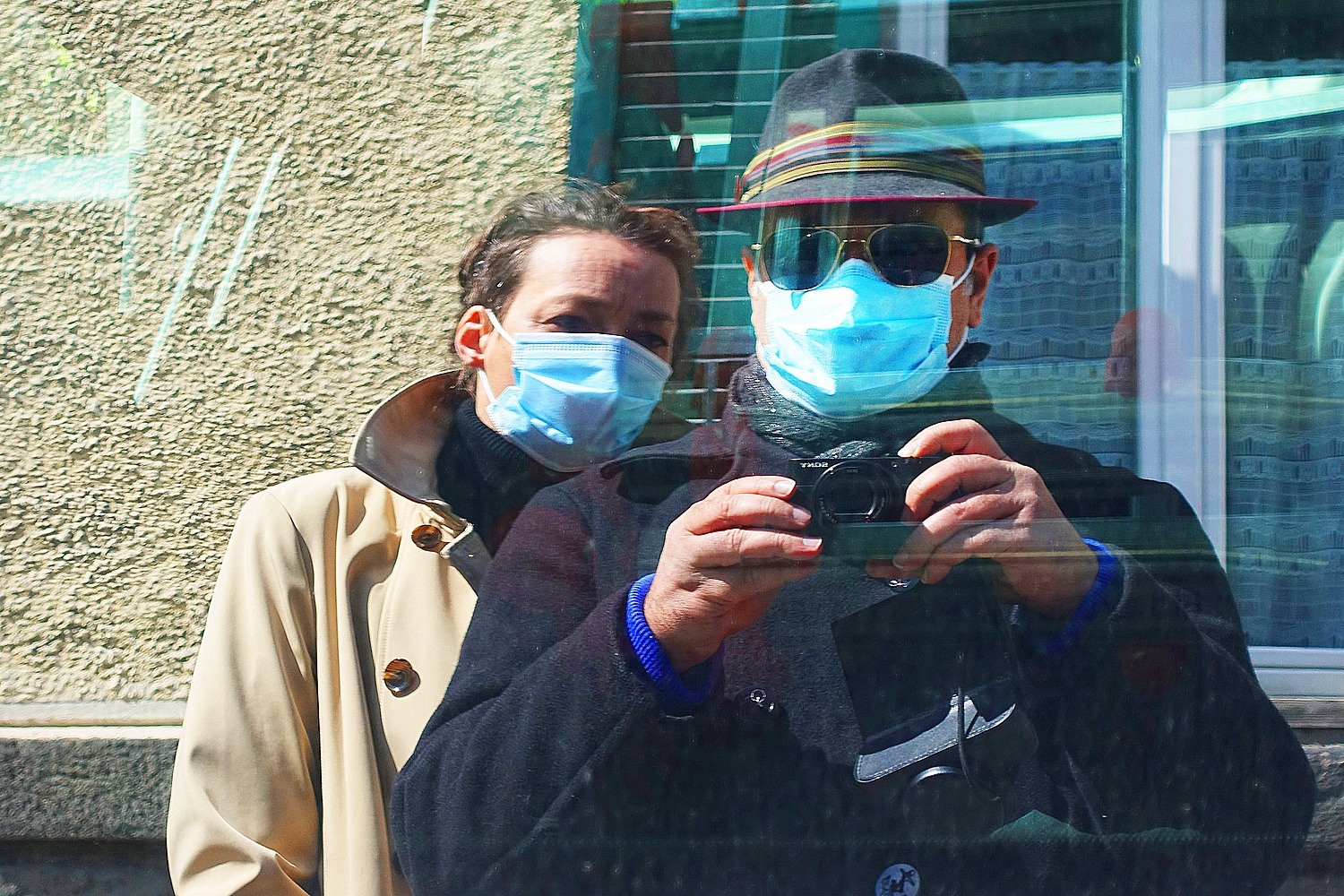

 I’m sitting in front of my window on the world sipping a disappointing Cabernet Sauvignon from Napa Valley and thinking about travel plans for next summer and fall. I’m proceeding as if everything were normal knowing full well they won’t be, especially not with our “leadership”. Every time I try to write something insightful about wine, these lyrics from the bard of Duluth run through my mind:
 Quarantined, sheltered, holed-up, bunkered, hiding, homebound, trapped–whatever you want to call it–I am, probably (hopefully) like you, socially isolated from everyone but my family, trying to do my part in “flattening the curve” on a virus that seems intent on overwhelming a system ill-equipped to deal with such a thing. Like the prisoner who resorts to counting the pockmarks on the cement wall of his cell to pass the time, I have used some of my new, spare time to take an account of my collection of shoes and boots. But unlike Derrida or Heidegger in regards to Vincent Van Gogh’s famous painting of boots, I have absolutely no desire to be profound or provocative. I simply and admittedly have a bit of a shoe and boot “problem” that I would like to discuss; not sneakers or trainers—never caught the bug—but handcrafted leather footwear that typically go from very expensive to “holy crap that’s a lot of money for boots!” My wife doesn’t understand it. “Another pair of boots?” she sneers as I unapologetically remove my latest purchase from its sturdy cardboard case; a stunning pair of Horween shell cordovan lace wing-tip boots, color number 8, with Goodyear welts, lug soles and copper rivets, handmade in the USA by one of the oldest family-owned shoe/boot-makers in the country. They ain’t cheap but they’re not “holy crap” expensive either. They are beautiful and rough, sophisticated and classic, yet in no way arrogant or pretentious and will be around, if properly cared for, long after I am dead. Seems like a deal to me.
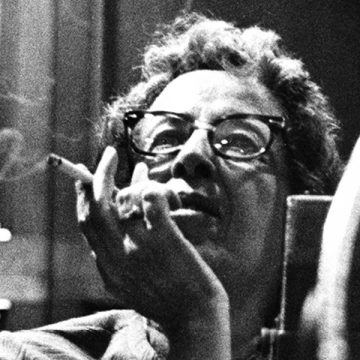 Some years ago, a friend told me about his dilettantish taste for nicotine, indulgence in which, however, he noted ruefully, was often thwarted by his young daughter. He supposed the vehemence of her protests derived, simply, from a concern for his health – to which I responded, perhaps: but that there might also be a further factor. His daughter, I reminded him, was just barely prepubescent, and thus newly arrived in what classical psychoanalysts call the “latency phase”, in which the para-erotic pulsions characterizing the various stages of her psychosexual development to date, and directed at her opposite-sex parent, the putative object of her nascent desire, are in retreat under the dawning realization that she is unlikely to be successful in her Oedipal struggle; and so she begins instead to bend to the will of a superego offering a compensatory identification with her triumphant rival, her mother. (This was before I had read Didier Eribon.) As a consequence, I concluded, his daughter was in the midst of developing prohibitive feelings of disgust at the merest suggestion of the desire she was busy repressing, and was thus likely to react with exaggerated horror at any sign of eroticism on the part of her erstwhile object.