by Adele A. Wilby

After assuming the mantle of a ‘vulnerable’ member of society and with many of my contacts temporarily closed off to me consequent to the British government’s public health policy of ‘social-distancing’ in place during this coronavirus pandemic, time is something I have plenty of. Thus, I took a tour of the unread books on my sitting-room table. Three books screamed out at me that they had been waiting for some time for me to pick them up and read them, but they had been constantly pushed to the end of the queue in preference to more urgent others that were later arrivals. Now I have time for them; it was their turn to be read, and they were worthy of the attention. The complexity and beauty of plants are the themes of these three books: Jonathon Drori’s Around the World in 8o Trees, Stefano Mancuso’s The Revolutionary Genius of Plants: A New Understanding of Plant Intelligence and Behaviour and his The Incredible Journey of Plants.
Like many of us on this planet, apart from an aesthetic appreciation of plants and our favourite trees and flowers, I have not given too much attention to what actually constitutes a plant. Had I known that, according to Mancuso, 80 percent of the earth’s biomass is taken up by plants, I might have given these inhabitants of the planet greater thought. Likewise, I was astounded to learn from Drori that there are at least 60,000 distinct species of trees sharing this planet with us: understanding more about plants was clearly a necessity. Read more »


 In contrast with other genres in literature, in crime fiction, which mainly started in the mid-19th century, women writers (and even women sleuths) became active around the same time as male writers and sleuths in their stories. By some accounts around the middle of 1860’s, both the first modern detective novels (by female as well as male writers in US, UK and France) and the first professional female detectives in them (one Mrs. G— in one case, Mrs. Paschal in another, both working for the British police) appeared. Most of us, of course, are more familiar with characters in the Golden Age of crime fiction of the 1920’s and the 1930’s, particularly, Agatha Christie’s Miss Jane Marple and Dorothy Sayers’ Harriet Vane. The number of female writers and sleuths has proliferated in recent decades. It goes without saying that not all of the female crime novelists come out as feminists, and that some male writers can do feminist crime novels quite well.
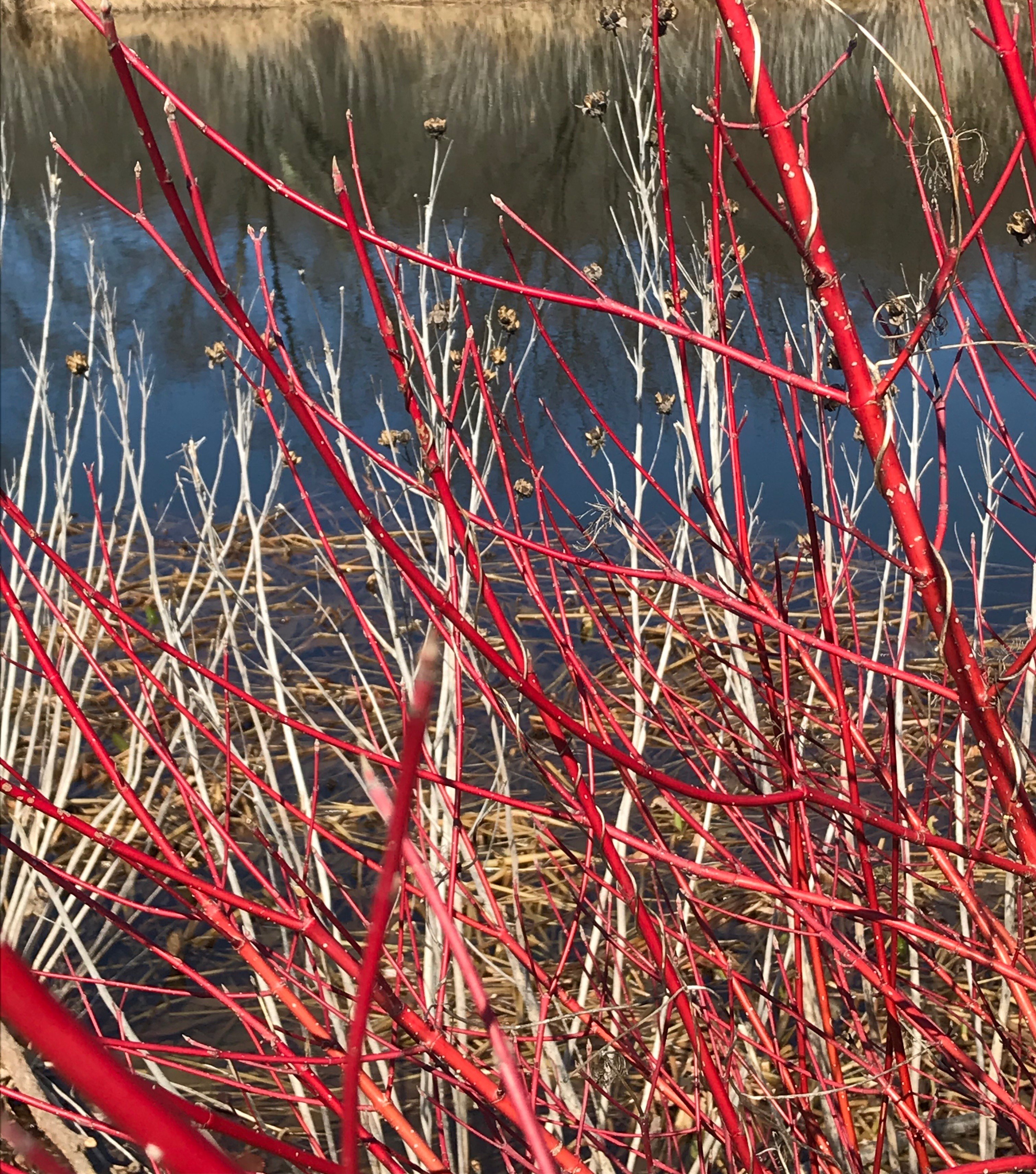 Sughra Raza. Untitled; Arnold Arboretum, Boston, March, 2020.
 The “Consequence Argument” is a powerful argument for the conclusion that, if determinism is true, then we have no control over what we do or will do. The argument is straightforward and simple (as given in the Stanford Encyclopedia of Philosophy):
 What can I make of these decisions emerging out of the blue, which I appear to act upon “freely?” What are the consequences of how I choose to react to them? Although these are vague philosophical musings, let’s look instead at the science of it all. I’m a layman, neither scientist nor philosopher, but as we are rediscovering, scientists are a less fuzzy lot than philosophers. I’m more likely to ask the woman with the medical degree about the true meaning of my dry cough than to ask philosopher

 For the same reason as large parts of the world, I spend even more time indoors these days than I already would. One thing I have been doing is rereading the Harry Potter books – or paying Stephen Fry to read them to me.
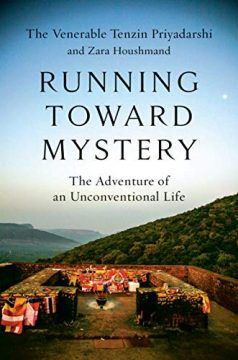 In the memoir, Running Toward Mystery: The Adventure of an Unconventional Life, the Venerable Tenzin Priyadarshi chooses to become a monk at the peak of his youthful potential. He rejects the spiritual path as a mere life enhancer and encourages readers to embark on a more totalizing journey of self-actualization. By embracing mystery, as opposed to cultural explanations, we can arrive at deeper questions. This wish bookends this carefully written memoir, which is co-authored by Zara Houshmand. Despite an already crowded landscape of books depicting religious quests and spiritual advice- both classics and new works – this book is bound to be widely read if for no other reason than Priyadarshi’s current role as a thought leader while serving as the first Buddhist chaplain at Massachusetts Institute of Technology (MIT).