by Jochen Szangolies
J Richard Gott and the Fall of the Berlin Wall

J Richard Gott, now an astrophysicist famous for the notion that the universe might have created itself by reaching back through time, visited the Berlin Wall in 1969, while an undergraduate at Harvard. There, he made the following prediction (paraphrased):
The Wall will stand for at least 2 and 2/3 years more, but no longer than 24 years.
On November 9, 1989, a rough twenty years later, his prediction came to fruition, and the Wall came down, precipitating the reunification of East and West Germany.
How did Gott arrive at this prediction? Did he have some special insight into the sociopolitical climate of the times? Was he so convinced of the inherent flaws of Soviet communist ideology that he could confidently predict its downfall? Or did he merely note a structural weakness in the construction itself?
The answer is, of course: none of the above. For his prediction, Gott needed only one single point of data: how long the Wall has stood so far. At the time of his visit, the Wall had existed for about eight years—construction having begun on August 13, 1961, two months after GDR council chairman Walter Ulbricht’s emphatic declaration that ‘nobody has the intention of building a wall’ (“Niemand hat die Absicht, eine Mauer zu errichten”).
Armed with this knowledge, Gott estimated that the Wall would stand between one third and three times that time longer. For this, he needed to appeal to two further assumptions—the Copernican Principle, and the Principle of Indifference. Read more »


 Actress Cameron Diaz and her business partner, the entrepreneur Katherine Power, have been all over various media promoting
 On November 11, 2019, I wrote a
 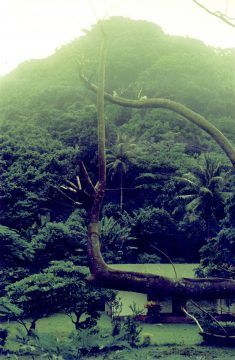 In 1997, I was living on Ambae, a tiny, tropical island in the western South Pacific. Rugged, jungle-draped, steamy, volcanic Ambae belongs to Vanuatu, an archipelago nation stretching some 540 miles roughly between Fiji and Papua New Guinea. There, under corrugated tin roofs, in the cinderblock classrooms of a small, residential school, I taught science to middle- and high-schoolers as a Peace Corps volunteer.

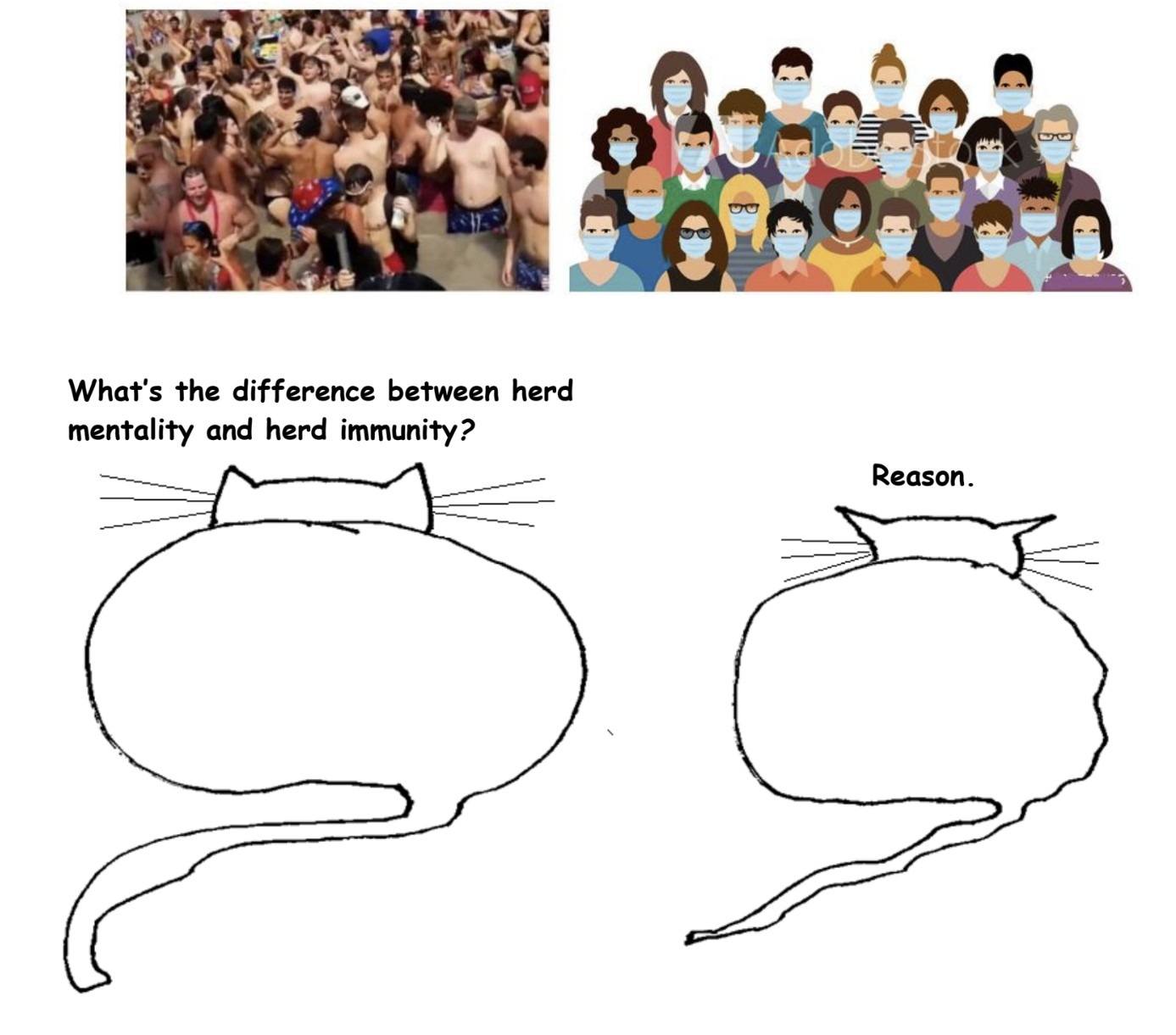
 In the Age of Trump, the banality of evil can perhaps best be defined as unfettered self-interest. Banal because everyone has self-interest, and because American culture expects and even celebrates its most gratuitous pursuits and expressions. Evil because, when unchecked, self-interest leads not only to intolerable disparities in wealth and power, but eventually the erosion of democratic norms.
 I may rise in the morning and notice that a long overdue spring rainfall has revived the flagging vegetation in my kitchen garden. I may give thanks to an unseen, benevolent power for this respite from a protracted and wasting drought. And I may record in my journal: “The heavens cannot horde the juice eternal / The sun draws from the thirsty acres vernal.” In such exercises, I will not have practised rigorous inquiry into the causes of things; I will not have subscribed to any particular view of the metaphysical; and I will certainly not have produced literature. But I will have replicated the conditions for the birth of science, as sketched by Geoffrey Lloyd in his account of the pre-Socratic philosophers, the first thinkers (at least in the Western world) to consider natural phenomena as distinct from the supernatural, however devoutly they may have believed in the latter; and who frequently set down their observations, theories and conclusions in formal language. For my observation of a natural phenomenon (rain and its effect on plant life), while not methodical, would bespeak a willingness to collect and consider empirical data unconstrained by superstitious tradition, and would not necessarily be contradicted by my ensuing prayer of gratitude to a supernatural force; and the verse elaboration of my findings into a speculative theory would not consign them to the realm of poetry (or even doggerel), but would merely represent a formal convention, whose forebears include Hesiod, Xenophanes, Lucretius and Vergil.
 Rutger Bregman’s Humankind: A Hopeful History is a clearly written argument if ever there was one. Bregman believes humans are a kind species and that we should arrange society accordingly. The reason why this thesis needs intellectual support at all is not that it is particularly profound or complicated, but that there are so many misunderstandings to be cleared away, so many apparent objections that need to be overcome.
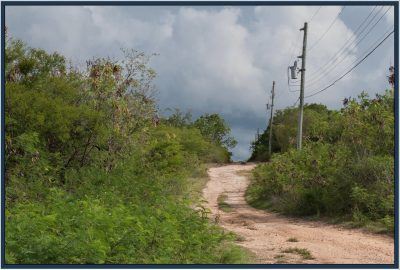 Anguilla is a sandbar ten miles long. It’s three miles wide if you’re being generous, but generous isn’t a word that pairs well with the endowments of a small, arid skerry of sand pocked with salt ponds.