by Deanna K. Kreisel (doctorwaffle.substack.com)
 This week I had planned to present the 3 Quarks Daily readership with a fluffy little piece about my memories of a grade school foreign language teacher. It was poignant, it was heartfelt, it was funny (if I do say so myself). Above all, it was intended as a brief respite from the nonstop parade of horrors scrolling past our screens every day—a parade in which my own recent writings have occupied a lavishly decorated float. We all deserve a break, I thought. It would be nice to look at some baton twirlers for a minute, listen to an oompa band.
And then. Something happened in my newly adopted home state that has filled me with such rage that I feel I have to write it out in order to be able to move on with my life. Everyone around me—my colleagues and friends—are filled with the same rage, to the point where I think we could use some kind of collective catharsis. It occurred to me yesterday that maybe my monthly essay for 3QD could form a tiny part of such a catharsis. Maybe I could scrap what I’d already written, and quickly write a piece about what happened here on Friday. At the very least, it would feel good to scream a little into the void, even if ultimately no one in the rest of the country really cares. That happens a lot with stuff that goes down in Mississippi.
Before I go any further, let me hasten to say the following. I am about to complain about Covid protocols at a university. I fully recognize that many, many other faculty, staff, students, and teachers across the country are dealing with horrifying working and learning conditions right now—not to mention, of course, what health care workers are going through. I do not mean to imply that we are somehow special. And yet—who are we kidding? It’s Mississippi. Of course we’re special! If you’ve been checking the New York Times Covid coverage for the past couple of weeks you might have noticed that things here are … challenging. For weeks our state has occupied pride of place as the top, labelled line in all the new-case graphs published above the fold. Indeed, we are now number one in the world for Covid transmission. So please bear with me as I attempt to complain about my own patch while simultaneously recognizing that it’s pretty bad all over the place. Read more »

 Sughra Raza. Karachi Afternoon Sun, 2010.







 In spite of my abiding interest in literature when I came to college I was vaguely inclined to major in History. In the long break between school and college I chanced upon two books of Marxist history which opened me to a new vista of looking at history. The first was Maurice Dobb’s Studies in the Development of Capitalism. This book showed me that there is a discernible pattern in the jumble of facts in history, which attracted me. Soon after, I read a lesser Marxist history book, A.L. Morton’s People’s History of England which showed me how recasting the old widely-known history of England from the people’s perspective gives you new insights. These books whetted my appetite to read more of Marxist history.
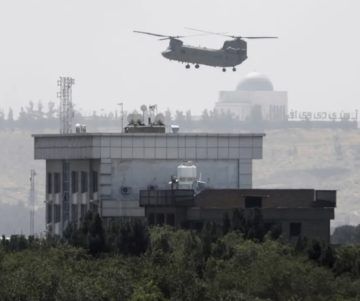 The events in Afghanistan over the last week are being seen as yet another “hinge moment” in history. The images of helicopters evacuating personnel from embassies and people chasing aircraft in desperation to get on them have been seared into the memories of all who have seen them. As a person from the region (Pakistan), a student of history, and as someone interested in the current state of the world, I too have watched these events with a mixture of amazement, trepidation, horror, and perplexity. It is not clear yet whether “hope” or “fear” – or both – should be added to that list. The things I say in this piece are just the thoughts and speculations of a non-expert lay person trying to make sense of an obscure situation. As will be obvious from the rest of this piece, for all the pain and suffering the new situation in Afghanistan will bring to people in Afghanistan, I think that the American decision to withdraw was the only rational choice. The alternative of staying on for years – perhaps decades – to build a better Afghanistan would just be another exercise in paternalistic colonialism. However, the way the withdrawal is happening is a great failure of American leadership and the blame for that lies mainly with the American policies of the last two decades. Perhaps its biggest failure was in not preparing Afghanistan for this day that was sure to come sooner or later. Now the Afghan people – especially women – will pay a price for that failure, but it may also come back to haunt the United States and other great powers. It has happened before….