by David Kordahl
There are two main types of people who seek out arguments that contradict their beliefs: those who are not afraid to change their mind, and those cannot imagine themselves doing so. I’m not sure which type I was a few years ago when I watched Out of the Blue, a documentary that billed itself as “the definitive investigation of the UFO phenomenon.” I was living at the time near Phoenix, Arizona, and was vaguely aware of its paranormal enthusiasts, but I wasn’t one of them. I watched the documentary as entertainment, to distract myself while grading papers. (Back then, I was teaching high school science.) When I turned it on, I hadn’t expected to be convinced. I also hadn’t expected Phoenix to play any part in the movie, so I was surprised to learn, in its first extended segment, about the “Phoenix lights,” a mass UFO sighting over Phoenix in 1999, and even more surprised when Fife Symington, Arizona’s governor during the incident, confirmed on camera that he had seen something and, despite his best efforts, hadn’t gotten to the bottom of it.
This was the first time I had ever considered UFOs as a non-fictional possibility, and I went around asking friends and coworkers about it. I only met one person who said she had seen the lights, a laboratory technician from Maricopa who played viola in my chamber music group. I remained interested in the subject, but despite her confirmation I looked no further.
Too bad for me. UFOs have gotten a mainstream boost in the past few years, and seem now to have neared the cusp of respectability. In 2017, the New York Times reported on the existence of ongoing efforts within the US defense department to understand them, and since then the gray lady has continued her UFO coverage apace. In 2019, the New Yorker published an interview with Avi Loeb, the Harvard astronomer who has argued that ‘Oumuamua, an elongated object spotted within our solar system, may be a guided craft, and this month, they reviewed Loeb’s book on the subject.
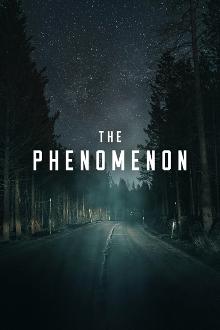
At the end of 2020, James Fox, the director of Out of the Blue, released a new film titled The Phenomenon. It’s a polished piece of work (“the definitive investigation of the UFO phenomenon” might be a good tagline for it if that one weren’t already taken), and it’s designed to capitalize on the new UFO respectability, of which Fox is but one architect. Yet as a viewer, I’ve changed, and what might have been mind-blowing a few years ago now seems a little propagandistic, though I admittedly continue to be confused. Read more »
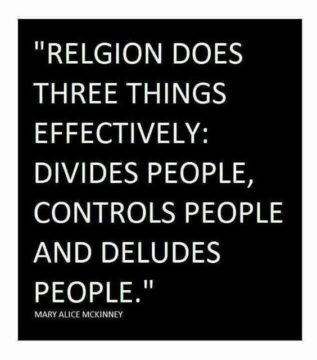 For those of us who classify ourselves as Nones—
 The presence of covid-19 running amok amongst us has momentarily disrupted the perimeters of our lives. That two, three, or possibly four generations are not always able to gather together under one roof has given rise to greater appreciation of the family.
 1. “A more perfect union.” The Founders expressed a breezy confidence, didn’t they? As if such a thing were possible – the distant states cohered into a nation; the various occupants working it all out. Loyal. Collaborative. Taking part in the common welfare. While remaining, of course, individual and autonomous and free, free, free. (Certain restrictions applied.)

 Two series have been streaming recently, to considerable success – The Queen’s Gambit (a Netflix miniseries, now concluded) and Succession (HBO, two series so far and more planned). They are interesting for a number of reasons – both for what they show, and perhaps more for what they do not, possibly cannot, show. So let’s consider some of the things we see and don’t see. I’m not going to recount the plot of either of them, as you can get that from Wikipedia and plenty of other places. But: spoiler alert: some will be divulged. Let’s look first at The Queen’s Gambit.
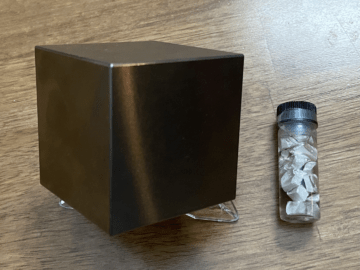


 I think it is fair to say that we usually see science and magic as opposed to one another. In science we make bold hypotheses, subject them to rigorous testing against experience, and tentatively accept whatever survives the testing as true – pending future revisions and challenges, of course. But in magic we just believe what we want to be true, and then we demonstrate irrational exuberance when our beliefs are borne out by experience, and in other cases we explain away the falsifications in one way or another. Science means letting what nature does shape what we believe, while magic means framing our interpretations of experience so that we can keep on believing what feels groovy.