by Chris Horner
 This year marks the 200th anniversary of Napoleon Bonaparte’s death in exile on the island of St Helena. And it was 206 years ago last June that his career came to a bloody end at Waterloo, with defeat at the hands of an allied army led by Britain’s Wellington and Prussia’s Blucher. But while the Emperor himself is dead and gone, the Napoleon Myth marches on, and is celebrated in some unlikely quarters.
The Guardian’s Martin Kettle is a big fan of the Emperor, as is the historian Andrew Roberts. Both have written admiringly on the man, the former in the pages of his newspaper, the latter in a big biography that verges on hagiography. On the face of it this is odd – Kettle is a liberal and Roberts is a conservative. What could they both find in the life of the ‘Disturber of the Peace of Europe’ to admire? They are not first to mourn the fall of Napoleon and sympathise with those who saw him as a great bulwark against reaction, but just the latest in a long line of Bonaparte fans. I’m not inclined share their adoration of the Corsican Adventurer.
It is certainly true that an appalling set of Crowned Heads did well out of the fall of the Emperor: after 1815 they imposed reactionary regimes across the content of Europe, which lasted until at least 1848. And in Britain the period fallowing the wars was one of great suffering and repression, a veritable ‘Thanatocracy’ in which armed force and the noose secured the rule of the rich. It is understandable that any radicals of the day tended to see Napoleon as a great alternative to the tyranny of the Monarchs who fought him: the essayist Hazlitt kept a bust of Napoleon on his desk, Byron publicly regretted the result at Waterloo, and later Victor Hugo devoted a large section of Les Miserables to mourning the fall of the Emperor in 1815. They saw him as carrying the spirit of the great Revolution of 1789 forward, and wished he had prevailed on the field of battle. Read more »
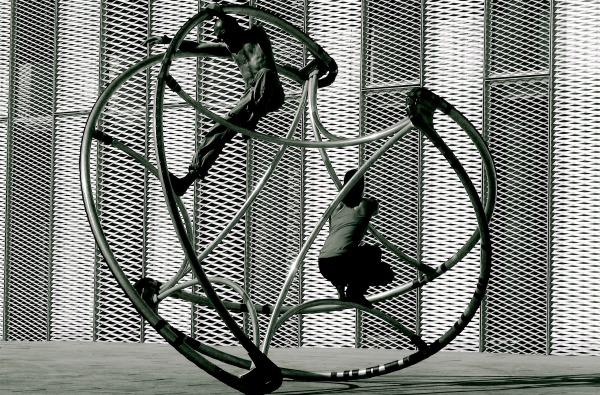
 Sughra Raza. HAPPY BIRTHDAY JIM CULLENY!
 A few years back,
 In my Kolkata neighborhood there was one kind of collective action that was unusually successful–this related to religious festivals. Every autumn there was a tremendous collective mobilization of neighborhood resources and youthful energy in organizing the local pujas for one deity or another, and on these occasions almost the whole community participated with devout dedication and considerable ingenuity (including openly pilfering from the public electricity grid for the holy cause—this art locally known as ‘hooking’).
 There are momentary flashes in the aesthetic life of an individual which can’t be explained away by the exigencies of personal taste or the broader parameters of gender-biased inclinations. These random epiphanies may or may not have their roots in a psychologically identifiable pantheon of ‘likes’, but when they occur, they yank us from our routine expectations of a work and catapult us into a recessive-compulsive emotional terrain resembling infatuation—with a breathlessness induced by the sudden recognition of something strikingly familiar and yet completely unrelated to us.
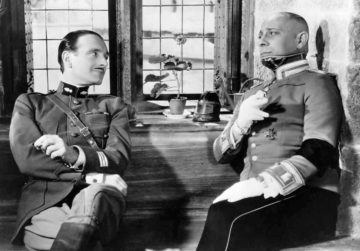 Not long ago, watching an emotional scene between two male Korean detectives in Beyond Evil, I was suddenly transported to Jean Renoir’s anti-war masterpiece

 Luxuriating in human ignorance was once a classy fad. Overeducated literary types would read Schopenhauer and Kierkegaard and Dostoevsky and Nietzsche, and soak themselves in the quite intelligent conclusion that ultimate reality cannot be known by Terran primates, no matter how many words they use. They would dwell on the suspicion that anything these primates conceive will be skewed by social, sexual, economic, and religious preconceptions and biases; that the very idea that there is an ultimate reality, with a definable character, may very well be a superstition forced upon us by so humble a force as grammar; that in an absurd life bounded on all sides by illusion, the very best a Terran primate might do is to at least be honest with itself, and compassionate toward its colleagues, so that we might all get through this thing together.
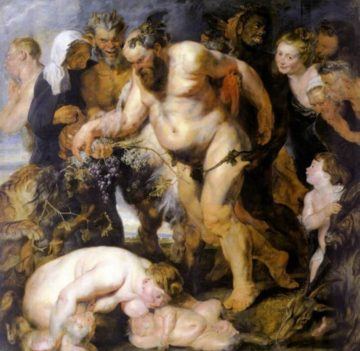 When King Midas asked Silenus what the best thing for man is, Silenus replied, “It is better not to have been born at all. The next best thing for man would be to die quickly.”
 Sughra Raza. Untitled. April 2021