by Varun Gauri
 A few years back, The University of Chicago Magazine sponsored a David Brooks parody contest. Don’t you think this one was a winner?
Porn Stars in Paradise
By David Brooks
(and Varun Gauri, AB 88)
There are two kinds of Americans. You might be surprised to hear that the basic political division is not between Republicans and Democrats. Nor is it Tea Partiers versus Huffington Post readers, extremists versus moderates, nor even Bobos versus NASCAR fans. Rather, the central divide these days is between Americans who accept electromagnetic scans of their intimates at airport security lines (let’s call these people “Porn Stars”) and people who would rather have a uniformed and preferably leathered officer touch their privates (let’s call them “Johns”).
Porn Stars accept the scans because they trust institutions. Generally speaking, they do this because they have careers and occupy professions that advance the nation’s major institutions: doctors, lawyers, professors, school teachers, scientists, bureaucrats. To them, institutions are themselves and their colleagues and friends. What’s not to trust? According to a fascinating study conducted by Professor E. Reilly Vant of the University of Chicago, 89% of social science graduate students, when told that their private parts were being shown to an unknown colleague, exhibited heightened brain activity in MRI scans in precisely the same neural regions as they did when told that their article had been accepted by The Center Folds, a leading journal in the field. In other words, Porn Stars believe in society and desperately want to be appreciated by it. Their deepest fear is that no one will see them on the inside or the underside.
Johns, on the other hand, are deeply skeptical of institutions, especially scientific ones. Johns are people who usually work with their hands, such as mechanics, electricians, small business owners, and car dealers. To them, pictures and scans, and indeed, the media altogether, can misrepresent, distort, and disguise. To know something is not to represent it but to feel it. That is why they want their fellow passengers to be touched. Only then can you verify that nothing untoward is being carried onto the plane. Now, where this gets is interesting is that Johns are themselves alienated in their own way. According to Vant’s University of Chicago colleague, Professor Trey V. L. Booker, 94% of MBA students preferred managing a massage parlor to running a university, if the private returns were identical, because they believed in the social mission of a massage parlor more than a university. The breakup of the social fabric, driven by the very social forces and institutions that Porn Stars glorify, have left Johns in need of social contact. Their deepest fear is that they will be alone.
Where is society going? Who is going to end up on top, Porn Stars or Johns? It’s clear that there is every reason to believe that Porn Stars are winning, hands down. We live in a society that is growing more institutionalized, more scientifically complex, and more representational every day. That has its advantages. But really, we could all use a nice pat down now and then. We are all Johns now.

 In my Kolkata neighborhood there was one kind of collective action that was unusually successful–this related to religious festivals. Every autumn there was a tremendous collective mobilization of neighborhood resources and youthful energy in organizing the local pujas for one deity or another, and on these occasions almost the whole community participated with devout dedication and considerable ingenuity (including openly pilfering from the public electricity grid for the holy cause—this art locally known as ‘hooking’).
 There are momentary flashes in the aesthetic life of an individual which can’t be explained away by the exigencies of personal taste or the broader parameters of gender-biased inclinations. These random epiphanies may or may not have their roots in a psychologically identifiable pantheon of ‘likes’, but when they occur, they yank us from our routine expectations of a work and catapult us into a recessive-compulsive emotional terrain resembling infatuation—with a breathlessness induced by the sudden recognition of something strikingly familiar and yet completely unrelated to us.
 Not long ago, watching an emotional scene between two male Korean detectives in Beyond Evil, I was suddenly transported to Jean Renoir’s anti-war masterpiece


 Luxuriating in human ignorance was once a classy fad. Overeducated literary types would read Schopenhauer and Kierkegaard and Dostoevsky and Nietzsche, and soak themselves in the quite intelligent conclusion that ultimate reality cannot be known by Terran primates, no matter how many words they use. They would dwell on the suspicion that anything these primates conceive will be skewed by social, sexual, economic, and religious preconceptions and biases; that the very idea that there is an ultimate reality, with a definable character, may very well be a superstition forced upon us by so humble a force as grammar; that in an absurd life bounded on all sides by illusion, the very best a Terran primate might do is to at least be honest with itself, and compassionate toward its colleagues, so that we might all get through this thing together.
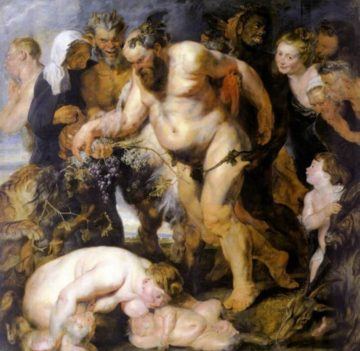 When King Midas asked Silenus what the best thing for man is, Silenus replied, “It is better not to have been born at all. The next best thing for man would be to die quickly.”
 Sughra Raza. Untitled. April 2021


 A rose is a rose is…well, you know. Botanically, a rose is the flower of a plant in the genus Rosa in the family Rosaceae. But roses carry the weight of so much symbolism that a rose is seldom only a rose.