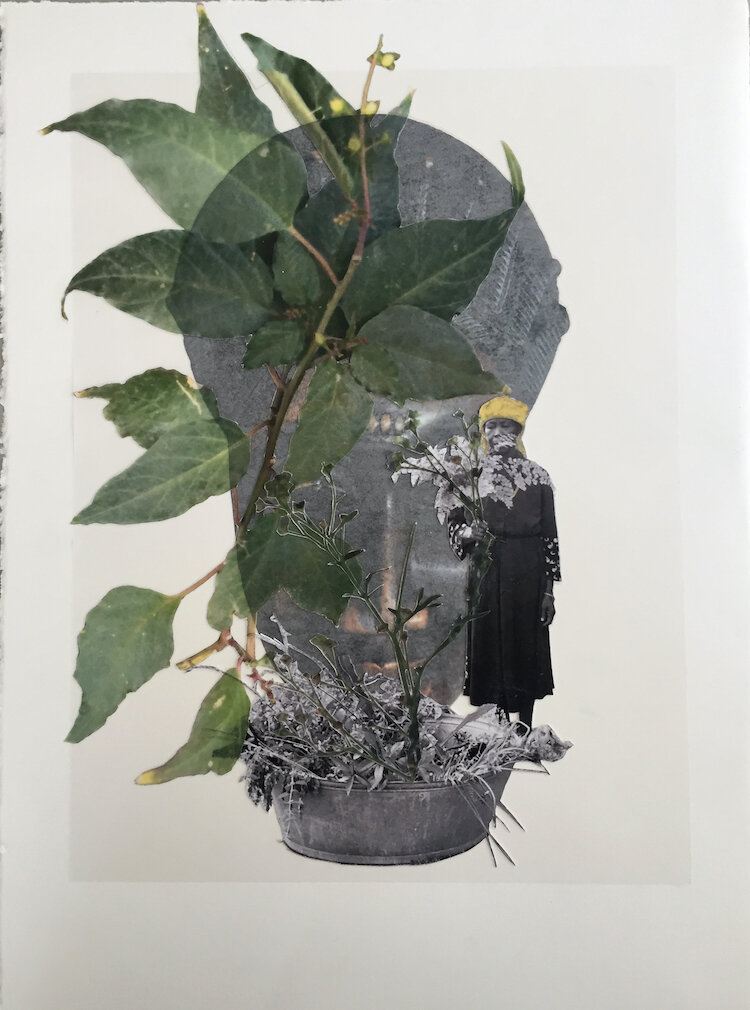
 Andrea Chung. From the series Vex, 2020.
Collage on paper.

by A. Minh Nguyen
On the morning of July 29, 2021, I woke up to the news that Minnesota native Sunisa Lee, also known as Suni, had become the 2020 Olympic individual all-around champion in women’s gymnastics, the first Asian of any nationality to achieve this distinction. How much does Suni Lee’s Olympic gold medal victory mean for an Asian American father such as myself? A lot — although before the Summer Olympics in Tokyo I had no idea who she was. I didn’t even know who Simone Biles was. Two days before, Lee was a member of the squad that won silver in women’s team all-around, and three days after her gold medal performance, she won bronze in uneven bars.
Like other Americans, I was overjoyed by Lee’s multi-medal win at the Tokyo Olympics, especially because she did it in the face of adversity. She overcame so many obstacles: her father’s fall off a ladder in 2019 that paralyzed him from the waist down, the deaths of her aunt and uncle from COVID-19 in 2020, and her own leg and foot injury that sidelined her for two months last year.
The fact that Lee was the first Hmong American Olympian, let alone the first Hmong American Olympic multi-medalist, was extra special for me. Like her parents, Houa John Lee and Yeev Thoj, refugees who immigrated to the United States from Laos via Thailand as children, I was a minor — an unaccompanied minor — from communist Vietnam who spent 17 months in two refugee camps in Indonesia. So was my wife Nhi even though she and her family reached the U.S. by way of a refugee camp in the Philippines. As a fellow child refugee from Southeast Asia, I could imagine Lee’s parents’ struggles. I could imagine their dreams.
Asian Americans are lauded as the model minority. We are praised as exemplars of unproblematic assimilation, upward mobility, and traditional family values. Our aptitudes and attitudes inspire positive thoughts and feelings. Yet this comforting cliché masks a more complicated reality. Wealth, income, education, occupation, and other measures of socioeconomic status vary drastically among Asian Americans both within and across communities of different ethnic backgrounds and national origins. Those variations depend on a number of factors such as geographical location within the U.S. and histories of migration. However you slice it, there is no way that Southeast Asian Americans — in particular Hmong Americans, nearly 60 percent of whom are low-income and more than 25 percent of whom live below the poverty line[1] — sit comfortably within the gauzy dream of a fictitious model minority. Read more »
by David Oates
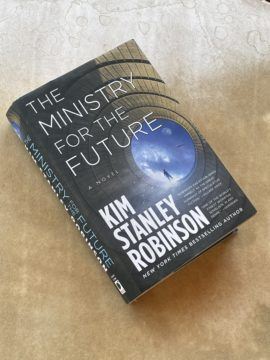 The day I began writing this essay, Portland Oregon braced for yet another round of uncharacteristic heat. Over several months of preparation, as I had been reading and pondering Kim Stanley Robinson’s big, detailed, hyper-realistic science-fiction book The Ministry for the Future, our normally cool northwest town had found itself repeatedly facing drought and high temperatures. Now we were about to be trapped under a “heat dome” of 115 degrees Fahrenheit (46° C) – Las Vegas temperatures, Abu-Dhabi temperatures – for days on end.
Salmon poached in their streams and fledgling birds leapt to their deaths from too-hot nests. Vulnerable people died in their apartments or on the streets. Eventually we went back to our Northwest summer normally so mild by day, so cool overnight. I continued writing. But within a few weeks, more Saharan temperatures. And in time, another heat dome began to form.
It’s no merely local problem. Sicily has just achieved Europe’s hottest temperature in history: 119.8° F (48.8° C). And the latest (sixth) IPPC report from the UN has confirmed it with a dreadful, deep-researched authority: as the Washington Post put it, “On the current emissions trajectory, global temperatures are likely to rise by 2.1 to 3.5 degrees Celsius, blowing past the 1.5 degree threshold scientists warn humanity should not breach.”
Our reality is bending, melting, reshaping in deeply disturbing ways. News stories have started to sound like fiction.
So perhaps fiction is needed to guide us into new ways of thinking about it – thinking that isn’t just panic and despair. But it would have to be fiction grounded on reality, fiction that grapples with the facts we face. That is, fiction that is at least half non-fiction. Read more »
by Brooks Riley
by Thomas Larson
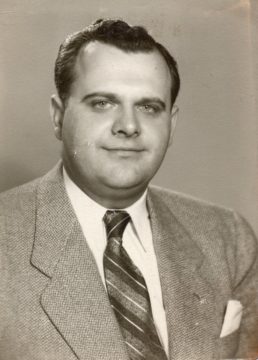
At breakfast my father asked me what I thought we should do if, in Grandma and Grandpa’s safety deposit box, we found the document identifying his real parents. The year was 1967, and he and I were in Evanston, Illinois, arranging a funeral for his adoptive mother, Elizabeth, who had died suddenly of a stroke. That he was given up at birth he had not learned until his 35th year, when Elizabeth sprang the news on him one Easter. Around the dinner table they were remembering her father, Sam Hill, descendant of a Revolutionary War general, who had often wondered aloud why Elizabeth’s child looked nothing like his parents. Dad had wondered, too.
“Wouldn’t it be funny,” Dad said to his mother that day, “to discover that I —”
“John, as a matter of fact, you were adopted,” she blurted out, vexing his remaining years with an insoluble conflict, namely, whether he should track down his real parents or let them be. Now that we were burying his mother and packing his 86-year-old dad into a retirement home, this bank-vault visit would be his last chance at a birthright.
He’d been up a while, ferrying trash down the back stairs to the cans. Dressed in a freshly laundered shirt, he’d rolled up the sleeves three turns. His gold watch squeezed his wrist, and the dark hair of his arms like a field of evenly charred grass reminded me that his real mother, the Czech servant girl, had given his skin a tannish color. (With the father’s Swedish ethnicity, that’s all we ever knew about his real parents.) My Scandinavian white certainly belied his half-Bohemian origins. Read more »
by Dwight Furrow
 Theories that specify which properties are essential for an object to be a work of art are perilous. The nature of art is a moving target and its social function changes over time. But if we’re trying to capture what art has become over the past 150 years within the art institutions of Europe and the United States, we must make room for the central role of creativity and originality. Objects worthy of the honorific “art” are distinct from objects unsuccessfully aspiring to be art by the degree of creativity or originality on display. (I am understanding “art” as a normative concept here.)
The creative theory of art emphasizes the distinctiveness of an artist’s vision or an artist’s ability to manipulate media in new ways as the defining feature of art. (Nick Zangwill offers one such theory in his book Aesthetic Creation.)
This picture of art as creativity is complicated in discussions about whether wine can be art. Although winemakers have vision and bring that vision of what a particular wine should taste like to the blending table, their art depends inevitably on nature and nature’s “creativity.” Some philosophers might hesitate to attribute creativity to nature. Nature has neither intentions nor vision. It lacks a subjectivity that can be expressed in a point of view. Yet, nature does produce continuous variation, especially with regard to wine grapes that are highly sensitive to differences in climate, weather, and soil. These variations are the raw material with which winemakers work. Whatever their aesthetic intentions, they are constrained and limited by the variations in their raw materials. Read more »
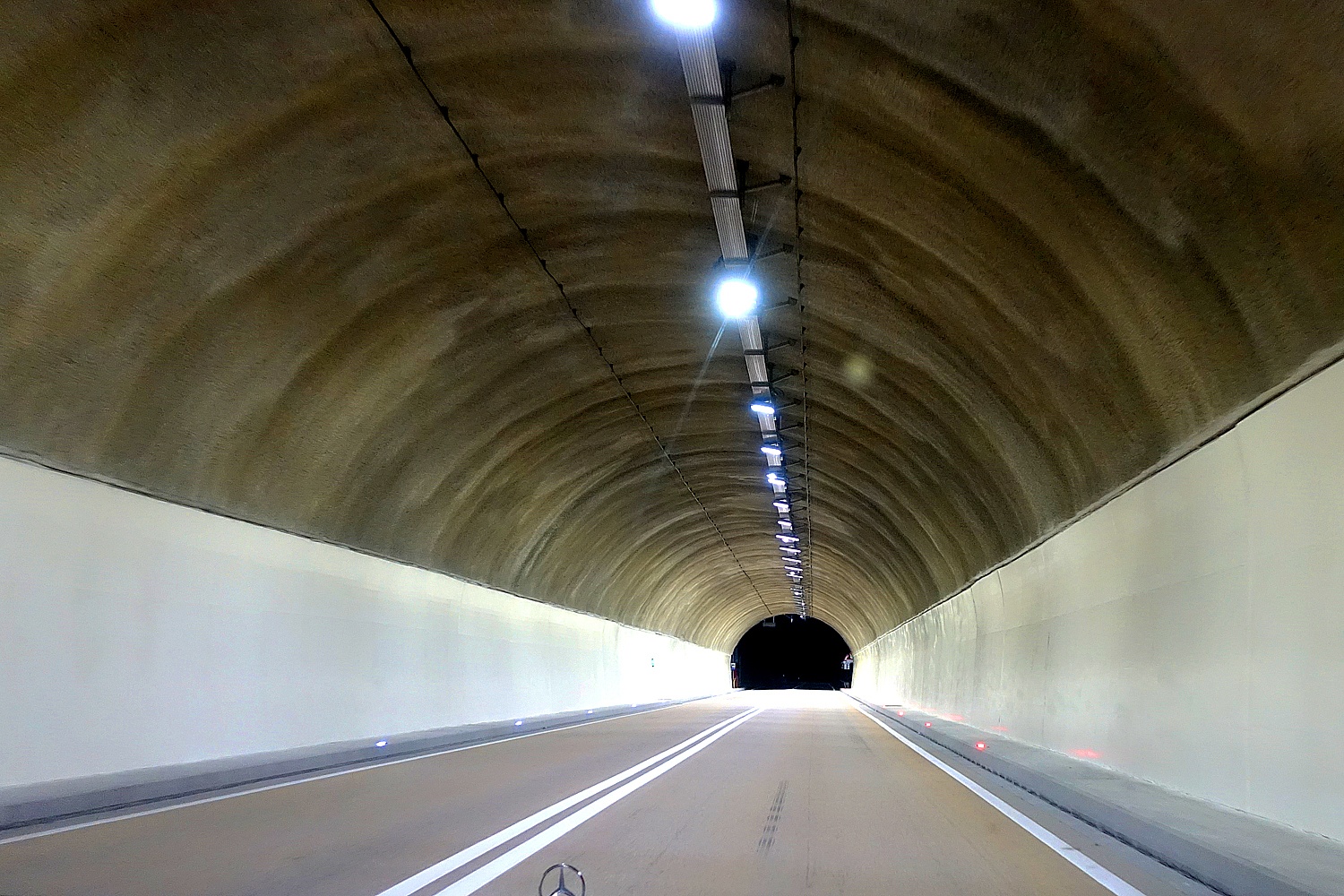
We drove through this long and very brightly lit tunnel just north of Franzensfeste, South Tyrol, the night before last.
by Pranab Bardhan
All of the articles in this series can be found here.
 Even though I arrived at Economics with the aim of interpreting history, it soon gave me a more general perspective. First, it showed me the value of precision and empirical testing in thinking about socially important issues. This immediately appealed to me, as two of the first courses I liked in college were on Deductive and Inductive Logic. More importantly, Economics gave me a deeper understanding of the incentive mechanisms that sustain social institutions. It made me think why some of the glib solutions suggested by my leftist friends were difficult to sustain in the real world, unless based on motivations/norms and constraints of people in that world. Why are cooperatives and nationalized industries, suggested as substitutes for private enterprise, often (not always) dysfunctional? Economics asks the question: if there is a social problem, why does it not get resolved by the people on their own, and if your answer is that it is the ‘system’ that is to blame—which was the main message of many leftist stories I read and plays/movies I watched—Economics teaches us to go beyond and look into the underlying mechanism through which that ‘system’ is perpetuated or occasionally broken.
Fortunately for me in Presidency College those days Economics was combined with Political Science, as I have always looked at the two subjects as intertwined. I found that classical economists of the 18th and 19th century looked at economics as political-economy, and analyzed some of the major questions of distributive politics.
Aristotle in his book Politics (which was one of our textbooks) describes man as a ‘political animal’. In some sense I have been a political animal ever since childhood. My mother told me that by age five I was a regular newspaper-reader; now-a-days I read about ten newspapers (including news websites) of different countries every day. Read more »
by S. Abbas Raza
Note: This is a true story about something that happened 17 years ago but I am publishing it here this week, which marks the 20th anniversary of the attacks of 9/11/01, to give an indication of the many ways that life changed for people in the wake of that horrific day.
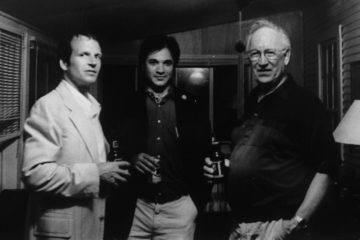 Recently I came upon this photo of my friend Eric, me, and his father, tucked into a book that I was trying to place in the correct place on my shelves as a part of a recent book-organizing effort and it made me think about one of the scarier events in my life. It was 2004. It was also only a couple of years after 9/11 and by then the Patriot Act was in full effect and I personally knew completely innocent people who had been caught up in the “bad Muslim” dragnet and had been detained, deported from America, etc. It was in this atmosphere that I was invited to attend my good friend Eric’s wedding on a lake in Michigan. I found the cheapest ticket possible which would involve a stopover in Pittsburgh on the way to Detroit from NYC and a stop in Philadelphia on the way back. I also reserved a rental car at the Detroit airport to get to the rural lake where the wedding was going to be.
So, on Eric’s wedding weekend, I braved the always-horrible M60 bus from the upper west side to Laguardia airport and, after going through the terrible post-9/11 security, got on my plane to Pittsburgh. All went fine.
Once in Pittsburgh, I wandered about the terminal looking at shops and tried to while away the time until my next flight and at the same time tried to ignore my nicotine cravings (I used to smoke two packs of Marlboro Red every day at that time) but in the end I couldn’t do it and decided to just go outside for a smoke, even though that meant I would have to again stand in the security line to get back to my gate for the flight to Detroit.
So there I was, sitting on a bench just outside the terminal, quickly smoking the second of my cigarettes within 15 minutes, and frequently glancing at my watch to make sure I still had enough time to get through security and onto my flight to Detroit, when I was startled by a man (African-American, in his late 30s most likely, dressed neatly in civilian clothes) who said to me in a tone which canceled all the politeness of his words, “Sir, excuse me, I am a Federal Marshal and I would like to speak to you.” Read more »
by Charlie Huenemann
 Philosophers are prone to define knowledge as having reasoned one’s way to some true beliefs. The obvious kicker in any such definition is truth; for how am I supposed to determine whether a belief is true? If I already know what is true, why should I bother with some philosopher’s definition of knowledge? What’s the use of this stupid definition anyway? “Hey, I’m just doing my job,” replies the philosopher. “You wanted to know what knowledge is, and I told you. If you want to know how to get it, that’s another story — and for that you’ll have to pay extra!”
If we think of true beliefs as getting things right — really right, like if you asked God about it they would say, “Yep, that’s what I figure too” — then it is indeed difficult to see how we could ever know the truth, and not just because friendly chats with God are so exceedingly rare, but also because we don’t really know what we mean when we say “really right” instead of just saying “right”. The “really” is supposed to add some special oomph to the knowledge, an oomph we by definition can never experience or access: it is the knowledge of what is going on in the world when no one is knowing it, which is like trying to see what your face looks like when no one is looking at you. “Really”, in this context, just means: at a level that is impossible to attain. Trying to get something really right means never knowing for sure whether you in fact have it right.
Where does that leave us with regard to knowledge? Well, we could be pure-souled skeptics and insist that knowledge, real knowledge, is strictly impossible ever to attain. Or, being slightly more careful, we could at least insist that we can never know when we have it. Maybe God or other metaphysical chimeras are able to confidently pronounce whether this or that mortal attains knowledge, but these or those mortals can never know when they know. In that case, if this is the route we choose, we should simply strike the word “knowledge” from our vocabularies, as it is never going to come into any practical use. Read more »
by Deanna K. Kreisel (doctorwaffle.substack.com)
 This week I had planned to present the 3 Quarks Daily readership with a fluffy little piece about my memories of a grade school foreign language teacher. It was poignant, it was heartfelt, it was funny (if I do say so myself). Above all, it was intended as a brief respite from the nonstop parade of horrors scrolling past our screens every day—a parade in which my own recent writings have occupied a lavishly decorated float. We all deserve a break, I thought. It would be nice to look at some baton twirlers for a minute, listen to an oompa band.
And then. Something happened in my newly adopted home state that has filled me with such rage that I feel I have to write it out in order to be able to move on with my life. Everyone around me—my colleagues and friends—are filled with the same rage, to the point where I think we could use some kind of collective catharsis. It occurred to me yesterday that maybe my monthly essay for 3QD could form a tiny part of such a catharsis. Maybe I could scrap what I’d already written, and quickly write a piece about what happened here on Friday. At the very least, it would feel good to scream a little into the void, even if ultimately no one in the rest of the country really cares. That happens a lot with stuff that goes down in Mississippi.
Before I go any further, let me hasten to say the following. I am about to complain about Covid protocols at a university. I fully recognize that many, many other faculty, staff, students, and teachers across the country are dealing with horrifying working and learning conditions right now—not to mention, of course, what health care workers are going through. I do not mean to imply that we are somehow special. And yet—who are we kidding? It’s Mississippi. Of course we’re special! If you’ve been checking the New York Times Covid coverage for the past couple of weeks you might have noticed that things here are … challenging. For weeks our state has occupied pride of place as the top, labelled line in all the new-case graphs published above the fold. Indeed, we are now number one in the world for Covid transmission. So please bear with me as I attempt to complain about my own patch while simultaneously recognizing that it’s pretty bad all over the place. Read more »
by David J. Lobina
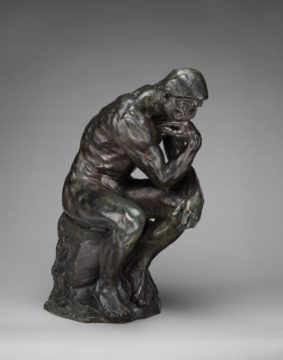
After running through “a linguistic update” of the study of nationalism and outlining some of the psychological underpinnings of the nationalist world-view that such an update suggests, it is now time to take stock. It is time, that is, to consider some of the repercussions of this general take on things.
Three interconnected corollaries come to mind, which I shall rank, and present, from the more general of consequences to the narrower and more significant. I should add that this is probably the sort of stuff that overzealous referees of academic journals dismiss outright, without giving it much thought (I know from experience), but do humour me anyway.
The first corollary has to do with the study of nationalism itself; or more properly, with what may well be termed “the origins of nationalism” – i.e., the genesis of nationalist beliefs.
There has been plenty of discussion on this issue in the relevant literature, with various proposals on offer, each espousing a whole paradigm. Some of the better-known accounts come under the names of perennialism, primordialism or ethno-symbolism, while the consensus on the study of nationalism I myself outlined is based on the so-called modernist paradigm, perhaps the most prominent of them all. Though a well-trodden topic, I think some of the material I presented in what I am now calling Parts 1 (the update) and 2 (the psychology) of this series on nationalism offers some novelty. As argued in Part 2, after all, it is by teasing out “the building blocks” of nationalism that we can obtain a better view of the overall phenomenon, and it may well be by drawing attention to the psychological underpinnings of nationalist beliefs that it might be possible to make sense of where nationalism as an idea comes from.[i] Read more »
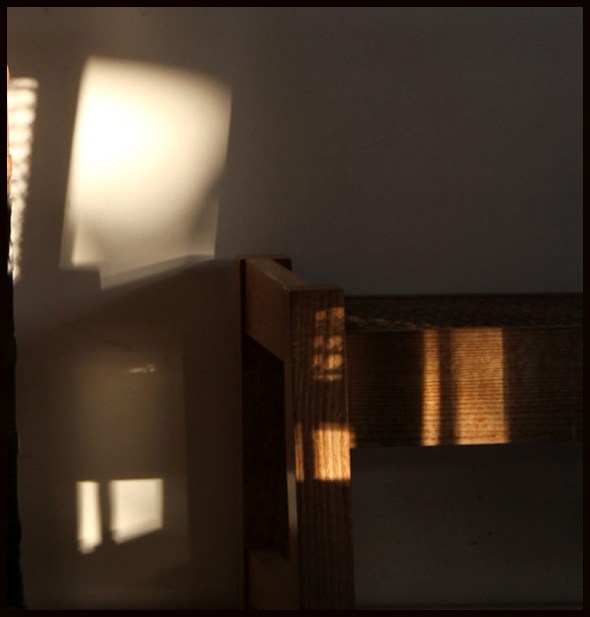 Sughra Raza. Karachi Afternoon Sun, 2010.
Digital photograph.
by Robyn Repko Waller

In the United States these days, it’s difficult to find a person not profoundly angry about something. Headlines scream of the vaccinated America tired, frustrated, and angry at the vaccine-hesitant and anti-vaxxers. And unvaccinated America in turn, outraged at the local jurisdiction and vaccinated for the increasing restrictions they face in attending school, dining indoors, and enjoying the gym and theater without conceding to a COVID jab. Angry parents are expressing exhausted outrage at school boards for mask policies. Outrage at mask mandates. Outrage at a lack thereof.
The anger isn’t confined to the pandemic. Our social and political landscape is bubbling with anger. Anger at politicians, left and right. Outrage in the form of cancelling. Responding anger at the ‘Cancel Culture.’ Anger about the Afghanistan withdrawal and the tragic humanitarian aftermath. Anger at continued social injustice stateside and abroad. Conversely for some, anger directed at social justice activists. Outrage for the teaching of Critical Race Theory. Anger — but perhaps not enough — that climate change, disrupting and catastrophically reshaping our Earth and its populace, remains largely unaddressed. So much anger.
Americans are angry. But is all of this anger really warranted? And even if it’s warranted, does it do us any good? With the amount of negative appraisal emoted as of late, it seems like a fitting time to step back and explore these concerns.
This is especially so, as political polarization is no longer a novel phenomenon in the US. Whereas once one might take such claims of political shifts to be hype, recent electoral and public health crises stand out as manifest expressions of polarizing views and self-contained communities. Divided towns, divided co-workers, even deeply divided families. Anger at a perceived other is a prominent feature of our current standing. Moreover, clashing moral views plausibly underpin this growing schism in society. Read more »
by Thomas O’Dwyer
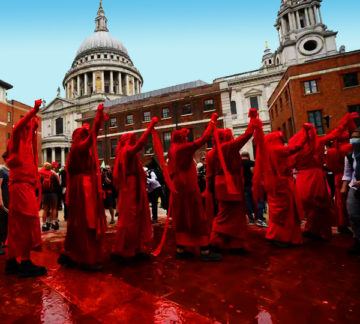
Before we can save the planet, we need to expose and stop the willful planet killers. They’re not difficult to identify – it’s the usual science-hating suspects and their followers. Shortly after the United Nations released its shocking scientific report on climate change last week, one of my acquaintances who has a sharp eye for ready-made answers to inconvenient truths, forwarded me an email. These Fwd: Fwd: messengers never share their own researched and crafted opinions – there’s an industry that creates cookie-cutter thinking for its email warriors. The report in the news is from the IPCC, the Intergovernmental Panel on Climate Change. This UN climate-science organisation, founded in 1988, has 195 member countries and every seven years it publishes a state-of-the-climate update, summarising current, peer-reviewed research on the science of climate change and its effects. To write this latest IPCC summary, 234 scientists read more than 14,000 research papers.
The gist of the scoffing email I received was that the UN report was alarmist, exaggerated and too negative. UN Secretary-General António Guterres’ warning that the report was “code red for humanity” was an overstatement. Behind the entire effort was “a political agenda” in which “some” politicians falsely proclaim an existential threat to the world by mixing politics and science. The writer admitted that they had not read the report, only “a couple of articles about it,” but assured us that far from heralding planetary catastrophe, climate change would bring “great commercial opportunities” (which the email did not specify). This vague prediction did contain the grudging admission that climate change is real — a couple of years ago, these emails were in full Trumpian cry proclaiming it a left-wing hoax. Now there’s a shift among the former purist deniers —it exists but it comes bearing bounty (more wealth for the wealthy). Read more »
by Fabio Tollon

Human beings are rather silly creatures. Some of us cheer billionaires into space while our planet burns. Some of us think vaccines cause autism, that the earth is flat, that anthropogenic climate change is not real, that COVID-19 is a hoax, and that diamonds have intrinsic value. Many of us believe things that are not fully justified, and we continue to believe these things even in the face of new evidence that goes against our position. This is to say, many people are woefully irrational. However, what makes this state of affairs perhaps even more depressing is that even if you think you are a reasonably well-informed person, you are still far from being fully rational. Decades of research in social psychology and behavioural economics has shown that not only are we horrific decision makers, we are also consistently horrific. This makes sense: we all have fairly similar ‘hardware’ (in the form of brains, guts, and butts) and thus it follows that there would be widely shared inconsistencies in our reasoning abilities.
This is all to say, in a very roundabout way, we get things wrong. We elect the wrong leaders, we believe the wrong theories, and we act in the wrong ways. All of this becomes especially disastrous in the case of climate change. But what if there was a way to escape this tragic epistemic situation? What if, with the use of an AI-powered surveillance state, we could simply make it impossible for us to do the ‘wrong’ things? As Ivan Karamazov notes in the tale of The Grand Inquisitor (in The Brothers Karamzov by Dostoevsky), the Catholic Church should be praised because it has “vanquished freedom… to make men happy”. By doing so it has “satisfied the universal and everlasting craving of humanity – to find someone to worship”. Human beings are incapable of managing their own freedom. We crave someone else to tell us what to do, and, so the argument goes, it would be in our best interest to have an authority (such as the Catholic Church, as in the original story) with absolute power ruling over us. This, however, contrasts sharply with liberal-democratic norms. My goal is to show that we can address the issues raised by climate change without reinventing the liberal-democratic wheel. That is, we can avoid the kind of authoritarianism dreamed up by Ivan Karamazov. Read more »
by Brooks Riley
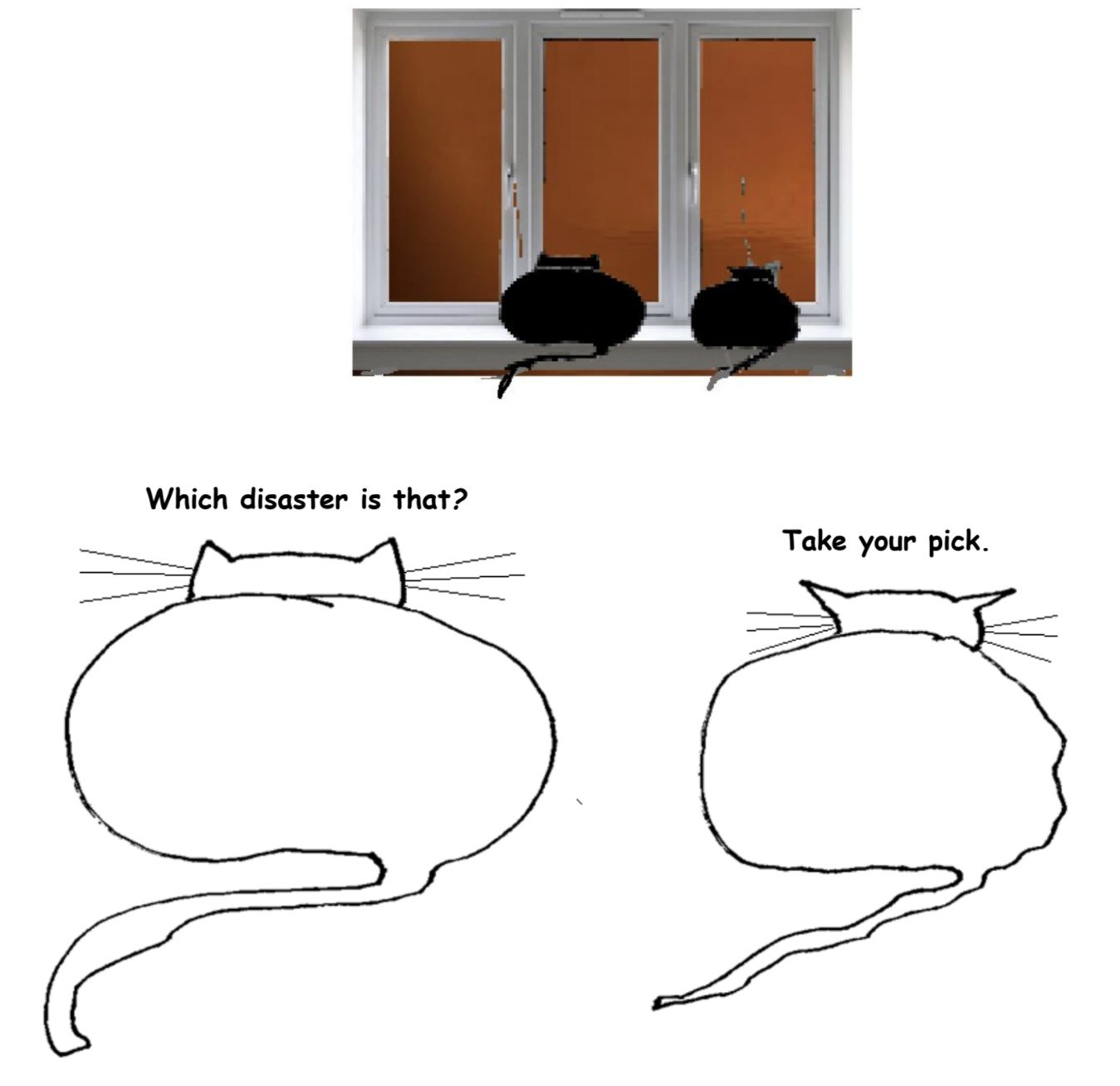
by Mark Harvey
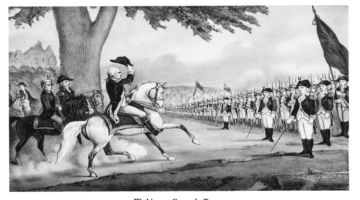
Here’s a weird thought: if it weren’t for 18th-century vaccines, America might have lost the revolutionary war to the British. That would have meant that all the anti-vaxxers today touting their freedom not to get a vaccine might have inherited quite a different destiny of eating scones and clotted cream under the British crown. Viruses have always been with us and they always will be, but in the early days of the revolutionary war, an invisible enemy probably killed more American soldiers than the British did. That quiet killer with no generals, no cannon, no forts, and no muskets was smallpox. The weapon against smallpox back then wasn’t truly a vaccine, for modern vaccines hadn’t been invented. But the inoculations were based on a similar principle of introducing a pathogen into a human to develop immunity to a disease.
It’s hard to know exactly how long smallpox has been with us, but we do know that it has been around for at least a few thousand years and probably killed Pharaoh Ramses V in 1157 B.C. When archaeologists unwrapped the linens and layers of resin preserving the pharaoh, his skin showed the characteristic pockmarks of a bad case of smallpox.
George Washington himself had suffered a bout of smallpox when he was traveling with his brother through Barbados at the age of 19. The illness incapacitated him for a solid month but also left him with a lifelong immunity, and a respect and understanding of the disease that would come to play a huge role in the revolutionary war and even the destiny of our country. Read more »
by Mike O’Brien
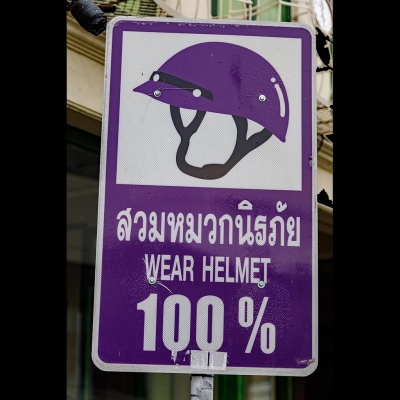
Last month I took a trip that had a profound impact on me. Departing from a small staircase, my short flight had stopovers on the edge of a sofa and a magazine rack, before finally reaching my final destination on the floor. Being the overly intellectual sort that I am, I proceeded though most of the itinerary head-first. As soon as it was over, I questioned how best to process the experience, and how it might change me as a person, going forward. (Lord, how I despise that expression. As if freezing or going backwards were options, plutonium-powered Deloreans notwithstanding.) I didn’t seek medical attention, given that I was half-vaxed at the time and not disposed to sitting in hospital waiting rooms with the Delta variant coming into bloom.
I had taken a similar voyage to the floor years ago, and knew the protocols for returning. The last time, I adhered as closely as possible to a 10-14 day regimen of silence, darkness, sleep and dietary fat, with an absolute prohibition on screens, reading, physical activity and alcohol. This is a much more stringent regimen than those prescribed by most Canadian health guidelines regarding concussions, for the same reason that dairy-producing countries prescribe more cheese in a balanced diet. To whit, if Canadian health authorities took the long-term effects of concussions seriously, we would have to cancel North-American-style hockey and football (and boxing and MMA and Judo and racing and that competition where Russians slap each other really hard), and any professional league with money in its pockets would be sued into oblivion.
I do take the long-term effects of concussions seriously, having taken a heap of psychology classes at the very neurologically-inclined McGill University (Go Martlets!), and having done a fair bit of rather rough martial arts (safely). Concussions scare the living daylights out of me, and I’m struck by the tone of much public health information on the subject, which seem to be structured around the question of when Timmy can lace up his skates again. Read more »
by Carol A Westbrook

Chocolate. The very word makes your mouth water; it conjures up images of childhood, of ice cream sundaes, of Valentine’s Day, of love. A small piece in your mouth makes you happy and improves your outlook—and makes you want more. chocolate is a stimulant, a mood elevator. And so many people reached for a piece of chocolate to help get through the dark days of the Covid-19 pandemic, as reflected in the increased chocolate sales during those months
Can chocolate really do all of these things? A surprising amount of research has been done to try to answer this question, with inconclusive results. Yes, there are pharmacoactive substances in chocolate, the most prominent of which is theobromine. This chemical which is named for the plant in which it was discovered, the cacao tree, (Theobroma cacao), the source of chocolate. Carl Linnaeus, the great Swedish botanist, gave the plant its name, perhaps in recognition of its importance to the natives that cultivated it. Theobroma contains the Greek words theo (god) and broma (food), meaning food of the gods—there is no bromine in the substance. Theobromine is a mild stimulant, similar to caffeine. It is also present in green tea and Yerba mate. A milk chocolate bar contains about 60 milligrams of theobromine, while dark chocolate has about 3 times as much. Consumption of an entire dark chocolate bar can have some pleasant mood effects, while three dark chocolate bars can cause sweating, trembling, and headaches. But keep your chocolate bars away from your dogs, because theobromine cannot be metabolized by animals, and it is toxic to them. Read more »