by David J. Lobina

What I really mean, of course, is what The Language of Thought (LoT, postea) is like; after all, in previous entries of this series on the relationship between language and thought, I have stated what the LoT is supposed to be, and thus, that can hardly still be an issue this late in the day – if anything, the question now is not what the LoT is, but what’s in it. In order to approach the latter question, we can do with a reminder on the former.
Starting from two reasonable, but by no account, universally accepted, assumptions about human cognition – namely, that much of cognition involves mental representations (possibly symbolic representations) as well as computational operations over these representations (in philosophy, these two assumptions are known as the representational and computational theories of mind, respectively) – one of the most striking features of the kind of thinking we conduct on a daily basis is how flexible it is. What I have in mind by this is the ability to combine information from different modalities (aural, visual, etc.) into a single representation, the result a thought, a decision, or what have you.
Such cognitive flexibility has often been taken as suggesting that the merging of different kinds of information must take place in a representational system that is in fact amodal – that is, a common code composed of, not words, pictures, or sounds, but abstract concepts, the mental particulars I have claimed in this series subsume most of cognition. And just like the words of a natural language, mental concepts can combine with each other into ever more complex representations (sometimes called conceptions), thereby explaining the richness of human thought – and, in turn, accounting for the “language” in the language of thought. Read more »
 Twitter is toxic, suggests autocomplete; Twitter is an echo chamber, or at best a waste of time. Twitter is a hotbed of political factionalism. Twitter can be a frightening place for people who are harassed or threatened, and it may become more so when a recently announced takeover is complete. The bullying and misinformation and political threat are all real, and they’ve been central to recent discussions about the takeover. But Twitter is a big place, and some of us are there mainly for things we love. Birds, for example, and poems.
 There are two kinds of people in this world: those who find basements scary and those who find attics scary. I suppose there might be some folks (bless their hearts) who are disturbed by both, like those ethereal creatures with one blue eye and one brown. I refuse to countenance the idea of people who have no feelings of unease in either space. To be that well-adjusted, that free from inchoate fear, that grounded in the solid objects of reality—I draw back in horror at the thought. We will leave these hale and pragmatic types to their smoothies and their 401Ks and godspeed to them.
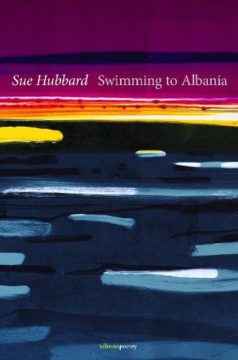 I find Sue Hubbard’s writings to be an invitation to feel sorrowful. And therefore a beckoning towards a search for beauty, an attempt at forgiveness and redemption and reckoning; a belief in the possibility of joy.
 June 4 early morning we took a taxi from Friendship Hotel to the Beijing airport, oblivious of the dreadful happenings in Tiananmen Square the previous night. I remember the taxi driver in his almost non-existent English tried to tell us that ‘something’ (he was not sure what) had happened in the night in the Square, traffic was not allowed to go in that direction. By the time we reached Shanghai, our hosts who came to receive us knew. Of course, they could not know it from radio or TV, as there was a news blackout. These were days before internet, but cross-country fax messages were still active. Beijing to Shanghai messages were blocked, but people in Beijing were sending fax messages to their friends and relatives in Los Angeles, and the latter were sending messages to Shanghai.
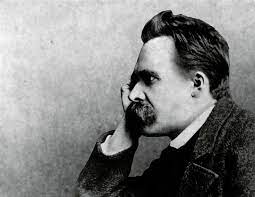 Friedrich Nietzsche is my “desert island philosopher.” Guests, or “castaways” on BBC Radio 4’s long running program “Desert Island Discs” are allowed to take to their desert island, in addition to eight pieces of music, a text of religious or philosophical significance. Many accept the bible as the default option. For me, the choice is a no brainer: I’d take the works of Nietzsche.
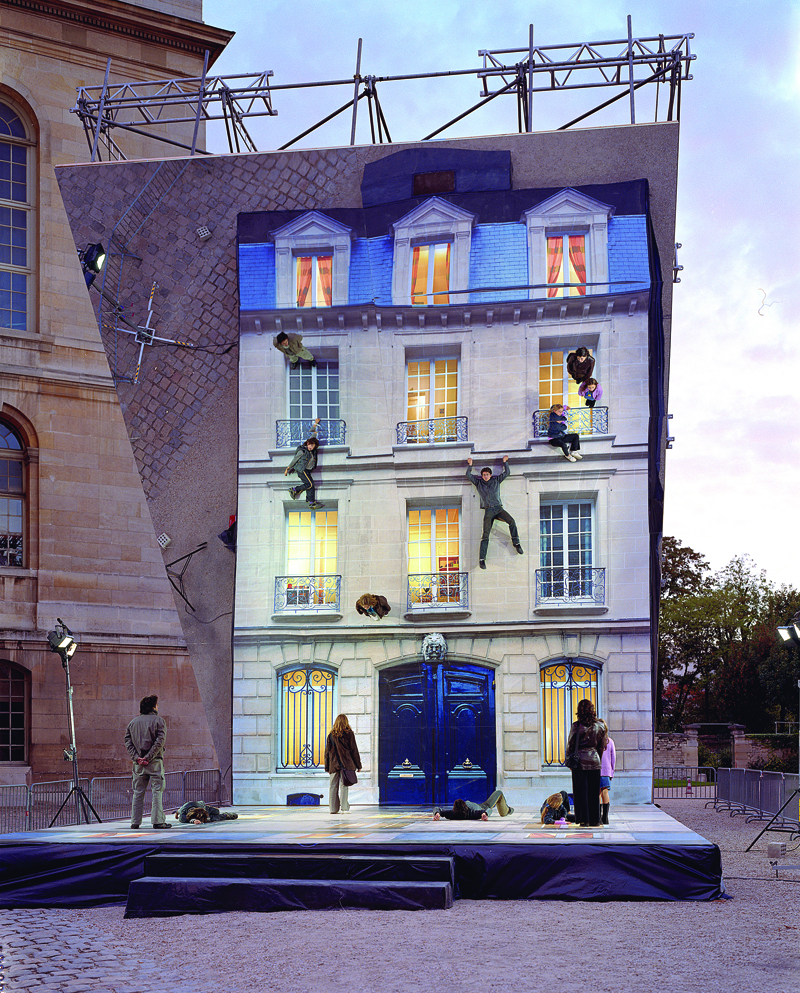 Leandro Erlich. “BÂTIMENT”, 2004, La Nuit Blanche, Paris, France.
 Language has an important role to play in national identity. One only has to think about the