by Scott Samuelson
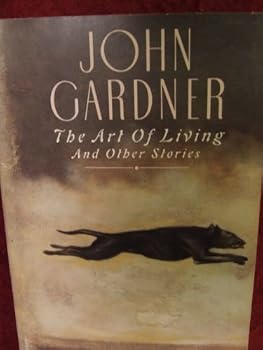
Let me say upfront that I have nothing against dogs. In fact, I’ve loved certain dogs more than I’ve loved certain family members. That said, one of my favorite stories in American literature is about eating a dog and thereby getting a glimpse into the meaning of human life. (Admittedly, part of why I love the story so much is that it’s about cooking, and I’ve just written a book about how making and sharing food is a useful paradigm for thinking about the good life.)
John Gardner’s short story “The Art of Living” is about Arnold Deller, a good cook in a small-town restaurant in the late 1960s, and a gang of greaser kids who hang out to chat with him because he talks about real things, things that matter, unlike the rest of society. A tale of disillusioned American youth seeking meaning in a semi-hostile culture is likely always going to be relevant, but it feels especially so in a time when the stage set is collapsing (as Camus once said) and the absurdity of our politics, our economy, our foreign policy, and our educational systems is being laid bare.
So, what’s the art of living? Sometimes Arnold Deller can sound like a downhome Socrates.
You kids had any brains, you’d ask me what to do with oregano. Educate yourself, learn a good honest trade, or, rather, art . . . But I’ll tell you one thing. Better to ask me these grandiose questions than ask somebody thinks he knows the answers.
He diagnoses the deep problem of our culture as a pervasive loss of care.
Everything’s easy, easy as pie!—TV dinners of chicken that never in its life felt the ground under its toes, instant potatoes, lettuce that’s been put in some stuff to make it fresh till the day of the Antichrist—and what’s the result? All humanity begins to be like sheep. That’s right! They baby themselves till they don’t care about themselves.
As it turns out, he manages to sum up my philosophy of cooking in a few sentences.
The thing a person’s gotta have—a human being—is some kind of center to his life, some one thing he’s good at that other people need from him, like, for instance, shoemaking. I mean something ordinary but at the same time holy, if you know what I mean. Very special. Something ritual—like, better yet, cooking! . . . That’s what it’s all about. Making life startling and interesting again, bringing families together, or lovers, what-not.
Halfway through the story, the cook mentions a letter he once received from his son Rinehart, a soldier who was killed in Vietnam. It describes an unforgettable meal that Rinehart had there. As Arnold says, “It wasn’t just food. It was an occasion. It was one of the oldest dishes known in Asia. Sit down to that dinner—this is what he wrote, and he was right, dead right—you could imagine you were eating with the earliest wisemen in the world.”
The dish was Imperial Dog. Read more »