
by Mark Harvey
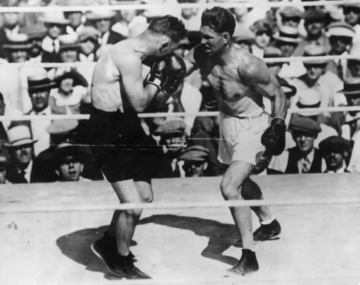
On a hot Ohio day on July 4th, 1919, a young man named Jack Dempsey from the tiny town of Manassa, Colorado, stepped into the ring to fight Jess Willard, a boxer who was sixty pounds heavier and five inches taller. The two were fighting for the heavyweight championship of the world, and the odds favored Willard, the bigger man and defending champion.
The fight was the most anticipated event across the country. Radio broadcasting wasn’t a thing yet, so men and women gathered at newspaper offices in every state to hear the “megaphone men” announce the fight from telegraph dispatches.
In Toledo, thousands of men surrounded the ring, wearing straw boaters with grosgrain hatbands.
The fight didn’t last long: Dempsey knocked Willard down six times in the first round. That Willard got up six times and survived four rounds before throwing in the sponge is a testament to his toughness. But he paid a terrible price. Dempsey broke his jaw, his cheek, his ribs, and gave him permanent hearing loss.
A surviving film of the fight shows Dempsey moving around the ring like a cat dwarfed by a slow-moving Willard. In modern boxing, the fight probably would have been stopped in the first round.
After his win, Dempsey became arguably the most famous and celebrated man in America. When he met President Coolidge a few years later, the President said, “Well, Mr. Dempsey, you’re a creditable champion, and you’re a more popular man than I am.”
Dempsey’s went on to win many more boxing matches, became a millionaire, and was hosted and toasted by the cream of America and Europe. If you knew his beginnings, you never would have imagined him becoming one of the world’s most famous men.
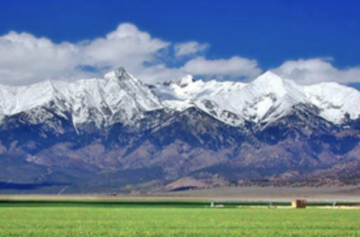
He was born in 1895 in the tiny town of Manassa, Colorado, which had about 650 souls at the time. Manassa sits on the southern end of the vast San Luis Valley in southern Colorado. It’s flanked by the Sangre de Cristo Mountains to the east and the San Juan Mountains to the west. Mormons founded the town in 1879 and named it after Manasseh, the elder son of Joseph in the Old Testament. Manasseh was important to Mormons as the ancient ancestor of Lehi, the prophet whose story opens The Book of Mormon.
Like hundreds of other Mormon towns, Manassa was laid out under the rules of the Plat of Zion: a town of one square mile, giant city blocks measuring about an acre each, wide streets measuring eight rods (132 feet), and all arranged strictly in alignment with the cardinal directions.
Dempsey was born just six years after the town’s founding and was raised in the Church of Latter-day Saints. His mother stayed devoted to the Mormon Church her whole life, but his father strayed from the church, drank coffee and whiskey, and smoked. Mormonism was important to Dempsey himself, but he was not devout and lapsed. Commenting on his religion, He said, “I’m proud to be a Mormon and ashamed to be the Jack Mormon that I am.”
At age sixteen, Dempsey left home and for five years lived as an itinerant hobo, hopping trains from town to town. He called it “riding the rods” because he would position himself lying flat under the train’s boxcars on the supporting truss rods. Hobos of that era rode the rods to avoid getting caught by violent security guards in the boxcars. So for miles, Dempsey would be sandwiched between the bottom of the boxcar and the railroad ties rushing by his head, just inches away.
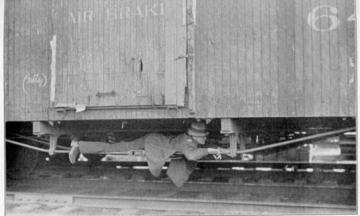
Riding the rods was incredibly dangerous, and documented fatalities from hobos trespassing on trains in 1915 numbered nearly 5,000. Another 7,000 hobos were injured. The men would fall asleep and fall on the tracks, their hands would freeze, and they’d lose their grip, or the slack between cars would lead to violent stops and starts when the engineer braked or accelerated.
Those five years were lean, hungry times for Dempsey as he traveled through towns like Cripple Creek, Montrose, Delta, Durango, Price, Salt Lake, and Reno. He worked as a day laborer in mining camps, cowboyed on ranches, shoveled ore, and picked fruit. But he still went hungry some weeks, so he supplemented his paltry wages with informal fights at bars, pool halls, mining camps, and carnivals.
Dempsey had a signature challenge. He would walk into a saloon and call out, “I can’t sing, and I can’t dance, but I can lick any man in the house.” No precise record shows how many fights he had in those five years, but Dempsey remembered sometimes fighting three or four times in one week.
The prize money was meager: just a few dollars or whatever was collected from patrons as a hat was passed around the room. It could be two dollars and a plate of stew, five dollars, or, at semi-organized events, twenty dollars.
So if you met Jack Dempsey in, say, 1914, you would have met a very rough-around-the-edges, skinny, hungry kid, traveling around the country on the bottom of trains. A kid with no prospects and likely headed to a potter’s grave. Without clairvoyance, you could never have imagined that ten years later he would be a multimillionaire, and one of the most famous and popular people in America.
Which takes us to another one of Manassa’s sons, someone you’ve probably never heard of, but who had a much bigger impact on the world than Dempsey.
I first learned about Nyle C. Brady when a well-meaning friend gave me a monstrous book called The Nature and Properties of Soils. I’m a total geek when it comes to the earth sciences, so I was both pleased and intimidated to receive the tome. While recovering from a knee injury, I tried to read the book while lying on my back with my leg elevated, but my arms got tired from holding the thing up, and I had to set it down about every two pages. Out of curiosity, I weighed the book, and it came in as a legitimate heavyweight at nearly four pounds. The Jack Dempsey of soil treatises.
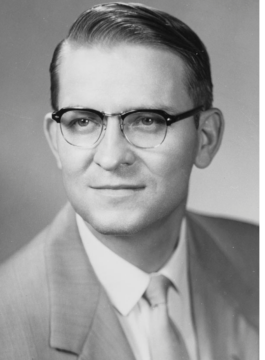
The preface included a moving tribute to the late Brady for writing the book and seeing it through 11 editions over 16 years. Reading the eulogy, I was most surprised to learn that he, too, was born and raised in the tiny town of Manassa. Brady was born in 1920 to farmers who were also devout Mormons. By the time Brady was born, Dempsey was already famous all across the land. Unlike Dempsey, Brady left a much fainter trail in his youth, and throughout his life seemed interested only in serving humanity on a broad scale. Few photos of him exist in public, but the ones of him as a young man show a bookish-looking fellow, neatly groomed and wearing browline glasses. He looks like the last man you’d ever send into a ring as a heavyweight contender.
Brady studied chemistry at Brigham Young University, and then got a PhD in Soil Science from North Carolina State College (now North Carolina State University). From there he taught at Cornell University for 26 years, rising to become head of the Department of Agronomy.
But it was after Cornell when he moved to the Philippines to direct the International Rice Research Institute that he really left his mark on the world. When Brady arrived in the Philippines, the so-called Green Revolution was already about ten years in. The American agronomist Norman Borlaug had already won the Nobel Peace Prize for developing a strain of wheat that was considered to have saved billions of lives in Southeast Asia.
After World War II, synthetic nitrogen fertilizers became cheap and abundant. Agronomists and farmers around the world tried to grow traditional wheat with the factory-made ammonium nitrate and urea, but the thin stalks couldn’t support the heavy seed heads; the wheat collapsed and the grain rotted in the dirt and mud. Borlaug solved the problem by crossing traditional wheat with a strain called Norin 10, a short-straw Japanese dwarf. The resulting hybrid was shorter and had a thick stalk that could support the seed heads. He also developed strains of wheat less susceptible to stem rust, a fungus that destroyed entire wheat fields in days.
Borlaug was credited with saving hundreds of millions of people in India and Pakistan with his robust strains of wheat and perhaps even a billion cumulatively worldwide.
When Brady reached the Philippines, he faced an analogous problem, but in the world of rice. Farmers in South Asia who applied synthetic fertilizers to traditional strains ended up with top-heavy plants on slender stems. The rice would collapse under the weight, making it impossible to harvest.
The International Rice Research Institute had already developed a strain of rice by crossbreeding thin-stemmed varieties with a dwarf mutant from Taiwan. The result was IR8, considered to be a miracle rice in the early days. The trouble with IR8 was that it had to be pampered with huge inputs of fertilizer, precise irrigation, and lots of pesticides. If you were a wealthy farmer, it was the bomb; but to the poorer farmers, it was too costly to grow.
Under Brady’s leadership, the IRRI developed IR36, a strain released in 1976. IR36 was resistant to brown planthoppers, green leafhoppers, and the tungro virus, three enemies of rice that required massive amounts of pesticides. It could also be grown in less ideal ground, including iron-toxic, zinc-deficient, and saline soils. Finally, it was better suited for dry spells and had a significantly shorter growing period, allowing farmers to harvest an extra crop or two in the same season.
The plant breeder at IRRI who helped develop IR36 was Gurdev Khush, and he deservedly received the World Food Prize for his work. But it’s not clear that Kush would have succeeded without Brady having restructured the whole institute. From my reading, it appears that before Brady, scientists worked in silos by specialty. Brady forced entomologists, plant breeders, soil specialists, and pathologists to all sit down and work together.
Brady also developed the International Rice Testing Program, which led to new strains being tested on hundreds of soils worldwide rather than the pristine soils of a lab.
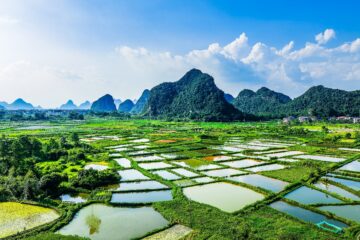
One of the most remarkable accomplishments of Brady’s career came in 1976, shortly after Mao Zedong died. China at the time was tightly sealed from the rest of the world, politically, culturally, and scientifically. It was in a precarious position: the population was approaching a billion, and for hundreds of millions of people, rice was the main staple. China had attempted to develop its own robust rice strains, but because of its isolation from the rest of the world, it lacked the genetic breadth in its germplasm collection. Rice grown nationwide was highly susceptible to blights and fungal disease, and the margin between feeding its people and famine was razor thin.
In October 1976, just one month after Mao died, Brady led an international delegation through China’s rice-growing regions and introduced IRRI’s disease-resistant genetic material, the backbone of IR36. When he left, he had secured formal agreements for scientific cooperation and germplasm exchanges between China and IRRI.
After Brady’s visit, China’s rice production exploded. Between 1976 and 1984, production increased by 30 to 40 million tons annually. By the late 1980s, hybrid rice had been planted on more than eight million hectares, close to a third of China’s total rice paddies. There were certainly political factors that spurred the growth in rice production, such as Deng Xiaoping’s breaking up the rigid collectives and giving farmers direct incentives to produce more. And China had its own brilliant geneticists, but there is little doubt that Brady’s work opening up the world’s germplasm to the Middle Kingdom helped solve the food problem.
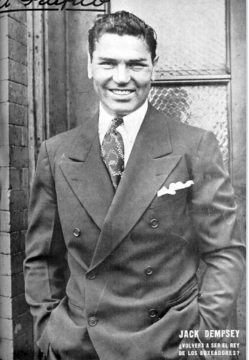
Jack Dempsey went on to become a millionaire—the first boxer to win a fight for more than a million-dollar prize—and a restaurant owner in New York City. His restaurant had a run of nearly 40 years. Despite being a real savage in the ring, he was said to be a warm-hearted gentleman out of the ring. The reporter William Seabrook wrote,
Jack Dempsey, aside from being a great fighter, has one of the rarest gifts that fate can bestow on any man or woman. He has natural charm—the unconscious kind that can’t be faked or imitated. He has the instinctive power of making men and women and children and dogs like him. It can be safely said that the only people who do not like Jack Dempsey are the people who have never met him personally.
Manassa’s other, more studious son never achieved much fame outside the world of soil scientists and agronomists. In fact, I couldn’t find a single written instance of Brady self-promoting or claiming credit for his astounding accomplishments. But his peers were glad to speak for him. His colleague Ray Weil wrote,
Nyle Brady had a larger-than-life personality, a deep sense of empathy, and an incredible understanding of how to work with people to get positive results. He was the kind of person that friends, associates, and even strangers would go to for advice when they found themselves in a perplexing position as a scientist, administrator, or even in their personal life.
Dempsey lived to be 87 and was buried in Southampton, Long Island, two thousand miles from the tiny town where he was born. For a time, he was the most celebrated man in America—more popular than even Babe Ruth. He was the day laborer and hobo prince who embodied the Roaring Twenties and the Jazz Age.
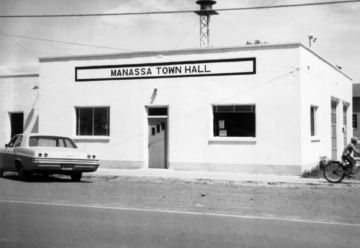
Brady left Manassa to focus on soil chemistry rather than prize fighting. Through his intense study of science, and maybe a practicality born of farming in the San Luis Valley, he became a central architect of the Green Revolution and helped spare millions from famine. He chose to be buried back in the same town where he was born.
If there was something in that small Plat of Zion in southern Colorado to spur these men to do great things, I can’t define it. Maybe it was just something in the soil.