Sandy Allen in Guernica:
 I have read before with fascination about the neurology of London cab drivers. Prospective London cabbies must memorize a preposterous amount of geographic information in order to pass the rigorous cab driver exam. Researchers have put drivers in brain scanners, wondering, is there something inherently different about their brains that allows them to memorize so much? Or does the memorization change their brains? They’ve found that in London cabbies’ brains, the area associated with memory is larger. This raises an enormous question, one that medicine still hasn’t figured out: when it comes to what happens inside our skulls, what makes an individual fall into or out of some standard called “normal?”
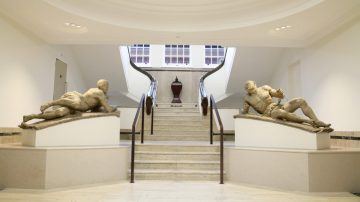
I thought about this on a Friday morning in early 2016, after my red-eye landed at Heathrow and I walked to find a cab. There was a particular museum just south of London that I desperately wanted to go to. For some months, I’d been visiting its website over and over. More recently, I’d been trying to convince my boyfriend that we needed to go to London for a weekend. He had some days off coming up and the means to go, I reasoned. It’d be romantic. “Plus,” I said, as if it were an afterthought, “I can go to that museum I’ve wanted to go to!”
The day we were to fly was also the day I was supposed to file a draft of my first book to my publisher. In the days leading up to the deadline, I hardly slept. I woke early and worked continuously, eventually closing my eyes past midnight but rising again in the dark, making another pot of coffee and continuing on. I paced the apartment. I read aloud to myself. I printed pages and wrote profanity in the margins. I muttered and cursed. I looked out the windows and wept. I handed in the draft just hours before we left for the airport.
I felt good! I felt great! The book was done! I told anyone who asked, and some who didn’t. Some weeks later, my editors would summon me and make clear, as gently as they could, that the work wasn’t finished, not at all. As they explained this to me in a small conference room over the course of an hour and a half, I tried not to cry. I managed to hold back tears until I was on the train home, and then kept at it for many days after. Eventually I’d tear the draft apart and rewrite the book entirely. Some months later, I’d do it again. The actual “the book is finished!” feeling wouldn’t arrive for another year and a half.
More here.

 If climate change, nuclear standoffs, assault weapons, hate crimes, mass killings, Russian trolls, near-record inequality, kids locked in cages at our border, and Donald Trump in the White House don’t occasionally cause you feelings of impending doom, you’re not human.
 The German word Bildung is notoriously difficult to render in English. Its most common meaning is perhaps ‘education,’ though in a more capacious sense than what happens exclusively in schools and universities. It is related to the German for ‘image’ (Bild) and the verb meaning ‘to form, shape, construct’ (bilden), and so suggests, when applied to a human being, a kind of quasi-aesthetic formation of one’s character. The complexities and ambiguities of the term provide a considerable obstacle to those interested in late eighteenth and early nineteenth-century German ethical thought, in which the ideal of Bildung plays a crucial role. In this splendid book, Jennifer Herdt has thus provided a valuable service in tracing the ways in which the concept of Bildung figures in the work of some of the most prominent thinkers of the period. With verve and impressive erudition, Herdt details how the notion of Bildung originated in the German pietist movement in the seventeenth century, and blossomed into a more (though perhaps not entirely) humanistic ideal in the subsequent work of Herder, Wilhelm von Humboldt, Schiller, Goethe, and Hegel. Though these figures differ in many crucial respects, they are united by the idea that human beings are “oriented toward a telos conceived as the harmonious development of all their various capacities . . . into a balanced, unified whole” (p. 82).
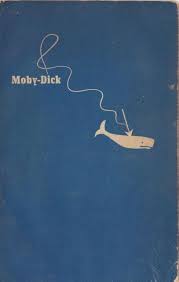 Perhaps it’s no surprise that the Great American Novel was born in 1868, only a few years after the end of the Civil War. Writing in
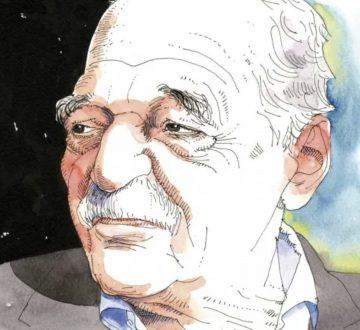 To begin with, it was the journalism that enabled him to make a precarious living while he wrote fiction, often at night. Yet even after the global success of his 1967 novel One Hundred Years of Solitude, he continued to write articles, commentaries, and reported pieces at an impressive rate. In Spanish, his collected Obra Periodística—not including three book-length works of reportage—spans five volumes, comprising more than 3,000 pages. The Scandal of the Century is the first English-language selection from this vast body of work. Long overdue, it provides a fairly representative slice of García Márquez’s journalistic output. In the first half, we track his movements across the globe, from 1940s Colombia through a string of international assignments in the ’50s and ’60s: Rome, Paris, Budapest, Caracas, and Havana, among many others. In the latter half, we find a more rooted García Márquez, largely through the columns he wrote for El País in the ’80s from Mexico City, where he lived much of the time from the ’70s onward.
 In 2004, two Amish children—siblings, in fact—died while playing. They weren’t doing anything particularly dangerous, just normal recreation, but somehow they both passed away suddenly.
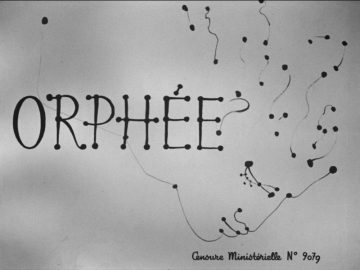 Orpheus is a film that deals in the interpretation of signs and meaning. It is one of the few films that deals with that in a direct and palpable way. Others from the same period as Orpheus are detective films and film noirs. This decoding is not just subtext nor is it merely somehow inscribed in the film for us to discover using our critical faculties. It is the film’s subject matter. That’s why Orpheus was also called, when it came out, “a detective story from the beyond.”
 Porter is so famous for his gifts as a lyricist that it might seem mischievous to the point of perversity to suggest that his real greatness resides in his skills as a composer. Yet how many other popular composers have had more hits with instrumental, unsung versions of their work? Artie Shaw’s version of “Begin the Beguine” is the best known, but the Dave Brubeck Quartet’s album of Porter songs, from the mid-sixties, with Paul Desmond’s peerless sax, is just as good. Though rarely overtly jazz in the Arlen-Gershwin manner, his melodies have so much mysterious inner propulsion that, asked to swing, they practically swing themselves.
 It is nearly impossible to live in today’s world without having come across mention of the legendary
  W
W Hit certain crystalline materials with a jolt of electricity and they will change shape. Squeeze them and they will jolt you right back. Scientists have used these so-called piezoelectrics for decades in ultrasound medical imaging; the materials are so sensitive that they can pick up the motion of sound waves moving through tissue. Now, researchers have come up with a simple new way to make potent transparent piezoelectrics, which could lead to improved medical imagers, invisible robots, and touch screens that power themselves.
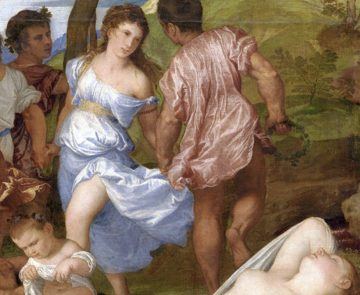 According to the best-known telling of the tale, Hippasus, a Pythagorean of the fifth century b.c., was drowned in the sea by his fellow philosophers while on a fishing voyage. Hippasus had disclosed a secret that, if made public, risked destroying the credibility of his school’s commitment to a cosmos governed by perfect mathematical harmony: The relationship between a diagonal of a square and its side cannot be represented as a ratio — it is “irrational.” This legend sets the stage in
  Be warned. If the rise of the robots comes to pass, the apocalypse may be a more squelchy affair than science fiction writers have prepared us for.