
David Byrne in Reasons to be Cheerful:
 How should one think of a nation, institution or company that has pioneered innovation and found solutions to seemingly unsolvable problems, but also has aspects we find objectionable, even despicable? How do we balance good and bad? Can we separate the two, or are they inexorably linked?
More specifically: How do we think about a country that has lifted hundreds of millions of people out of poverty, has backed and advanced renewable energy technology, and mostly avoided military imperialism, even as it violates the human rights of millions, persecutes minorities, wreaks havoc on the environment and embraces authoritarianism, surveillance, censorship and corruption? If we cheer the good stuff, are we tacitly endorsing the bad? Does it have to be all or nothing?
With Reasons to be Cheerful we try to present the good stuff. But sometimes the good stuff is mixed in with not-so-good stuff, sometimes even with fairly horrible stuff. I’m going to take China as an example of this dilemma. Watching the Beijing-supported crackdown on democracy activists in Hong Kong, and reading about the brutal Uyghur detention camps in Xinjiang province, one wonders whether it is bad form to highlight even the most indisputably good solutions from China. Like German coal-powered electric car infrastructure, is China good or is it bad? It’s complicated.
More here.
 W
W For Hägglund what flows from the recognition that religious faith is incoherent is a revaluation of our relation to our finite lives that he calls secular faith—the faith that life is worth living, for itself, and not for some deferred or transcendent goal. But secular faith leads necessarily to another revaluation. When we realize that our time in this life is finite, we are compelled to ask the most fundamental of questions: what ought I to do with this time? Asking this question is at the core of what Hägglund calls spiritual freedom: “The ability to ask this question—the question of what we ought to do with our time—is the basic condition for what I call spiritual freedom. To lead a free, spiritual life (rather than a life determined merely by natural instincts), I must be responsible for what I do.”
 The primary difficulty of interstellar communication is finding common ground between ourselves and other intelligent entities about which we can know nothing with absolute certainty. This common ground would be the basis for a universal language that could be understood by any intelligence, whether in the Milky Way, Andromeda, or beyond the cosmic horizon. To the best of our knowledge, the laws of physics are the same throughout the universe, which suggests that the facts of science may serve as a basis for mutual understanding between humans and an extraterrestrial intelligence. One key set of scientific facts presents an intriguing question. If aliens were to visit Earth and learn about its inhabitants, would they be surprised that such a wide variety of species all share a common genetic code? Or would this be all too familiar? There is probable cause to assume that the structure of genetic material is the same throughout the universe and that, while this is liable to give rise to life forms not found on Earth, the variety of species is fundamentally limited by the constraints built into the genetic mechanism.
 Julian Lucas: Your introductory essay suggests that when it comes to King, contemporary thought is held “captive by a picture.” Do you think that there can be a coexistence between King the political icon and King the serious philosophical thinker?
 Physics is simple; people are complicated. But even people are ultimately physical systems, made of particles and forces that follow the rules of the
  As the world’s business elites trek to Davos for their annual gathering, people should be asking a simple question: Have they overcome their infatuation with US President Donald Trump?
 Last week, my parents saw Little Women. My mother immediately phoned me. “I think Professor Bhaer is Jewish,” she said, her voice vibrating with barely suppressed excitement. I said I didn’t think the facts supported this theory. But several days later, I got an email from her with the subject line “FYI!!!” When I clicked on the link, I saw it was
  Aleksandr Solzhenitsyn’s multivolume historical novel about the Russian Revolution, The Red Wheel, is divided into four “nodes,” each a lengthy account of a short span of time. March 1917, the third node, is in turn divided into four volumes, the second of which is the book under review, translated into English for the first time. Combining nonfictional historical argument with novelistic accounts of the principal historical actors and a few fictional characters, March 1917 covers a mere three days of unrest and revolution, March 13–15, 1917, at the end of which Tsar Nicholas II abdicates, ending the Romanov dynasty in Russia. Marian Schwartz’s splendid translation captures the prose’s powerful pace and conveys, as few translators could, the author’s subtle use of tone.
 The last time we heard from Bombay Bicycle Club, they’d gone out on a high. 2014’s So Long, See You Tomorrow, their fourth album, was their first to reach number one. Their final show before they announced a hiatus in January 2016 was also the last ever gig at London’s 19,000-capacity Earl’s Court – a historic, confetti-fuelled moment before the bulldozers came in to flatten 40 years of rock history.
 AN ANTIMODERNIST
 Earlier this month, the American Cancer Society announced its latest figures on cancer incidence and mortality
 I first met Roger Scruton almost 20 years ago at a symposium in Sweden. I admired the eloquence with which he could talk about Kant and the elegance of his writing on beauty. I learned from his conservatism, even as I disagreed with what he said. But although I got to know him quite well over the years, our relationship was always fraught. For there was another Roger Scruton, not the philosopher but the polemicist. For all his warmth and generosity, and for all the poise of his writing, his views were often ugly. “Whatever its defects,” Scruton wrote in his memoir
  TOURISTS VISITING
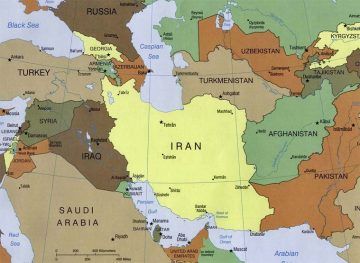 On September 24, 2019, in his UN address President Trump defended the United States’s economic sanctions against Iran by invoking language that has become so familiar to us we fail to hear its ruthless and genocidal resonances. After stating that it was his duty and priority to “defend America’s interests,” Trump cited “Iran’s blood-lust,” its “menacing behavior,” its “traffic in monstrous antisemitism,” and accused Iran of single-handedly destabilizing the Middle East. The use of abstract and degrading terminology to discuss Iran has a long history in American politics: in 1987, during a televised address in reference to the Iran–Contra Affair, Ronald Reagan innocently stated that “what began as a strategic opening to Iran deteriorated, in its implementation, into trading arms for hostages” (it’s important to note that Jimmy Carter had lost the reelection to Reagan because he was devoted to the Middle East Peace Process and unwilling, in his own words, to “wipe Iran off the map”); in 1989, George H.W. Bush claimed that “we can’t have normalized relations with a state that’s branded a terrorist state”; and, during his State of the Union address months after the ghastly and apocalyptic 9/11 attacks, George Bush stated that “Iran aggressively pursues weapons of mass destruction and exports terror,” and that “states like these [Iran, Iraq and North Korea] and their terrorist allies constitute an axis of evil arming to threaten the peace of the world by seeking weapons of mass destruction posing a grave and growing danger.” This appeal to nationalist discourse has served time and again to justify the imposition of American will over Iran.