John Warner in Inside Higher Ed:
 In 1965, James Baldwin debated William F. Buckley at the Cambridge Union Society, Cambridge University. The topic of the debate was, “The American Dream is at the expense of the American negro.”
…Baldwin delivers his remarks slowly, somehow seeming both passionate and cool, like jazz. He is mesmerizing, as shown by the camera cutaways to the audience that sits rapt. It almost seems unfair, a distortion, to excerpt Baldwin’s remarks because as a work of rhetoric, it surpasses even the best of Martin Luther King or JFK. In the opening, he acknowledges the trap of segregation for the segregationists, that what he is discussing is a fundamental inequality born of an unjust system in which individuals are only actors:
“The white South African or Mississippi sharecropper or Alabama sheriff has at bottom a system of reality which compels them really to believe when they face the Negro that this woman, this man, this child must be insane to attack the system to which he owes his entire identity.”
He then makes deft use of the 2nd person in order to draw a circle around the experience of being black in 1960s America:
“In the case of the American Negro, from the moment you are born every stick and stone, every face, is white. Since you have not yet seen a mirror, you suppose you are, too. It comes as a great shock around the age of 5, 6, or 7 to discover that the flag to which you have pledged allegiance, along with everybody else, has not pledged allegiance to you. It comes as a great shock to see Gary Cooper killing off the Indians, and although you are rooting for Gary Cooper, that the Indians are you.”
A small ripple of laughter coursed through the Cambridge fellows at that moment. A laugh not of amusement, but recognition. Baldwin shifts to the first person, reminding the audience that the man in front of them is indeed part of this “you”:
“From a very literal point of view, the harbors and the ports and the railroads of the country–the economy, especially in the South–could not conceivably be what they are if it had not been (and this is still so) for cheap labor. I am speaking very seriously, and this is not an overstatement: I picked cotton, I carried it to the market, I built the railroads under someone else’s whip for nothing. For nothing.”
The Southern oligarchy which has still today so very much power in Washington, and therefore some power in the world, was created by my labor and my sweat and the violation of my women and the murder of my children. This in the land of the free, the home of the brave.”
Baldwin hammers the “I” in his delivery in the first part. The final lines of this passage are delivered in some combination of sorrow and disbelief. Baldwin then returns to his theme that black America is not the only group being destroyed by this system:
“Sheriff Clark in Selma, Ala., cannot be dismissed as a total monster; I am sure he loves his wife and children and likes to get drunk. One has to assume that he is a man like me. But he does not know what drives him to use the club, to menace with the gun and to use the cattle prod. Something awful must have happened to a human being to be able to put a cattle prod against a woman’s breasts. What happens to the woman is ghastly. What happens to the man who does it is in some ways much, much worse. Their moral lives have been destroyed by the plague called color.”
Baldwin finishes with this:
“It is a terrible thing for an entire people to surrender to the notion that one-ninth of its population is beneath them. Until the moment comes when we, the Americans, are able to accept the fact that my ancestors are both black and white, that on that continent we are trying to forge a new identity, that we need each other, that I am not a ward of America, I am not an object of missionary charity, I am one of the people who built the country–until this moment comes there is scarcely any hope for the American dream. If the people are denied participation in it, by their very presence they will wreck it. And if that happens it is a very grave moment for the West.”
Baldwin received a standing ovation from the very white, very British audience. The announcer says in the video that he’s never seen such a reaction at these events before.
More here. (Note: Throughout February, at least one post will honor The Black History Month. This year’s theme is “African Americans and the Vote.” Readers are encouraged to send in their suggestions)

 “Dalai Lama” is a foreign title. Tibetans refer to him with names like “Precious Protector,” “Wish-Fulfilling Jewel” and “the Presence.” The divide between the Tibetan Buddhist world — which often has included China and Mongolia — and the world beyond has rarely been of particular consequence to the Dalai Lamas, until this one, the 14th, who is the first to spend most of his life in exile; he fled to India in 1959 and has not returned. His biographer, facing the usual problems of recounting the life of a figure still living (the Dalai Lama will be 85 this year), is also faced with the dilemma of describing his life on the world stage (which has been fairly well documented) and his life inside the world of Tibetan Buddhism (which has not). This is the challenge that Alexander Norman, a longtime associate of the Dalai Lama, takes up in his new biography.
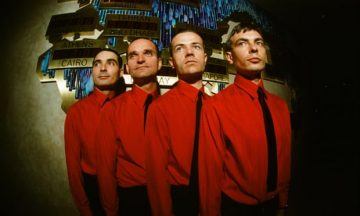 Kraftwerk
 Black women filmmakers—not invented yesterday and invented by no one but themselves—have persistently been making imaginative work in spite of the many obstacles and restrictions they’ve faced. The sixty plus films included in a recent series at Film Forum, “Black Women: Trailblazing African American Actresses & Images, 1920–2001,” exemplify their innovative and lasting legacies. One of these, Losing Ground (1982), by the filmmaker, playwright, and novelist Kathleen Collins, is a particularly incandescent example of filmmaking as a process of defiant self-creation.
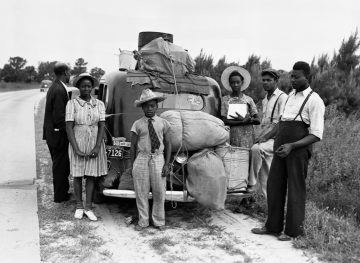 Viewers of the Oscar-winning film “
 Cancer has always been imagined as a biting, grasping, greedy beast. Hippocrates (or one of his students) is thought to be the first to name the disease karkinos, or crab, as ‘its veins are filled and stretched around like the feet of the animal called crab’. It was an image that would stick, embellished by physicians more deeply and vividly ever after. Like the crab, cancer was tenacious. ‘It is very hardly pulled away from those members, which it doth lay hold on, as the sea crab doth,’ remarked one 16th-century physician. There was no use in cutting away the tumour, just as there was no forcing a ‘Crab to quit what he has grasped betwixt his griping Claws,’ despaired another observer. Cancer the disease was as sneaky as its namesake. ‘It creeps little and little,’ noted one medieval commentator, ‘gnawing and fretting flesh and sinews slowish to the sight as it were a crab.’
 I am not the first to propose that Transhumanism channels elements of Christian eschatology. In The Pearly Gates of Cyberspace (1999), the science writer Margaret Wertheim argued that Transhumanists seek to “realize a technological substitute for the Christian afterlife” in “digital domains.” She documents, for example, Transhumanist hopes for “whole brain emulation,” whereby—as its most influential proponent, Hans Moravec, envisions it—a “robot brain surgeon” will download your “mind” tissue-layer by tissue-layer, after which you’ll wake up in a simulation. (The useless “meat” leftovers will be trashed.) One’s new cyber-body will now be “limitless” both in time and space, a hope that bears more than a passing resemblance to the “glorified” bodies promised by St. Paul. Moreover, a self made of bits could be backed up, making it possible for one’s “soul-data” to survive a crash or power outage. “As in the New Jerusalem,” Wertheim writes, “‘death would be no more.’”
 It was Fascism that set image, stage, and performance at the core of an ideology of the state, that merged culture and politics until one was all but indistinguishable from the other, as Walter Benjamin intuited in his much-cited formulation of Fascism as the aestheticization of politics. And as we look on today at the grim return of totalitarian impulses across the globe, we might reflect on how this has been made possible in part by the latent and unresolved question of the relation of politics to culture (and identity) in the modern state.
 Mercer has long since been placed in the upper ranks of the great palindromists. Over the years he submitted hundreds of palindromes to the British periodical Notes and Queries, including “Now, Ned, I am a maiden won,” “Nurse, I spy gypsies—run!,” and “Did Hannah say as Hannah did?” But outside the world of word game enthusiasts (a.k.a. logologists), he is largely unknown. This despite being the author of a seven-word, mostly inaccurate synopsis of a complex engineering feat that became one of the most widely known palindromes in English.
 Translator’s Introduction: Xu Zhiyong is a legal scholar and former university lecturer from central China with a doctorate from Peking University. He co-founded the
  Up until now, plant-based food companies like Beyond Meat, Impossible Foods, and Quorn have almost singlehandedly worked to lessen the impacts of industrial animal agriculture.
 “You’ve been cheated of your birthright: a complete education.”
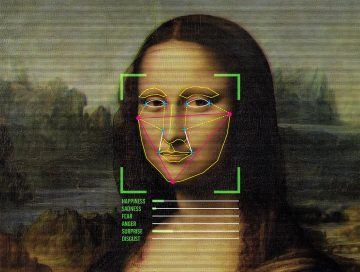 Human faces pop up on a screen, hundreds of them, one after another. Some have their eyes stretched wide, others show lips clenched. Some have eyes squeezed shut, cheeks lifted and mouths agape. For each one, you must answer this simple question: is this the face of someone having an orgasm or experiencing sudden pain?
 When Alexa replied to my question about the weather by tacking on ‘Have a nice day,’ I immediately shot back ‘You too,’ and then stared into space, slightly embarrassed. I also found myself spontaneously shouting words of encouragement to ‘Robbie’ my Roomba vacuum as I saw him passing down the hallway. And recently in Berkeley, California, a group of us on the sidewalk gathered around a cute four-wheeled KiwiBot – an autonomous food-delivery robot waiting for the traffic light to change. Some of us instinctively started talking to it in the sing-song voice you might use with a dog or a baby: ‘Who’s a good boy?’
 Japanese toilets are marvels of technological innovation. They have integrated bidets, which squirt water to clean your private parts. They have dryers and heated seats. They use water efficiently, clean themselves and deodorize the air, so bathrooms actually smell good. They have white noise machines, so you can fill your stall with the sound of rain for relaxation and privacy. Some even have built-in night lights and music players. It’s all customizable and controlled by electronic buttons on a panel next to your seat.
 ‘Hate is a poison that… is responsible for far too many crimes’,