John M. Barry in Smithsonian Magazine:
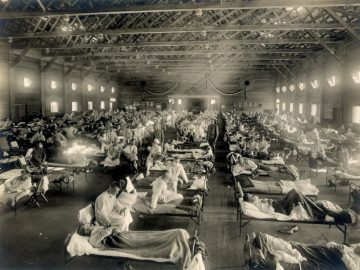 Haskell County, Kansas, lies in the southwest corner of the state, near Oklahoma and Colorado. In 1918 sod houses were still common, barely distinguishable from the treeless, dry prairie they were dug out of. It had been cattle country—a now bankrupt ranch once handled 30,000 head—but Haskell farmers also raised hogs, which is one possible clue to the origin of the crisis that would terrorize the world that year. Another clue is that the county sits on a major migratory flyway for 17 bird species, including sand hill cranes and mallards. Scientists today understand that bird influenza viruses, like human influenza viruses, can also infect hogs, and when a bird virus and a human virus infect the same pig cell, their different genes can be shuffled and exchanged like playing cards, resulting in a new, perhaps especially lethal, virus.
We cannot say for certain that that happened in 1918 in Haskell County, but we do know that an influenza outbreak struck in January, an outbreak so severe that, although influenza was not then a “reportable” disease, a local physician named Loring Miner—a large and imposing man, gruff, a player in local politics, who became a doctor before the acceptance of the germ theory of disease but whose intellectual curiosity had kept him abreast of scientific developments—went to the trouble of alerting the U.S. Public Health Service. The report itself no longer exists, but it stands as the first recorded notice anywhere in the world of unusual influenza activity that year.
More here.

 Really great poetry is difficult to read. I don’t just mean it’s challenging, though it usually is. I mean it’s hard to make progress, because the density of meaning in the language stops you; it makes you read in loops. Alice Fulton has called poetry “recursive”: “It sends you back up the page as much as it sends you forward.” Because of this effect, it once took me all afternoon to finish reading John Ashbery’s long poem “Self-Portrait in a Convex Mirror” — I kept wanting to stop and start over again. Alice Notley’s best work feels this way: intensely recursive, almost too good to read. In its semantic density, great poetry gives you the sense you’ve skipped over and missed some available shade of meaning. You certainly have.
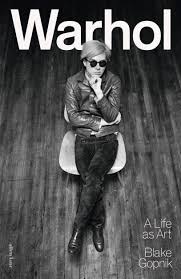 Gopnik humanises the man who pretended to be a monster. In his fey and mother-dominated youth in hard-boiled Pittsburgh, Warhol is actually endearing. He began life in among the murk of the steel mills, where the churches of the eastern European immigrant workers were decorated with holy icons that served as models for his later portraits. He was a self-avowed sissy; his first job was as a shop-window decorator in a local department store, and when he moved to New York he offered himself to advertising agencies as a specialist in drawing female footwear. A college contemporary remembers him as a cuddly bunny, and Gopnik, risking gooiness, repeatedly describes his behaviour as ‘lovely’ and exclaims over the ‘sweet little presents’ he bestowed on friends. What some took to be arrogance was a reflex, Gopnik suggests, of paralysing shyness. Once Warhol’s aloof persona was in place, he claimed not to believe in love, but Gopnik sees in his long trail of failed relationships a thwarted quest for ‘coupledom’.
 The great mystery of consciousness is why matter lights up with felt experience. After all, we are composed of particles indistinguishable from those swirling around in the sun; the atoms that compose your body were once the ingredients of countless stars in our universe’s past. They traveled for billions of years to land here—in this particular configuration that is you—and are now reading these words. Imagine following the life of those atoms from their first appearance in spacetime to the very moment they became arranged in such a way as to start experiencing something.
 Violence has become a familiar feature of many of the places convulsed by protests around the world—especially when the government gets involved. Such is the case in
 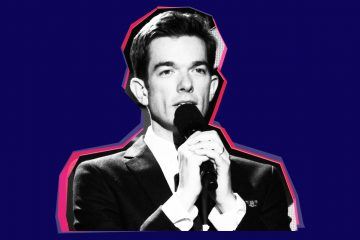 You watch John Mulaney in his new Netflix special, Kid Gorgeous at Radio City, and it’s hard not to think he was made in some lab to do stand-up. I like to describe him as the LeBron James of comedy, in that he is great at everything a stand-up can be good at. But it wasn’t always that way. Once upon a time, Mulaney was a clever young man, bombing specifically for audiences who paid to see him. Everything changed after the worst set of his life, one fateful night in New Jersey. It’s the story of how he got his joke about $100 million movies to work.
 Anyone who has read histories of the Cold War, including the
  In August 1958, gangs of white youths began systematically attacking West Indians in London’s Notting Hill, assaulting them with iron bars and meat cleavers and milk bottles.
 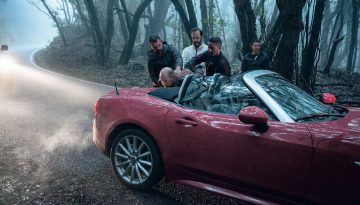 THE ROMANIAN DIRECTOR Corneliu Porumboiu may be the most epistemologically preoccupied filmmaker this side of Errol Morris, but, having spent his first fourteen years living under the dictator Nicolae Ceaușescu’s Père Ubu–ist regime, his sense of the absurd is second nature.
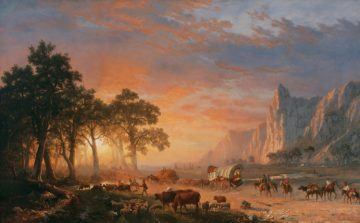 A truly literary history eludes most working historians. Their books are too often weighed down by specialist jargon, and they know that neglecting scholarly trappings—extensive footnotes, name-checking fellow historians—means risking professional irrelevance. It is nearly impossible to reach that most coveted literary destination: a serious argument delivered with a light touch.
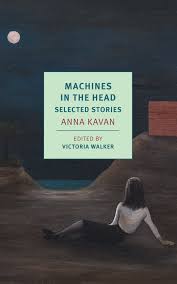 A YEAR BEFORE ANNA KAVAN WAS FOUND DEAD
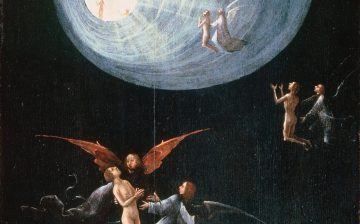 There are many arguments for theism, most of them not worth rehearsing. The ontological argument, first formulated by St Anselm in the 11th century and reframed by the 17th-century French rationalist René Descartes (1596-1650), maintains that God must exist because humans have an idea of a perfect being and existence is necessary to perfection. Since many of us have no such idea, it is a feeble gambit. The arguments of creationists are feebler, since they involve concocting a theory of intelligent design to fill gaps in science that the growth of knowledge may one day close. The idea of God is not a pseudo-scientific speculation.
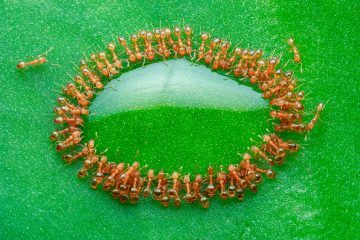 Are humans the only animals that caucus? As the early 2020 presidential election season suggests, there are probably more natural and efficient ways to make a group choice. But we’re certainly not the only animals on Earth that vote. We’re not even the only primates that primary. Any animal living in a group needs to make decisions as a group, too. Even when they don’t agree with their companions, animals rely on one another for protection or help finding food. So they have to find ways to reach consensus about what the group should do next, or where it should live. While they may not conduct continent-spanning electoral contests like this coming Super Tuesday, species ranging from primates all the way to insects have methods for finding agreement that are surprisingly democratic. As meerkats start each day, they emerge from their burrows into the sunlight, then begin searching for food. Each meerkat forages for itself, digging in the dirt for bugs and other morsels, but they travel in loose groups, each animal up to about 30 feet from its neighbors, says Marta Manser, an animal-behavior scientist at the University of Zurich in Switzerland. Nonetheless, the meerkats move as one unit, drifting across the desert while they search and munch.
 Greta’s father, Svante, and I are what is known in Sweden as “cultural workers” – trained in opera, music and theatre with half a career of work in those fields behind us. When I was pregnant with Greta, and working in Germany, Svante was acting at three different theatres in Sweden simultaneously. I had several years of binding contracts ahead of me at various opera houses all over Europe. With 1,000km between us, we talked over the phone about how we could get our new reality to work.
 For John Morgan, an American expat living in Budapest, controlling the form the world takes comes down to shaping how white people dream.
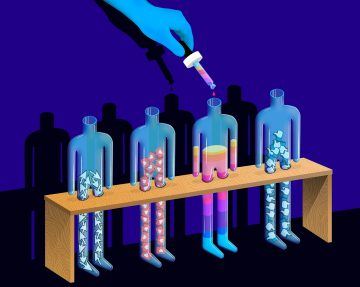 Dr. John Haygarth knew that there was something suspicious about Perkins’s Metallic Tractors. He’d heard all the theories about the newly patented medical device—about the way flesh reacted to metal, about noxious electrical fluids being expelled from the body. He’d heard that people plagued by rheumatism, pleurisy, and toothache swore the instrument offered them miraculous relief. Even George Washington was said to own a set. But Haygarth, a physician who had pioneered a method of preventing smallpox, sensed a sham. He set out to find the evidence. The year was 1799, and the Perkins tractors were already an international phenomenon. The device consisted of a pair of metallic rods—rounded on one end and tapering, at the other, to a point. Its inventor, Elisha Perkins, insisted that gently stroking each tractor over the affected area in alternation would draw off the electricity and provide relief. Thousands of sets were sold, for twenty-five dollars each. People were even said to have auctioned off their horses just to get hold of a pair. And, in an era when your alternatives might be bloodletting, leeches, and purging, you could see the appeal.