Cajas/Boxes with Zero Tolerance—excerpt
3.
In 1930, my tatarabuela still spoke Rarámuri.
Detribalized now as we’ve been from Turtle Island,
south and north of the río grande, west and east
it’s no surprise that we’re still writing about
our identities, brown women regarded
as brown women, they’d say equally as if
a consolation for any. What does it mean
to be Mexican living in Tejas,
singing in English? I blend in. U.S.
citizenship privilege—check. Education—check.
Job security, check. Chingona propensity, check.
Trauma half-lives (half-līves).
I thought music touches us first
and then the words.
If they built the wall near you,
you’d think music left for rhetoric too.
4.
If they built walls and migrant kennels near you,
you’d think music left for rhetoric too.
Jefferson Che Pop, six, stolen from his papá
Hermelindo, in El Paso, a day after crossing.
Weeks later, by phone, in Mayan Q’eqchi
Papá, I thought they killed you. You separated from me.
Where are you? You don’t love me anymore?
How can I sing a song in this English
when this country urges many to sign
this and that form in this English?
Have it all end with a form in English?
Why would any parent crossing countries
seeking asylum agree, deport me, childless?
5.
Jefferson doesn’t ask You don’t love me anymore?
He doesn’t say anything.
Hermelindo says, My son has come back
to me sick. Limp. Rash. Bruised.
LA Times does not report their
favorite songs from home.
I’m dreaming of a song, one I can never write,
one I have never heard. I’m dreaming
that Hermelindo will sing it to Jefferson,
that Jefferson’s mother will sing it by phone
and he will remember he is loved.
by Emmy Pérez
from Split this Rock
Note: Italicized quotes are from an LA Times article

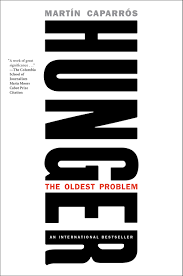 How do those of us who have enough to eat account for hunger? We often imagine it’s about drought, famine, lack of rain, corruption and incompetence. We need to be much more imaginative. Hunger is about land-grabbing, cartels, early marriage, immunisation, genetically modified crops, child development, slums, climate change, subsidies, chemical pollution, derivative markets, deforestation, child labour, food banks and much, much more. Systemic hunger is about the failure of our food systems and the fact that one half of the world is eating the food of the other half. This is not new. In the 19th century, Europe improved its food availability and quality by importing foodstuffs grown elsewhere.
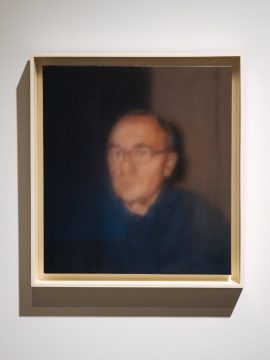 The blur is as close as Mr. Richter has ever come to a stylistic signature, and it recurs here in seascapes, landscapes, and street scenes; portraits of his daughter Betty, her head resting on a table like meat on the butcher block, or his ex-wife, the artist
  Suppose that you’re interested in how false beliefs – ‘fake news’ – spread across a population. The problem is extraordinarily complicated. What people come to believe depends on a myriad of factors: which news outlets they read; who their friends and colleagues are; their ability to distinguish between fact and fiction; their social media echo chamber; and so on. A very good way of investigating a complicated phenomenon is to model it. This involves the construction of a simplified version of it and the investigation of the behaviour of that simplified version in order to draw conclusions about the actual system of interest. Both of these steps require a curious and playful outlook.
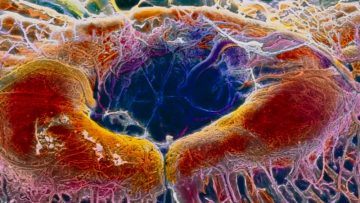 A person with a genetic condition that causes blindness has become the first to receive a CRISPR–Cas9 gene therapy administered directly into their body. The treatment is part of a landmark clinical trial to test the ability of CRISPR–Cas9 gene-editing techniques to remove mutations that cause a rare condition called Leber’s congenital amaurosis 10 (LCA10). No treatment is currently available for the disease, which is a leading cause of blindness in childhood. For the latest trial, the components of the gene-editing system – encoded in the genome of a virus — are injected directly into the eye, near photoreceptor cells. By contrast, previous CRISPR–Cas9 clinical trials have used the technique to edit the genomes of cells that have been removed from the body. The material is then infused back into the patient. “It’s an exciting time,” says Mark Pennesi, a specialist in inherited retinal diseases at Oregon Health & Science University in Portland. Pennesi is collaborating with the pharmaceutical companies Editas Medicine of Cambridge, Massachusetts, and Allergan of Dublin to conduct the trial, which has been named BRILLIANCE.
 When the Japanese attacked Pearl Harbor, the United States was surprised and unprepared, but it was quickly freed of its illusions. The same does not hold true for the COVID-19 epidemic. The attack is underway and our defenses are down – but so far our illusions remain intact.
 I think I’m finally ready to come out as a
 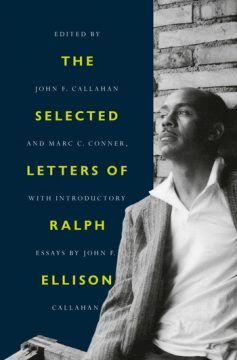 Of all these correspondents, however, Albert Murray was the one who best drew out of Ellison both the literary lion and the streetwise sophisticate at his most unbuttoned and inventive. Murray was a couple years behind Ellison at Tuskegee and was teaching literature there when they began corresponding in 1950. While on the home stretch of Invisible Man, Ellison, feeling super-relaxed, concedes to Murray, as he could to no one else, that the book has become “just a big fat ole Negro lie, meant to be told during cotton picking time over a water bucket full of corn, with a dipper passing back and forth at a good fast clip so that no one, not even the narrator himself, will realize how utterly preposterous the lie actually is.” In Murray (a novelist and critic of comparable stature whose own side of the decade-long exchange can be found in 2000’s Trading Twelves), Ellison found a boon companion with whom he could comfortably revel in the foot-stomping, jump-dancing, blues-shouting verities of their shared cultural references and unfurl freewheeling inquiries into the literary masters (Hemingway, Malraux, and Faulkner, among others) who had nourished them since their respective youths.
 In mid-January, The New York Times
 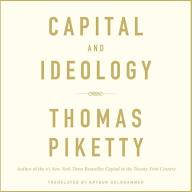 Setting aside these internecine disputes, after the very long durée of his historical exegesis, what is Piketty’s main thesis? It is that the sharp growth in inequality of income and, especially, wealth we have seen in most Western societies in recent years is unsustainable. Furthermore, our traditional political parties find it impossible to engage with the problem. Taking the UK as an example, he argues that the two main parties are now led by the ‘Brahmin Left’, with Labour having become the party of the highly educated, its working-class roots withered, and the ‘Merchant Right’, who cling to the belief that loosely regulated free markets will deliver prosperity for all, one day. He argues that the trickle-down theory on which that latter assumption is based has given way to a trickle-up phenomenon, with the rich getting richer and the incomes of the middling sort stagnating.
 A study using neuroimaging led by Stony Brook University professor and lead author Lilianne R. Mujica-Parodi, Ph.D., and published in PNAS, reveals that neurobiological changes associated with aging can be seen at a much younger age than would be expected, in the late 40s. However, the study also suggests that this process may be prevented or reversed based on dietary changes that involve minimizing the consumption of simple carbohydrates.
 Back in 2015, Bill Gates
  In December 2015, Susan Fowler was settling into a new job as a software engineer at the technology-transportation company Uber when her boss sent her a series of disturbing chat messages. After asking how her work was going, Fowler’s manager, “Jake,” began complaining about inequities in his relationship with his girlfriend. “It is an open relationship, but it’s a little more open on vacations haha,” he wrote, to Fowler’s bewilderment. “She can go and have sex any day of the week. … It takes a herculean effort for me to do the same.”
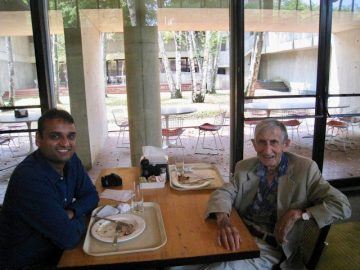 No doubt much will be written about this remarkable man who was one of the leading scientific and literary lights of the 20th century. His imagination and contributions ranged over an entire universe of disciplines – pure and applied mathematics, theoretical and particle physics, game theory, nuclear reactor and spaceship design, origins of life, space exploration and astrophysics, genetic engineering – whose only unifying thread seemed to be the diversity of ideas they contained. Most of these he explored in rigorous scientific papers with reams of mathematics; some of these he explored in elegant prose written for the general public. He made groundbreaking contributions to an untold variety of fields, and as evidenced on his
  Aristotle, Niccolò Machiavelli, Alexis de Tocqueville, Adam Smith and Karl Marx grounded their philosophies in the understanding that there is a natural antagonism between the rich and the rest of us. The interests of the rich are not our interests. The truths of the rich are not our truths. The lives of the rich are not our lives. Great wealth not only breeds contempt for those who do not have it but it empowers oligarchs to pay armies of lawyers, publicists, politicians, judges, academics and journalists to censure and control public debate and stifle dissent.
 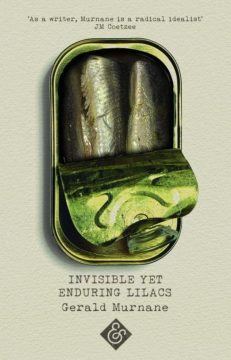 Murnane’s most compelling writing orbits around what he fails to express in life, what he cannot bring himself to say, what he has repressed. Even the faintest whiff (or glimpse, as it were) of sexuality carries a vestigial sense of shame and sinfulness for the writer. While some of his tenderest work concerns the men in his life (see also “Stream System”), some of his most unsettling work is rooted in his fear of ridicule by women, and his deeply ingrained aversion to direct expressions of sexuality, a hangover from his pious Catholic upbringing. Without this buried disquiet, Murnane’s serene ekphrasis of the contents of his mind might be insufferably tedious. In the quintessential Murnane story the narrator’s game of presenting blurred, half-remembered images that hint at a deeper subtext before gradually bringing them into focus, culminates in the narrator discovering something about himself that could only have been revealed by those images, further clarifying and strengthening the connections between the images in his image system. When it works, as it does the title piece and a few others, the result can be transcendent, the reader’s patience and sustained focus is rewarded.