
Jim Baggott at Aeon Magazine:
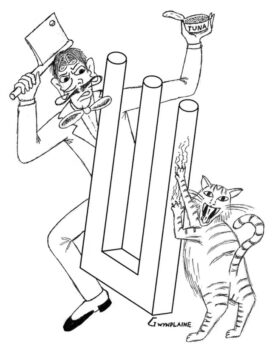 To understand the point Schrödinger was making, we need to do a little unpacking. The nature of Schrödinger’s ‘diabolical device’ is not actually important to his argument. Its purpose is simply to amplify an atomic-scale event – the decay of a radioactive atom – and bring it up to the more familiar scale of a living cat, trapped inside a steel box. The theory that describes objects and events taking place at the scale of atoms and subatomic particles like electrons is quantum mechanics. But in this theory, atoms and subatomic particles are described not as tiny, self-contained objects moving through space. They are instead described in terms of quantum wavefunctions, which capture an utterly weird aspect of their observed behaviour. Under certain circumstances, these particles may also behave like waves.
These contrasting behaviours could not be starker, or more seemingly incompatible. Particles have mass. By their nature, they are ‘here’: they are localised in space and remain localised as they move from here to there. Throw many particles into a small space and, like marbles, they will collide, bouncing off each other in different directions. Waves, on the other hand, are spread out through space – they are ‘non-local’. Squeeze them through a narrow slit and, like waves in the sea passing through a gap in a harbour wall, they will spread out beyond.
more here.
Enjoying the content on 3QD? Help keep us going by donating now.
 Richard Blanco says he still can’t believe how much his life has changed since he read his poem “One Today” at U.S. President Barack Obama’s second inauguration in 2013. After his appearance, he received thousands of emails from people who appreciated his descriptions of hardworking Americans and immigrants, including his parents, and his vision of “All of us as vital as the one light we move through.”
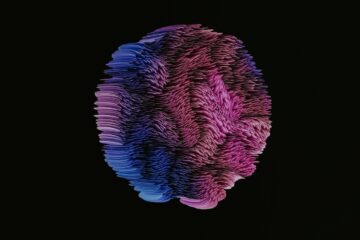 Older computer programs were hand-coded using logical rules. But neural networks learn skills on their own, and the way they represent what they’ve learned is notoriously difficult to parse, leading people to refer to the models as “black boxes.”
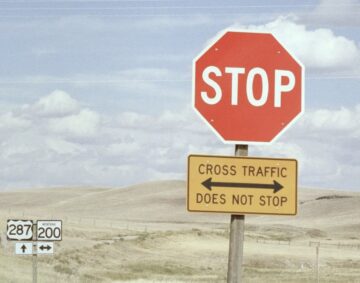 In the everyday sense of the term, the pragmatist is the person who ‘gets results’. The term can be intended as either a compliment or a criticism; it can be applied equally to effective and to unscrupulous managers and politicians. These connotations carry over, typically in misleading ways, into the philosophical sense of pragmatism.
 Tracking a river through a cedar forest in Ecuador,
  In 1995, World Bank Vice President Ismail Serageldin warned that whereas the conflicts of the previous 100 years had been over oil, “the wars of the next century
  W
W When we think about the forces that shape us, we inevitably turn to parents. The parent-child relationship is the basis of probably half a millennium’s worth of psychoanalytic conversation and intellectual discourse; parenting books are perennial best sellers, with advice that fluctuates as often as the health advice on what to eat or drink and how much. Their whiplashing instructions don’t stop many parents from reading them, and who can blame those mothers and fathers: Children are baffling, variable, not that verbal — and parents also know that if they get it wrong, their kids will blame them for just about everything.
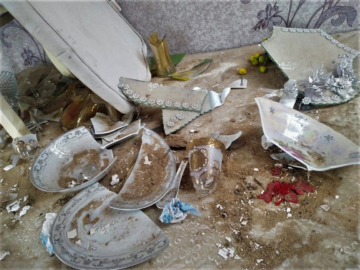 There are philosophies of brokenness, which makes sense, given how much broken stuff disrupts the flow of our lives. How should we think about those disruptions? A practitioner of the Japanese ethic of wabi-sabi respects the beauty of brokenness: instead of trying to erase the wear and tear that accrues inevitably with time, she finds ways of acknowledging and celebrating it. In a prototypical example of the philosophy, a teacup that has fallen and shattered is reassembled through the art of kintsugi, in which lacquer, mixed with powdered gold or other metals, is used to fill the cracks; now the fractured, gilded cup tells a story of endurance, authenticity, acceptance, and care amid impermanence. Your favorite jacket, with a mended tear in its lining and the mark of an exploded pen below its pocket, has some wabi-sabi. So does your grandfather’s watch, still functional but with a scratch in its crystal. I like to imagine that the Wabi Sabi Salon, in a town near mine, helps its clients age gracefully. (I’ve never visited.)
 The videos “starring” the author, who died in 1976, have been made using AI-enhanced technology, licensed images and carefully restored audio recordings.
 The follicles at the root of each hair contain
  When the Vietnam War finally ended on April 30, 1975, it left behind a landscape