
Sue Harris at The Current:
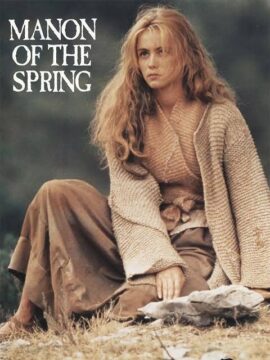 When Jean de Florette, the first part of Claude Berri’s magisterial two-film adaptation of Marcel Pagnol’s celebrated 1962 literary diptych, L’eau des collines, was released in theaters in August 1986—the second part, Manon of the Spring, would follow in November—it was the cinematic event of the year in France. The films ran during an exceptionally tough time for the French, who were on constant alert as they went about their daily lives because of a terrorist bombing campaign that had been targeting Paris and regional transportation networks since December 1985. One can only imagine what a relief it must have been to escape to a cinema for a few hours and be transported to 1920s rural France and a world imagined by one of the country’s most beloved and prolific chroniclers of Provençal life. Shot simultaneously on location in rural Provence over the last half of 1985, the two parts drew many millions of domestic spectators, capturing the top two box-office spots for 1986.
Jean de Florette and Manon of the Spring present Provence as a feast for the senses, a spectacular landscape of trees and mountains, dirt tracks and sun-bleached stone cottages. Our eyes, like those of Jean Cadoret, the first part’s protagonist, roam freely over the hills and valleys, soaring and sweeping, drinking in both the immensity of the land and its permanence.
more here.
Enjoying the content on 3QD? Help keep us going by donating now.