
Josh Rothman at The New Yorker:
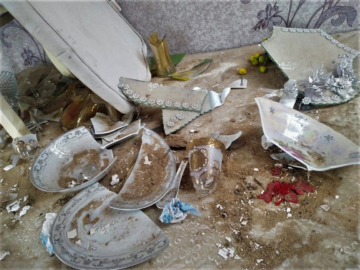 There are philosophies of brokenness, which makes sense, given how much broken stuff disrupts the flow of our lives. How should we think about those disruptions? A practitioner of the Japanese ethic of wabi-sabi respects the beauty of brokenness: instead of trying to erase the wear and tear that accrues inevitably with time, she finds ways of acknowledging and celebrating it. In a prototypical example of the philosophy, a teacup that has fallen and shattered is reassembled through the art of kintsugi, in which lacquer, mixed with powdered gold or other metals, is used to fill the cracks; now the fractured, gilded cup tells a story of endurance, authenticity, acceptance, and care amid impermanence. Your favorite jacket, with a mended tear in its lining and the mark of an exploded pen below its pocket, has some wabi-sabi. So does your grandfather’s watch, still functional but with a scratch in its crystal. I like to imagine that the Wabi Sabi Salon, in a town near mine, helps its clients age gracefully. (I’ve never visited.)
The German philosopher Martin Heidegger, who wrote about how we experience ourselves and the world, argued that there were two ways we could relate to objects. A doorknob, he thought, could be “ready-to-hand”—something we reach for and use reflexively, unconsciously, without a moment’s thought. But that same doorknob, if it breaks, can become “present-at-hand”: precisely because it’s not working, we notice it, examine it, try to figure it out so we can fix it. Broken things are often “there” for us in ways that working things aren’t.
more here.
Enjoying the content on 3QD? Help keep us going by donating now.